
- Buy Crypto
- Markets
 Futures
- Spot
- Copy Trade
- Earn
- More
Berachain’s $25M Refund Controversy: A Closer Look into the Brevan Howard Deal

Key Takeaways
- Berachain faced controversy over a $25 million refund arrangement with investor Brevan Howard, challenging the accuracy of reports.
- The supposed refund option arises from complex commercial agreements involving Nova Digital, a Brevan Howard vehicle.
- Misinterpretations led to claims about preferential treatment for Brevan Howard, which Berachain disputes.
- The arrangement included provisions for liquidity commitment and was not solely designed to retain Brevan Howard’s interest.
- Despite the publicity, Brevan Howard holds a significant token share and plays an active role as a liquidity provider for Berachain.
Unpacking the Berachain and Brevan Howard $25M Refund Controversy
In recent developments, Berachain, a notable player in the blockchain industry, has come under scrutiny due to a reported refund mechanism with one of its Series B investors, Brevan Howard’s crypto fund, Nova Digital. As these reports unfolded, Berachain’s anonymous founder, known as Smokey The Bera, stepped forward to mitigate the situation, challenging claims regarding preferential treatment in their $25 million investment deal.
Dissecting the Refund Claims
Media coverage suggested that Berachain offered Brevan Howard a right to reclaim its $25 million investment within a year following Berachain’s token generation event, purportedly set for February 2024. This right emerged from apprehensions about the project’s token availability, which Nova Digital deemed vital given its liquid-only investment strategy.
Smokey clarified that Brevan Howard’s agreement mirrored those of other investors, albeit accompanied by extra provisions specific to the needs of Nova Digital. Nova had proactively sought a lead role in the Series B round, driven by strategic interests in Berachain’s potential. The refund option was reportedly a protective measure tied to the risk of the token not launching as planned.
Behind Closed Doors: Complex Commercial Agreements
Smokey elaborated that the partnership with Brevan Howard involved intricate contracts and agreements not typically disclosed in simple investment language. The need for a side letter, formalized with Berachain’s and Nova’s legal representatives, was a result of these complex agreements. Brevan Howard required assurances that the BERA tokens acquired would remain a fluid asset, aligning with Nova’s operational strategy, which is focused on liquidity and rapid adaptability in volatile market conditions.
These additional arrangements didn’t aim at merely retaining Brevan Howard’s interest or managing potential post-launch setbacks, as initially speculated. Instead, they established a framework for how Berachain could operationalize liquidity provisions with significant stakeholders in mind.
Market Reactions and Investor Confidence
Despite the drop in the BERA token’s market value—now 93% lower from its initial high—Brevan Howard retained a strategic position, increasing its token holdings over time. This demonstrates confident engagement with Berachain’s ecosystem, even amidst tumultuous market environments.
Such involvement emphasizes Brevan Howard’s commitment to Berachain’s long-term vision rather than short-term gains. As a substantial tokenholder and liquidity provider, Brevan Howard actively supports the network’s infrastructure growth, which contrasts with the typical narrative surrounding distressed investments.
Broader Implications in Venture Capital and Blockchain Investments
The situation casts a spotlight on the dynamics between venture capital and blockchain projects, emphasizing the necessity for transparent and comprehensive agreements. Misunderstandings and perception gaps can easily arise when dealing with complex financial instruments and strategic partnerships.
This incident also serves to remind stakeholders of the importance of aligning expectations between investment funds and technology startups, ensuring that both financial feasibility and technological development are given due consideration.
Frequently Asked Questions
What exactly is Berachain, and why is its partnership with Brevan Howard significant?
Berachain is a blockchain startup that caught investor attention due to its innovative approach in the DeFi space. The partnership with Brevan Howard, a prominent financial firm, is significant as it demonstrates high-profile interest and potential trust in Berachain’s technological and market potential.
Why did Brevan Howard require an option for a refund on their investment?
The refund option emerged from the need to secure Brevan Howard’s investment under specific conditions related to the availability and liquidity of Berachain’s tokens. Nova Digital, a part of Brevan Howard focusing on liquid assets, wanted to ensure that its investment remained viable within its operational strategy.
What is a token generation event (TGE)?
A token generation event (TGE) refers to the initial creation and distribution of a cryptocurrency token. It is a critical phase for blockchain projects, often marking the transition from development to market presence.
How has the controversy impacted the perception of Berachain in the market?
While the controversy stirred some uncertainty, Berachain’s proactive communication and clarification efforts have helped mitigate potential negative impacts. By clarifying their agreements with Brevan Howard and demonstrating continued investor confidence, Berachain maintains its market presence.
What lessons can other blockchain startups learn from Berachain’s experience?
Blockchain startups can learn the importance of clear, transparent communication with their investors and the necessity of aligning strategic goals with investment expectations. Ensuring that all contractual obligations and agreements are meticulously managed can prevent misunderstandings that may arise from publicly disclosed terms.
You may also like

Daily Observation of Cryptocurrency Concept Stocks: Nasdaq Bets on Stocks on the Blockchain, Strategy Buys Another 17,994 BTC, ETH Treasury Stocks Enter Production Period

One-click onboarding to RootData, allowing project information to be accurately presented on over 200 platforms including Binance Wallet, Gate, TP, and more
To the Builders who are still persevering in the crypto industry
Oil Price Cools Off, Crypto Bounces Back

a16z Releases Top 100 AI Applications List, Models Are Moving Out of the Browser and App

If you only follow the news, you may have misconstrued this Iran conflict

ERC-8183: Write a Rule for a $3M On-Chain Agent Business

AI Mistakenly 'Tips' $260,000, Makes It All Back in 24 Hours

Arthur Hayes: Why is HYPE a 5x Moonshot?
OpenClaw Money-Saving Strategy: Saving Two Thousand a Month - What Am I Doing Right?
a16z: Making a $2 Billion Bet on the Next Dawn of Web3

Trade to Earn Series IV: WEEX Launches Up to 40% Real-Time Futures Fee Rebates
Trade futures on WEEX and earn up to 40% real-time fee rebates. Trade to Earn Series IV lets you accumulate WXT rewards while reducing trading costs.
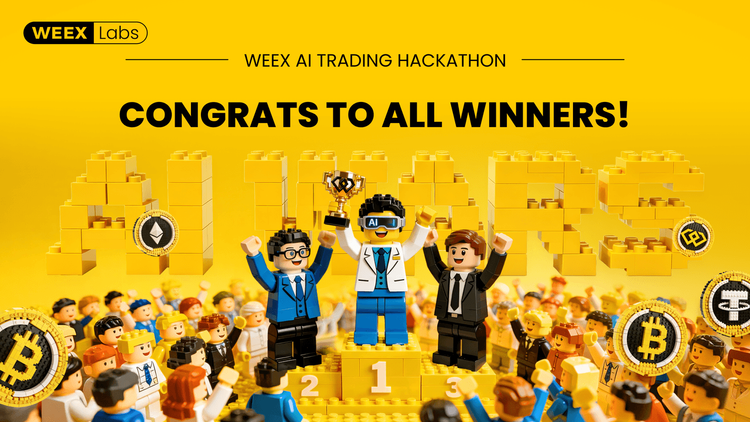
WEEX AI Hackathon Champions Crowned, Revealing Future of AI Trading
The first-ever WEEX AI Hackathon has concluded, with 10 winners emerging from over 200 global teams. Beyond its $1.8 million prize pool, the event marked a milestone—proving that the future of AI trading belongs to accessible, AI-powered innovation.
View: No Hype, No FUD, I Rate OpenClaw at 65 Points

Single-day Oil Price Plunge Exceeds 30%, Copilot Cowork Feature Launched, What Is the English-Speaking Community Talking About Today?

The Agent Spend Safely thing has already taken off

After the rise in the stablecoin's status, long-time partners Circle and Stripe vie for dominance

WEEX Trade to Earn: Turn Futures Trading into Instant WXT Rewards
Join WEEX Trade to Earn and earn instant WXT rebates on every futures trade. Boost rewards with referrals and tasks. Trade more, earn more on WEEX exchange.


 App
App