
- Buy Crypto
- Markets
 Futures
- Spot
- Copy Trade
- Earn
- More
Educational | How to Avoid Blindly Following the Crowd - A Beginner's Guide to Project Research

Original Title: How to do a good research?
Original Author: le.hl
Original Translation: Luffy, Foresight News
As an investor, the easiest way to lose money is to blindly follow the crowd, knowing nothing about the project, and simply enter the market based on others' advice. I have had such an experience, so I am sharing my project research experience here.
If you are a cryptocurrency newbie and need a reliable practical method, this article is prepared for you.
Define the Project Narrative
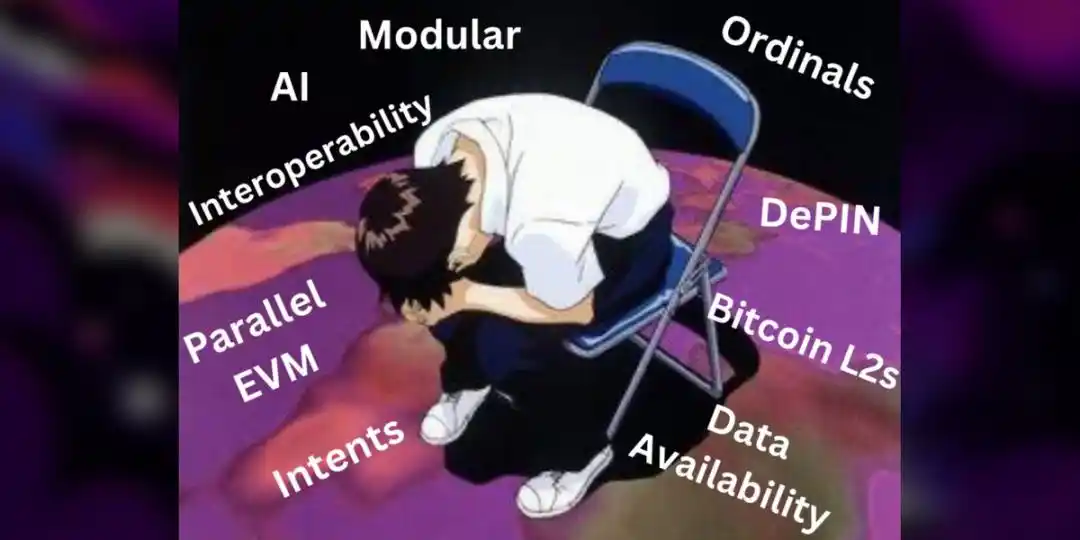
Narrative is one of the core elements of the cryptocurrency industry, and market trends often revolve around narratives. If you want to invest in a project, you must first understand the narrative logic behind it. If the project is still stuck in outdated narratives like the metaverse, GameFi, it is likely to have a hard time succeeding.
I usually look up the project narrative on CoinMarketCap and CoinGecko platforms.
Steps:
1. Visit the website: https://coinmarketcap.com/cryptocurrency-category/
2. Enter the project name;
3. Scroll down to the "Tags" section to view the project's narrative.
After understanding the narrative, the next step is to identify the leading project in that sector. Observe its recent trading volume changes, assess the dynamics; and evaluate if the project you are interested in has the ability to compete with the leader. Remember, investing in the leader's competitors often has a better opportunity than chasing an already skyrocketed leader.
Choosing a currently trending narrative (such as AI, prediction markets, InfoFi, etc.) is the best path to profitability.
Verify the Project's Investors
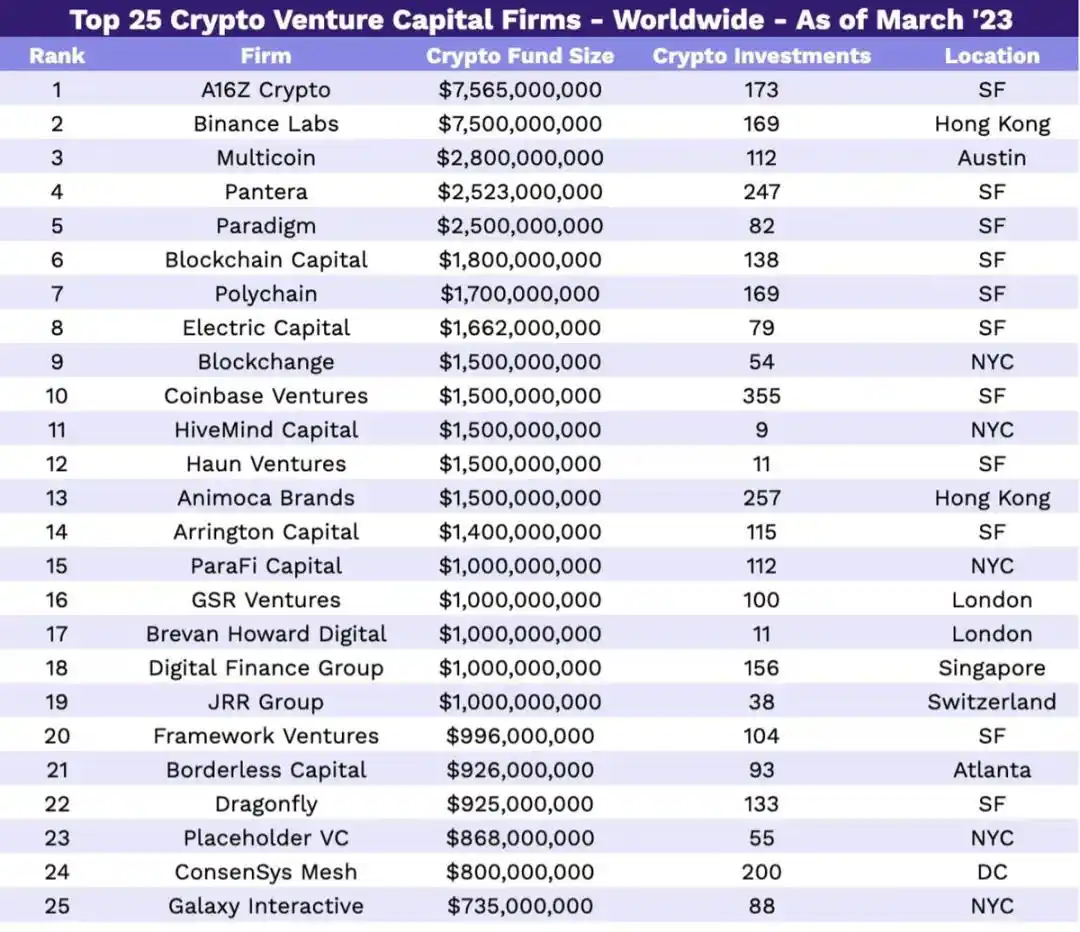
Today, many people are averse to the term 'venture capital' and prefer projects that self-fund. However, the fact is: If a project lacks excellent products, has a mediocre team, and is not the leader in any narrative, it needs reliable investors to drive its development.
My most frequently used platform to look up project investors is CryptoFundraising, which can display all key information about a project's investors, team, social accounts, official website, and more, all completely free of charge.
Operating steps:
1. Visit the website: https://crypto-fundraising.info/
2. Search for the target project;
3. Check the funding amount and venture capital level.
I have found that projects with lower funding amounts, supported by only 2-3 VCs, usually perform better than those with 20 or more VCs. It’s like a cake being divided among too many people; the team needs to get approval from all VCs when making decisions, which can be restrictive.
The VC level is also crucial. I personally prefer projects supported by VCs such as Coinbase VC, a16z, Polychain Capital, Paradigm, and GSR.
Examine Project Social Dynamics
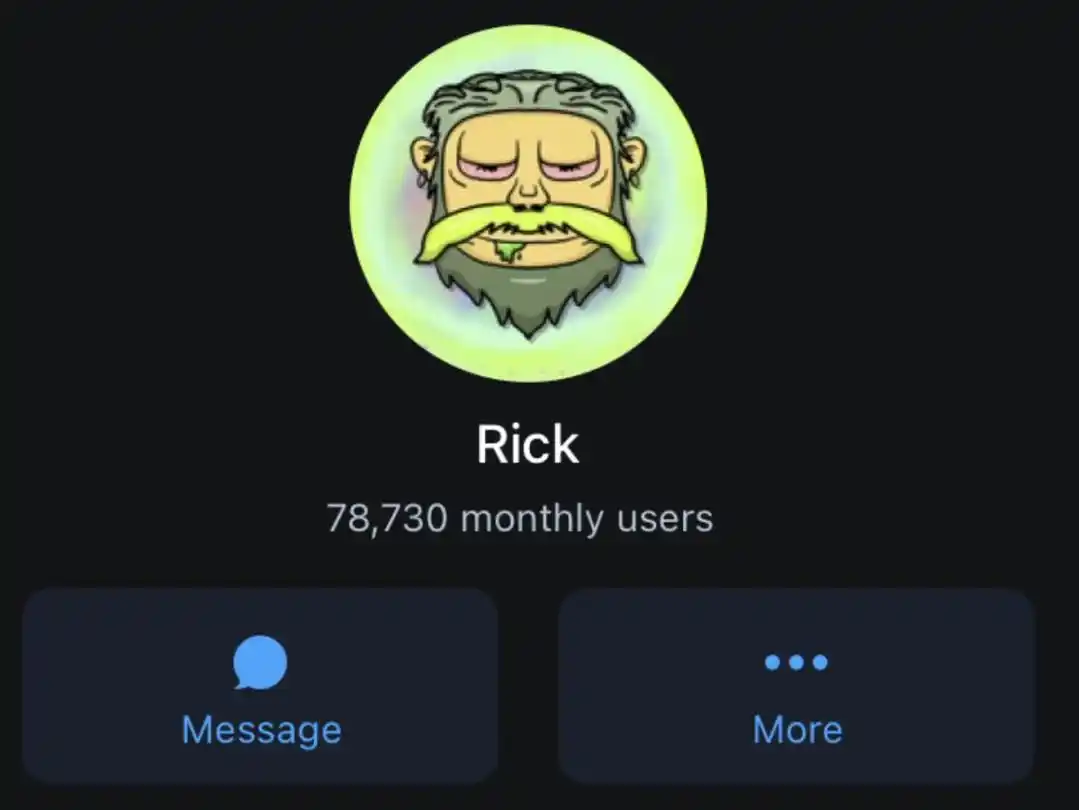
This step is very crucial. If a project disables comments or frequently changes its social account nickname, it’s best to avoid it directly. If you want to look up a project’s previous nickname, you can use the Rick bot on Telegram:
1. Log in to Telegram;
2. Send a message to Rickburpbot;
3. Enter the command: /twit current nickname of the project to query the historical nickname.
The "number of well-known individuals who follow each other" is also worth considering: If there are over 20 industry celebrities following the project, it is usually a positive sign.
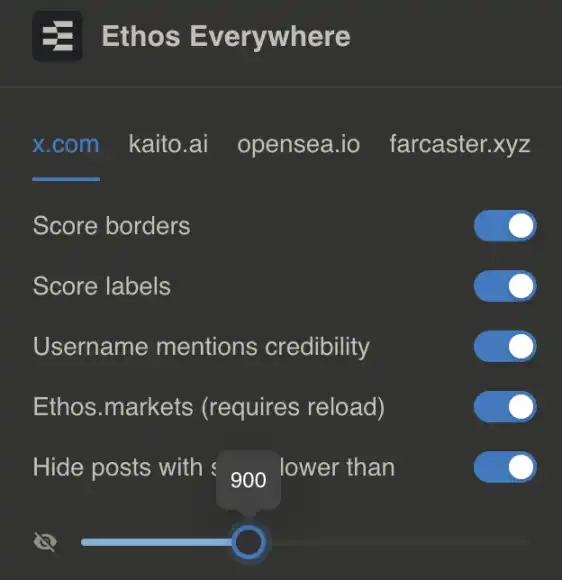
To verify the legitimacy of a project, you can also use Ethos Network:
1. Visit the website: https://app.ethos.network/
2. Install the Chrome browser extension;
3. Make the following settings: If a project has negative feedback, block it to avoid seeing related disruptive data on X.
No Ethos invitation code is needed, you can also use this plugin for free.
Deep Research Core Dimensions

Founder
I prefer to invest in projects where the founder is actively involved in the cryptocurrency community on a daily basis and engages with the community. Outstanding founders have a strong belief in their project and are willing to admit mistakes.
Avoid founders who claim that the community is everything but then behave arrogantly, are disconnected from users, or are anonymous.
The founder's actions often determine the project's direction after launch.
Product
Usability is the key metric I value the most. Only a simple, user-friendly product can attract real users and generate revenue.
Even the most amazing concept (like "Quantum Blockchain Solves Global Hunger") will not receive attention if it is complex to operate and challenging to use.
Tokenomics
For projects with issued tokens, be cautious if the following situation occurs: distributing tokens to groups not related to the project (e.g., distributing tokens to platforms like Binance Alpha for short-term hype without receiving any substantial support). This behavior often leads to a failed Token Generation Event (TGE) and a dismal price trend thereafter.
A tokenomics model does not need to allocate all tokens to the community, but it must establish a clear, transparent unlocking schedule for all stakeholders (including the team). Team transparency is always paramount.
To investigate a project's tokenomics and unlocking schedule, you can use Dropstab to search for the target project; examine the price trend after the project's last token unlock to assess the unlocking's impact on the price.
You may also like

2025 South Korea CEX Listing Post-Mortem: Investing in New Coins = 70% Loss?

BIP-360 Analysis: Bitcoin's First Step Towards Quantum Immunity, But Why Only the "First Step"?

50 million USDT exchanged for 35,000 USD AAVE: How did the disaster happen? Who should we blame?

The Cryptographic Past of the Middle East

Resolving the Intergenerational Prisoner's Dilemma: The Inevitable Path of Nomadic Capital Bitcoin

Who Will Control AI? Why Decentralized AI May Be the Only Alternative to Government and Big Tech
AI has become critical infrastructure, and governments and corporations are competing to control it. Centralized development and regulation are entrenching existing power structures. The Web3 community is building a decentralized alternative — distributed compute, token incentives, and community governance — before that window closes.

Vitalik wrote a proposal teaching you how to secretly use AI large models

On the eve of the explosion of on-chain options

WEEX AI Hackathon: How Did This AI Trading Winner Succeed?
A self-taught AI trading enthusiast achieved top-10 results at the WEEX AI Hackathon. Learn about the mindset, AI tools, and lessons behind this impressive performance.

One Balance to Rule Them All: Gravitas' On-Chain Prime Broker Ambition

That person who cashed out at the NFT peak is now selling a new shovel in the OpenClaw craze

Inter-generational Prisoner's Dilemma Resolution: The Nomadic Capital and Bitcoin's Inevitable Path

Upstream and downstream are starting to fight, all for the sake of everyone being able to "Lobster"
Circle and Mastercard Announce Partnership, the Next Stage for the Crypto Industry Belongs to Payments

From 5 Mao per kWh of Chinese electricity to a $45 API export: Tokens are rewriting currency units

Why is OpenAI playing catch-up to Claude Code instead?

Vitalik wrote a proposal teaching you how to secretly use AI large models

The doubling of Circle's stock price and the paradigm shift of stablecoins
2025 South Korea CEX Listing Post-Mortem: Investing in New Coins = 70% Loss?
BIP-360 Analysis: Bitcoin's First Step Towards Quantum Immunity, But Why Only the "First Step"?
50 million USDT exchanged for 35,000 USD AAVE: How did the disaster happen? Who should we blame?
The Cryptographic Past of the Middle East
Resolving the Intergenerational Prisoner's Dilemma: The Inevitable Path of Nomadic Capital Bitcoin
Who Will Control AI? Why Decentralized AI May Be the Only Alternative to Government and Big Tech
AI has become critical infrastructure, and governments and corporations are competing to control it. Centralized development and regulation are entrenching existing power structures. The Web3 community is building a decentralized alternative — distributed compute, token incentives, and community governance — before that window closes.


 App
App