
Former Meme Coin ORE Makes a Comeback: New Economic Model Launched, with Monthly Gains of Over 30x


Original Article Title: "Former DeFi Gem ORE Makes a Comeback, Surging 30x in a Single Month This Time"
Original Article Author: Nicky, Foresight News
In 2024, ORE initially emerged as the Solana Renaissance hackathon champion, and its usage of a proof-of-work mechanism had previously caused network congestion on Solana due to high transaction volume.
The once-silent Solana ecosystem project ORE has returned to the market spotlight after nearly a year of dormancy. This PoW mining protocol, once jokingly referred to as "Solana clogger," has made a comeback with a newly upgraded protocol. Not only has it driven the token price surged from around $10 to over $600 in a month, but it has also ranked as the second-highest protocol earner on the Solana network, with a daily protocol revenue of over $1 million, second only to Pump.fun. This growth was predominantly achieved within DEXs.
ORE was created by an anonymous developer known as Hardhat Chad, whose identity model follows the Bitcoin Satoshi Nakamoto tradition. In the early stages of the project, Hardhat Chad single-handedly developed ORE V1. Currently, the team includes members like Neil Shahani responsible for project development and community communication.
As the project progressed, ORE established Regolith Labs as its formal development entity.
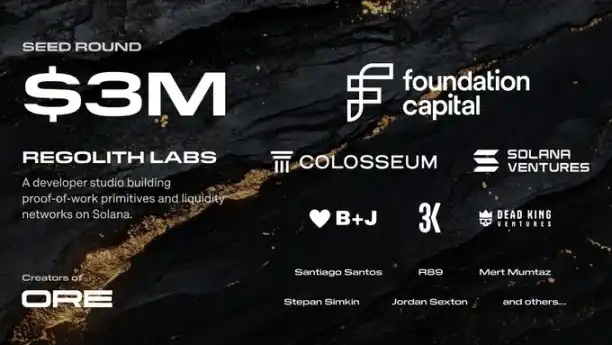
In September 2024, the development team behind ORE, Regolith Labs, completed a $3 million seed funding round led by Foundation Capital, with participation from Solana Ventures. This funding was primarily used for team expansion and technical development.
Subsequently, the project team launched the V2 version. However, the early V2 version failed to fully address the incentive misalignment issue, resulting in low mining rewards and a prolonged slump in ORE's price.
After a year of exploration, the team recognized the fundamental value loss issue in traditional PoW and decided to undergo a comprehensive overhaul. On October 22, 2025, ORE officially released a new announcement, stating that after the redesign, it could accumulate protocol revenue, achieve a sustainable tokenomics, and accelerate the mission of creating a Solana-native value store.
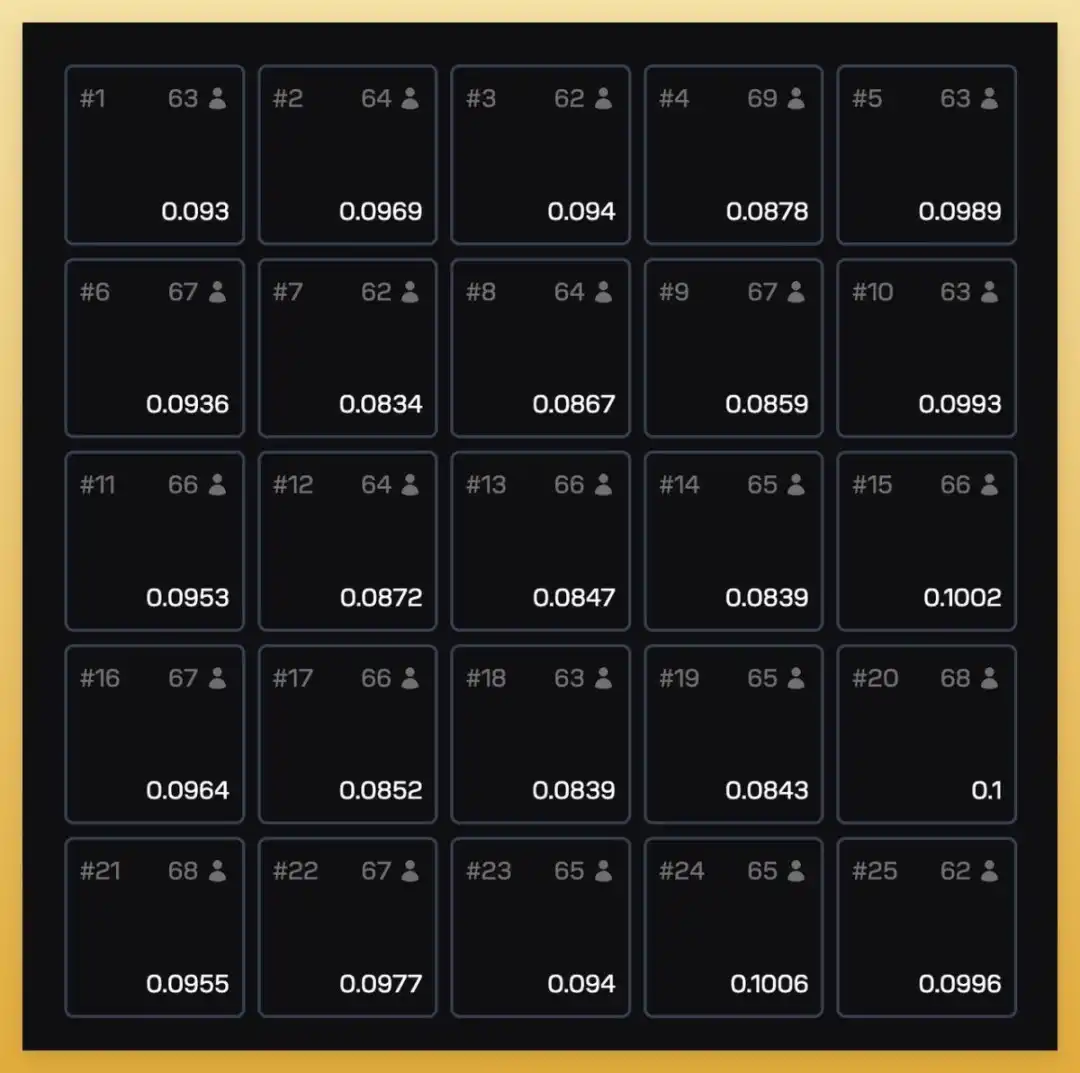
The new protocol introduces a 5x5 grid mining system. Each round lasts one minute, during which miners occupy blocks on the grid by deploying SOL. At the end of each round, a winning block is selected by the system through a secure random number generator. The miners on this block proportionally share all SOL from the other 24 blocks. Additionally, one miner on the winning block has the opportunity to receive an additional 1 ORE reward (approximately once every three rounds). This design transforms the 'zero-sum game' into 'collective value redistribution,' where the losing miners' SOL flows entirely to the winners, preventing value outflow.
The protocol also features a 'Motherlode' pool mechanism, where 0.2 ORE is contributed to the pool each round, with a 1:625 chance of triggering the pool. If the reward is not triggered, the pool continues to accumulate until a lucky miner claims it in a future round.
Economic Model: Deflationary Mechanism and Value Accumulation
The core innovation of the ORE protocol lies in its value capture mechanism. All mining rewards incur a 10% 'refining fee' upon withdrawal, with these tokens automatically distributed to miners based on the unredeemed ORE proportion. The longer miners hold the mined ORE, the more they receive.
Moreso, the protocol automatically collects 10% of SOL mining rewards as protocol income, used to buy back ORE tokens from the open market. In the past seven days, the protocol income amounted to 21,529 SOL (approximately $3.6 million), driving a buyback of 10,381 ORE tokens. 90% of the repurchased tokens are permanently 'buried,' while the remaining 10% is allocated to stakers.
This design allows for the net issuance of ORE to dynamically adjust between deflation and inflation. When the protocol income is substantial, the entire system enters a deflationary state.
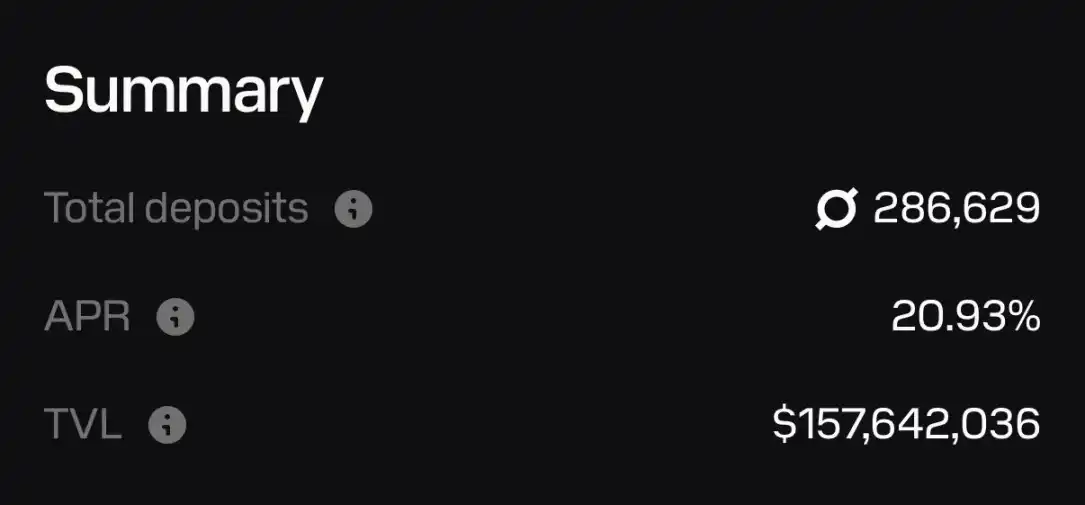
Currently, the protocol has a total of 286,629 ORE staked, with a TVL exceeding $150 million and an APR of 20.93%.
Tokenomics
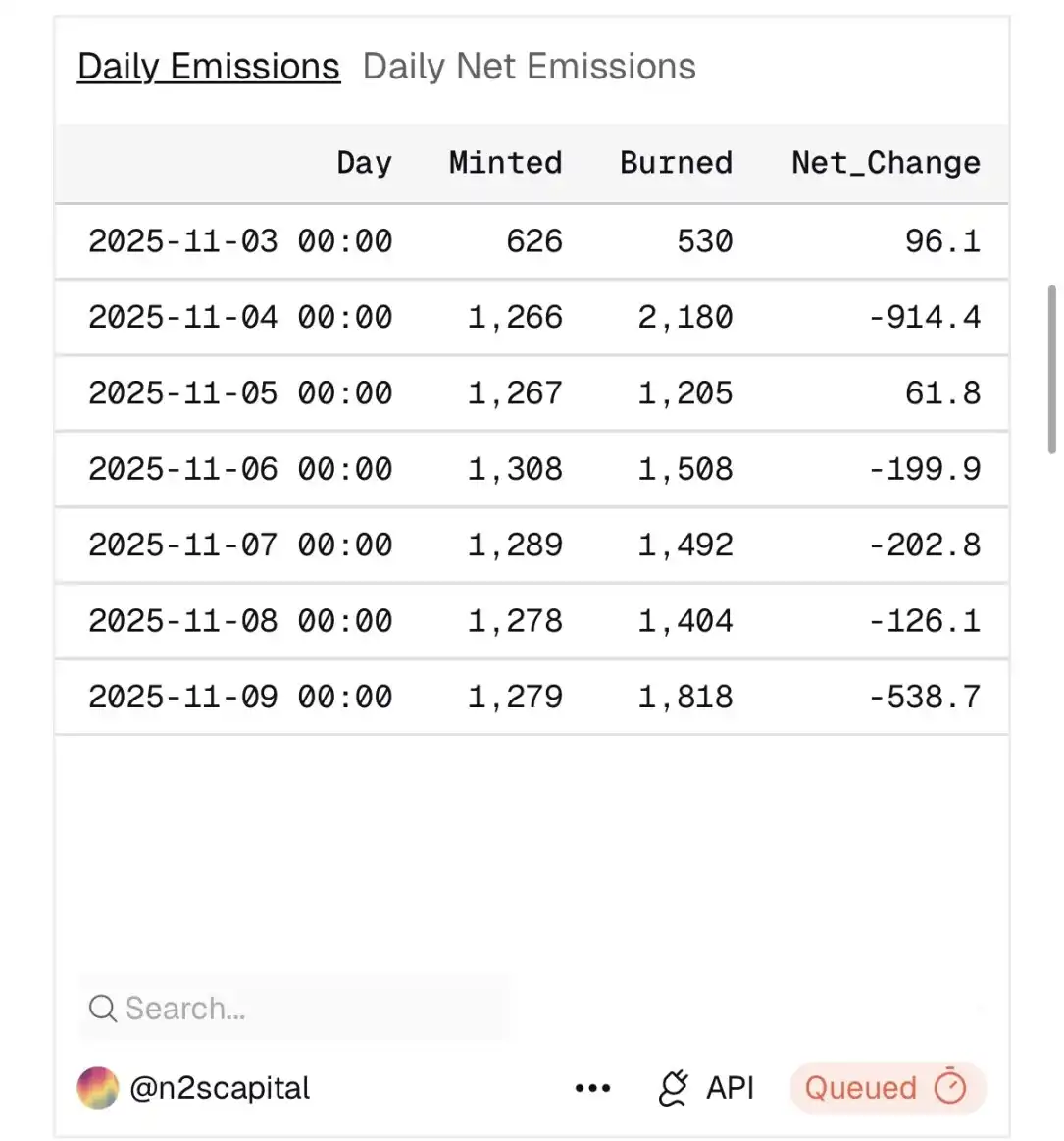
ORE will maintain its existing maximum supply limit of 5 million tokens and a stable average issuance rate of about 1 ORE per minute. However, the introduction of protocol income and automatic burial mechanisms implies that if the protocol income is significant, the net issuance may fluctuate between limited inflation and unlimited deflation. According to Dune data, five out of the past seven days saw ORE in a deflationary state.
errorYou may also like

Forbes Special Report: Stablecoin cross-border payments are faster now, but not cheaper yet
Li Feifei's latest long article: When video generation, robots, and NVIDIA all claim to be world models, we need a taxonomy
Blaming the desolation of the cryptocurrency world on the rise of AI is a form of intellectual laziness
The impact of OUSD on Circle, Tether, and Paxos: not a single negative factor, but a more complex reshaping of competition
A valuation of 8 billion dollars, doubling in 8 months! What makes the crypto-friendly bank Erebor Bank stand out?
340 billion valuation: Li Yanhong's largest IPO, a seat in Kunlunxin's shares is hard to come by
Stablecoins are the "royalists" of the crypto world: Open USD brings the old currency system into play
Cape Verde 2-3 Argentina: The Underdog Team That Stunned the World in Defeat
Cape Verde's run ended in a 3-2 defeat to Argentina, but their journey — three unbeaten draws, one heroic goalkeeper, and a fight that pushed the defending champions to the brink — is the kind of story markets recognize too: small caps can rattle blue chips long before anyone expects it.
Semiconductor stocks plummet, yet Anthropic wants to create a 2nm chip
Where is Zhao Changpeng's billion-dollar investment going? YZi Labs' investment landscape fully revealed
Ethereum Foundation Report: A Basic Guide to Ethereum for Governments and Financial Institutions
A pre-announced harvesting case: After the cryptocurrency price dropped by 99%, the public chain Saga exited to transform into AI
When American giants collectively "defect" from Chinese AI models
BIS Report Compliance Observation: The Real Risks of Stablecoins, Not Just "Depegging"
Portugal 2-1 Croatia: Ronaldo's 20-Year Knockout-Stage Drought Ends With a Debt Finally Collected
Portugal beat Croatia 2-1 in the 2026 global football championship's knockout rounds as Ronaldo scored his first-ever knockout-stage goal, Gonçalo Ramos struck a stoppage-time winner, and VAR ruled out a late equalizer for offside.
Bitcoin Price Prediction July 2026: Will BTC Recover to $70K or Drop Below $55K?
A South Korean company that learned the strategy of hoarding coins, from a bull market to delisting?
WEEX API Broker Program: Turn Your Trading Platform Into a Revenue Engine
Forbes Special Report: Stablecoin cross-border payments are faster now, but not cheaper yet
Li Feifei's latest long article: When video generation, robots, and NVIDIA all claim to be world models, we need a taxonomy
Blaming the desolation of the cryptocurrency world on the rise of AI is a form of intellectual laziness
The impact of OUSD on Circle, Tether, and Paxos: not a single negative factor, but a more complex reshaping of competition
A valuation of 8 billion dollars, doubling in 8 months! What makes the crypto-friendly bank Erebor Bank stand out?
340 billion valuation: Li Yanhong's largest IPO, a seat in Kunlunxin's shares is hard to come by