
Is the U.S. Stock Market Facing a Crash Risk Tonight as Well?


Following the plunge of gold and silver, US stocks are also under pressure. On February 2, Nasdaq index futures fell nearly 1% in pre-market trading, the S&P 500 index has retraced 0.43% from its peak, and the fear index VIX surged to 17.44, indicating a significant shift in market sentiment towards caution.
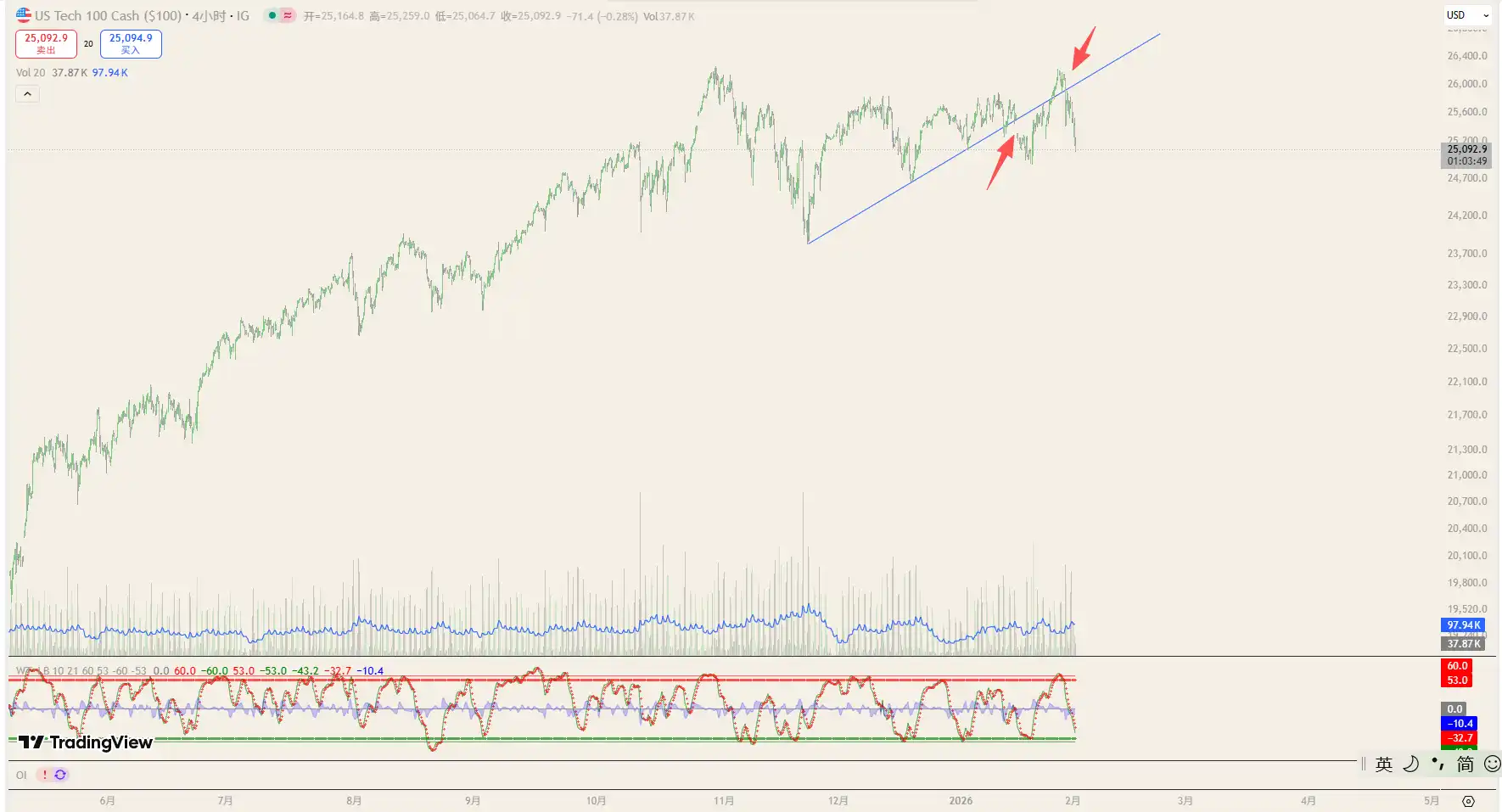
Technically, the Nasdaq index has been oscillating at high levels for three months, forming a rising wedge pattern. Now, this critical uptrend line has been breached for the second time, dealing a severe blow to market confidence.
If tonight's daily closing price is below the previous low, forming a "Lower Low," then a larger downtrend may unfold.
Adding to market unease is the continued fallout from last weekend's "Epstein Files." This batch of over 3 million pages of documents has implicated Kevin Warsh, the next Federal Reserve Chair nominee selected by the Trump administration.
His name appeared on the guest list for the 2010 "St. Barts Christmas Party" email. This has transformed distant political gossip into a tangible risk hanging over the market.
Escalation of Political Risk
Market panic primarily stems from a reassessment of policy uncertainty in the "Trump 2.0" era. Warsh is a staunch hawk, and his nomination almost signals the end of the low-interest-rate era.
Warsh has long been a vocal critic of the Federal Reserve, believing that a "regime change" is necessary. He has publicly rebuked the Fed for cutting rates by a full percentage point when inflation exceeded the target in 2024, only to backtrack afterwards, damaging its credibility.
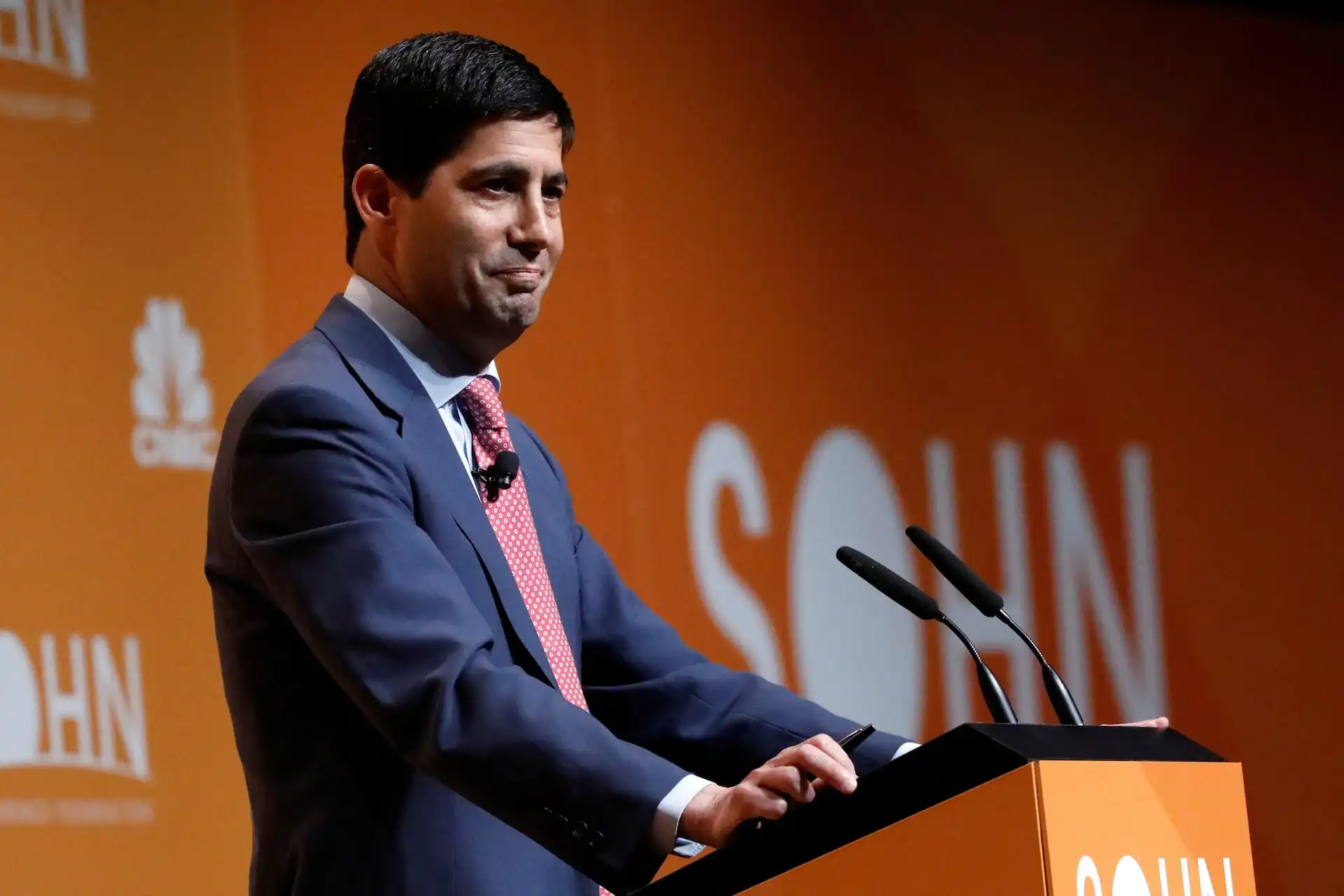
Kevin Warsh, the next Federal Reserve Chair nominee selected by the Trump administration
Warsh's core argument is that the Fed's bloated balance sheet distorts the healthy functioning of the economy and inflates asset bubbles. He advocates for balance sheet reduction, even if it means achieving it through tightening policies. This combination of "hawkish rate cuts" has raised concerns in the market about a sharp tightening of future monetary policy.
The release of the Epstein Files has exposed a significant, unpredictable political risk to the market. While there is currently no evidence of Warsh's involvement in illegal activities, his association with this century-defining scandal itself poses a major political liability, further complicating an already controversial nomination.
In addition, the Trump administration's iconic tariff policy has also caused market concerns due to its uncertainty. If a new round of tariffs expands in scope, it will not only impact consumer confidence and corporate profits but may also further swell the already huge fiscal deficit.
Forecasts indicate that in just the first three months of 2026, the U.S. fiscal deficit will reach $601 billion. This fiscal outlook, combined with the political trust crisis exposed by the Epstein files, collectively forms an extremely fragile market environment.
Global Markets and Commodity "Bloodbath"
The commodity market was the first to ignite the "long liquidation" stampede. Traditional safe-haven assets such as gold and silver experienced an epic collapse, with gold prices plummeting by 12% at one point, and silver flash-crashing by 36%, marking the largest single-day decline since 1980, with a trading volume of 30 billion under ETFs. High-leverage long positions were swiftly liquidated within a short period.
As prices fell, the Chicago Mercantile Exchange (CME) quickly raised margin requirements for gold and silver futures. For example, the margin ratio for non-high-risk accounts in silver futures was increased from 11% to 15%. This forced many underfunded long traders to be liquidated, triggering further sell-offs that crushed prices, creating a vicious cycle. According to statistics, the liquidation amount in tokenized futures alone reached as high as $140 million within 24 hours.
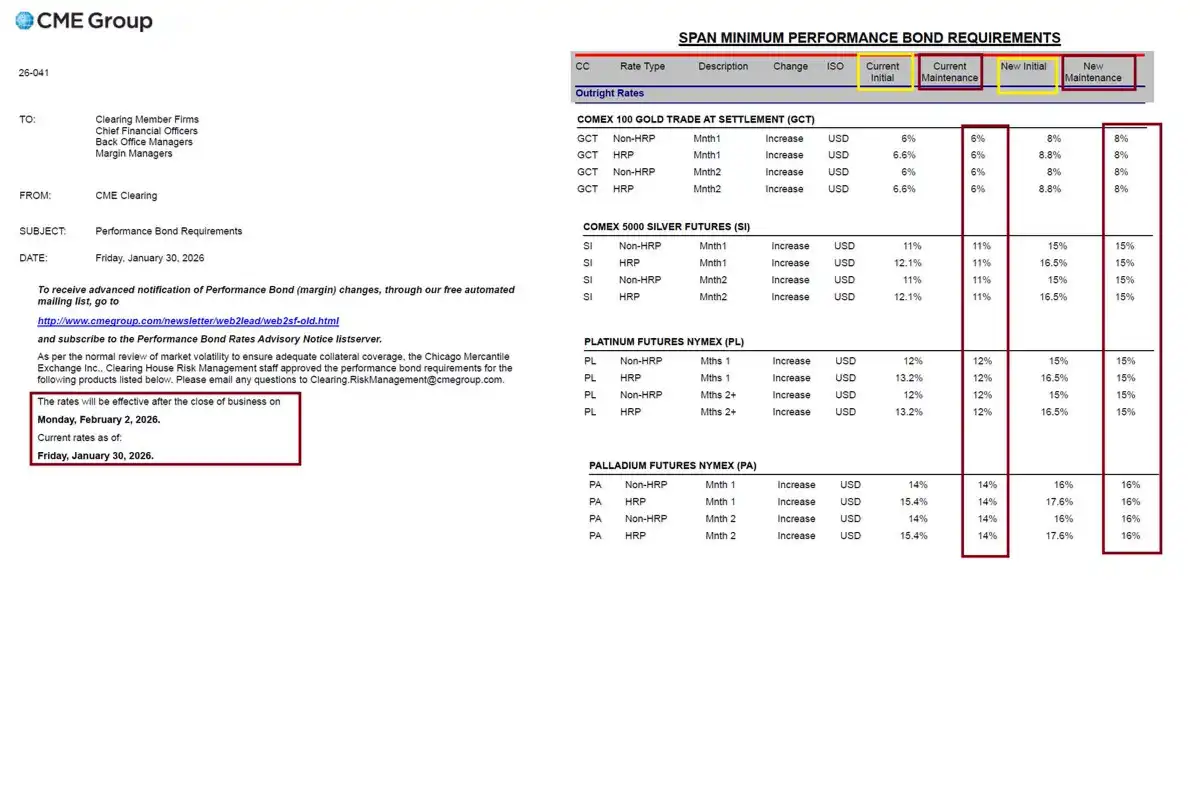
The Chicago Mercantile Exchange announced the margin ratio was increased from 11% to 15%
This storm also spread to the domestic market, with multiple gold shops in Shuibei, Shenzhen, experiencing a "bankruptcy" due to participating in unqualified gold futures gambling transactions, involving an amount of possibly hundreds of billions, affecting thousands of investors.
Crude oil prices were also not spared, falling by 5.51% to $61.62 per barrel. The softness in the Asian stock markets had already sounded the alarm, with the Nikkei index falling by 1.11% and the Hang Seng index plummeting by 3.15%. Bitcoin, as a risk asset indicator, also dropped below the psychological level of $75,000. Behind this series of chain reactions, a global deleveraging event may be unfolding.
When investors in one market (such as commodity futures) are forced to liquidate due to high leverage, they have to sell assets in other markets (such as Asian stocks, bitcoin) to raise margin, triggering cross-market risk contagion. If this liquidity drought continues, the next assets to be sold off could potentially be the overvalued U.S. stocks.
Economic Data and the AI Bubble
The cracks at the economic level are becoming increasingly clear. The upcoming job report has become the focus of the market's attention. Once the data shows an unexpected cooling in the labor market, concerns about an economic recession will quickly intensify. The Federal Reserve is currently maintaining interest rates, but faced with persistent inflation, its policy space is extremely limited. If inflation fails to recede as expected, future rate hikes will be inevitable.
The yield on the 10-year U.S. Treasury bond has risen to 4.218%, and the massive amount of interest the U.S. government needs to pay on its debt each year is further exacerbating its fiscal situation. Historically, an inverted yield curve has repeatedly been a reliable leading indicator of an economic recession, and the market is once again approaching this dangerous edge.
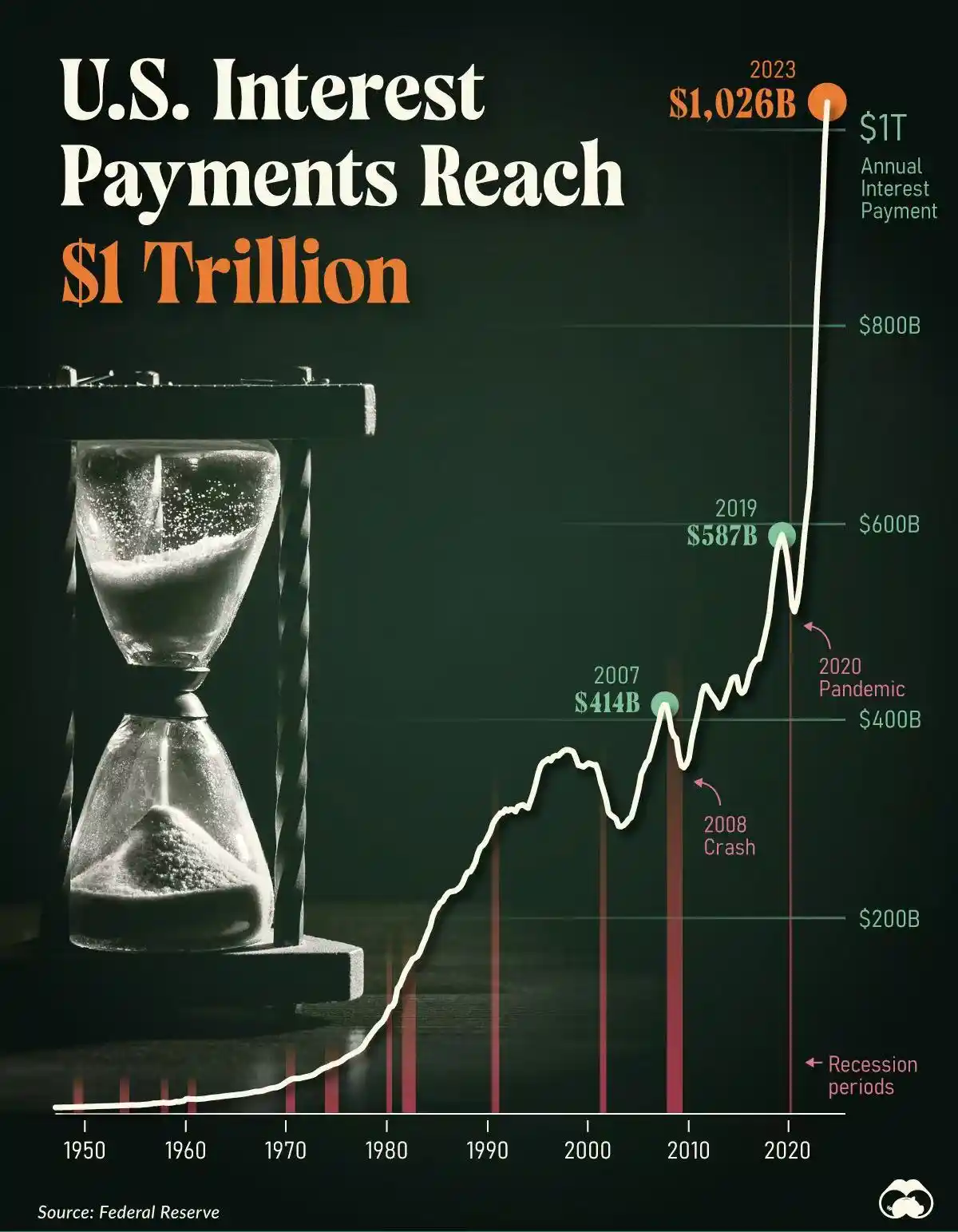
Historical trend of total U.S. government debt interest payments, which have now surpassed $1 trillion
Meanwhile, the AI narrative that underpinned the market prosperity of 2025 is also showing cracks. The recent weakness in the Nasdaq index, especially in software stocks becoming the most oversold sector in the S&P 500, indicates that the market's enthusiasm for AI is cooling off.
Investors are beginning to realize that the commercialization and profit realization of AI are much longer and more challenging than imagined.
The upcoming earnings season, especially the financial reports of tech giants like Amazon and Alphabet, will be a "litmus test" to evaluate the true capability of AI. If the reports fall short of expectations, a large-scale sell-off may be hard to avoid.
The Ghost of 1979
The current geopolitical and macroeconomic environment bears striking similarities to 1979, causing many seasoned investors to feel uneasy.
1979 marked the end of the era of detente in the Cold War. In December of that year, the Soviet Union invaded Afghanistan, leading to a sharp deterioration in U.S.-Soviet relations and a peak in global geopolitical tensions.
Almost simultaneously, the Iranian Revolution triggered the second oil crisis, causing oil prices to skyrocket and the global economy to fall into a state of "stagflation" (economic stagnation combined with high inflation). Back then, under political pressure, the Federal Reserve failed to take timely decisive action, resulting in uncontrolled inflation. It ultimately took the new chairman, Paul Volcker, implementing a sharp rate hike through "shock therapy" to contain it, but not without the cost of a deep economic recession.
Today, we are facing a similar situation once again: Middle East geopolitical tensions. According to prediction market Polymarket, as of February 2, the market believes there is a 31% probability of the United States striking Iran by the end of this month, with an insider whale betting big on regime change in Iran.
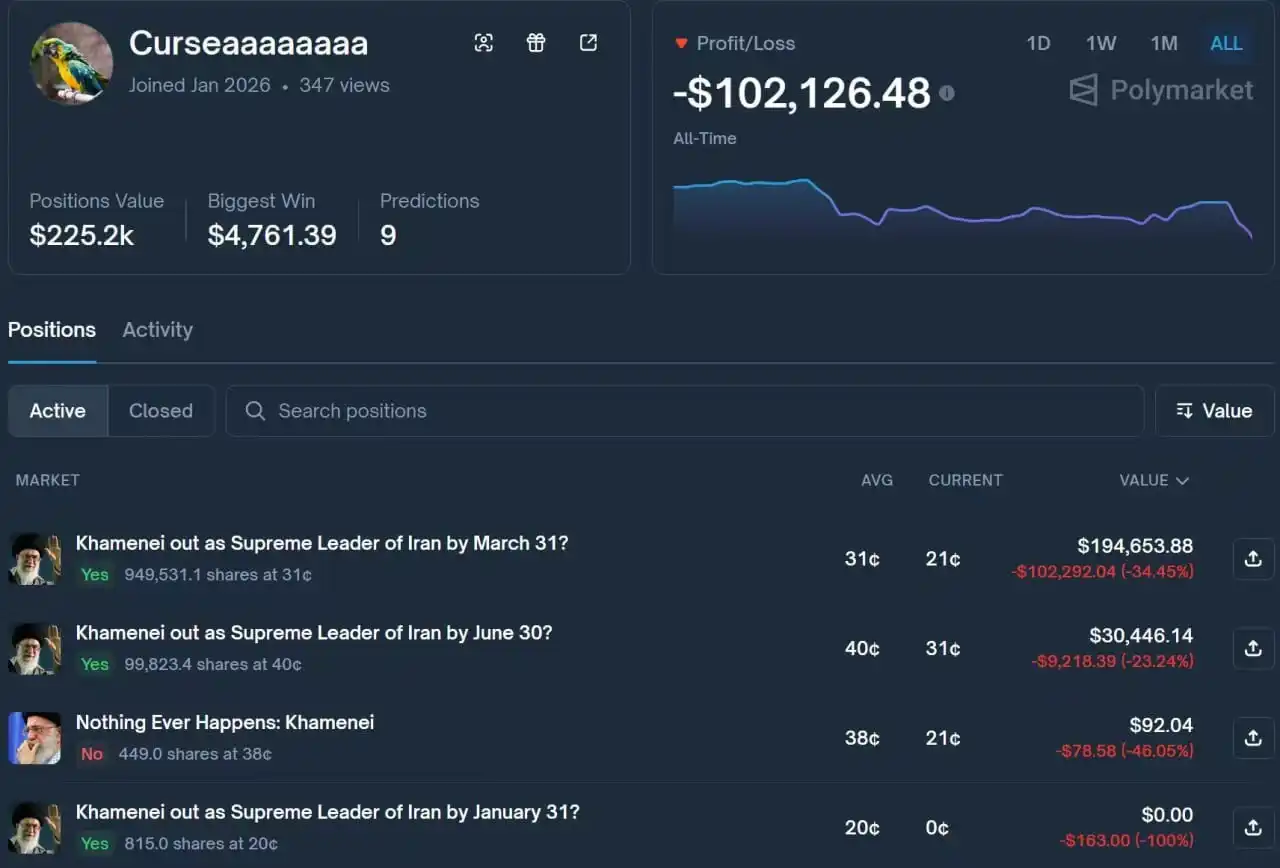
Polymarket insider whale heavily bets on regime change in Iran, total bet $336.7k | Source: Polybeats
Meanwhile, energy prices are experiencing significant volatility, and global inflation pressures remain high. Concerns about potential interference by the Trump administration in the Federal Reserve's independence, along with the nomination of hawkish figure Warsh, are reminiscent of past policy mistakes made under political pressure.
If history repeats itself, the aggressive tightening policies implemented to control inflation could bring an end to the current artificially prolonged bull market, leading to a crisis of confidence in the US dollar and a significant stock market correction similar to the late 1970s to early 1980s.
For investors who have been riding high in the euphoria of 2025, now may be the time to reassess risks and prepare for potential market turbulence ahead.
You may also like

Bitcoin Market Analysis 2026: Can BTC Reach $150K by Year-End?

STRC unanchored by 11%, can the perpetual motion machine of Strategy still operate?

Bitcoin ETF Outflows Hit a Record $4.4 Billion: What Are Traders Doing With Their Cash?

WEEX App Just Got Smarter – New Tabs for Faster Trades & Easy Asset Management

Blockchain Capital Partner: The Core Secret of Arbitrage

WEEX All-New Search Features: Find, Trade & Earn Faster Than Ever

Will MicroStrategy fall into a death spiral? What will the macro trend be in the second half of the year?

Morning Report | Illinois signs the strictest digital asset tax law in the U.S.; RWA tokenization market size surpasses $43 billion, institutions accelerate the migration of on-chain assets

Full version of the debut Q&A! Federal Reserve Chairman Waller: Sticking to the 2% inflation target, establishing five special working groups, individual did not submit the dot plot

From Disruptor to Shadow Market: The Crypto Market is Becoming a Colony of Traditional Finance
Dalio's important long article: How to position in the current market environment?

OKX Star analyzes Binance's competitive advantages: when regulation levels the playing field, competition has just begun

New gameplay for participating in initial offerings on cryptocurrency exchanges
Why Is Bitcoin Down Today? What the Hawkish FOMC Means for SpaceX, Gold and Nasdaq

DeepSeek Financing Story

Morning Report | DeepSeek completes over $7 billion in financing, with a valuation exceeding $50 billion; Musk's personal wealth has surpassed the total market value of Bitcoin
Cursor, why did you get on Musk's spaceship?
In the name of charity, for the benefit of the family: How the Trump family turned charity into profit?
Bitcoin Market Analysis 2026: Can BTC Reach $150K by Year-End?
STRC unanchored by 11%, can the perpetual motion machine of Strategy still operate?
Bitcoin ETF Outflows Hit a Record $4.4 Billion: What Are Traders Doing With Their Cash?
WEEX App Just Got Smarter – New Tabs for Faster Trades & Easy Asset Management
Blockchain Capital Partner: The Core Secret of Arbitrage
WEEX All-New Search Features: Find, Trade & Earn Faster Than Ever


