
Is USDT's cross-chain version, USDT0, reliable?


Original Author: 0xTodd, Partner at Nothing Research
Wasn't Uni supposed to restart liquidity mining on 4.15? This time it involves 12 pools, many of which are related to $USDT0. So, I'll take this opportunity to talk about USDT0.
Firstly, What is USDT0?
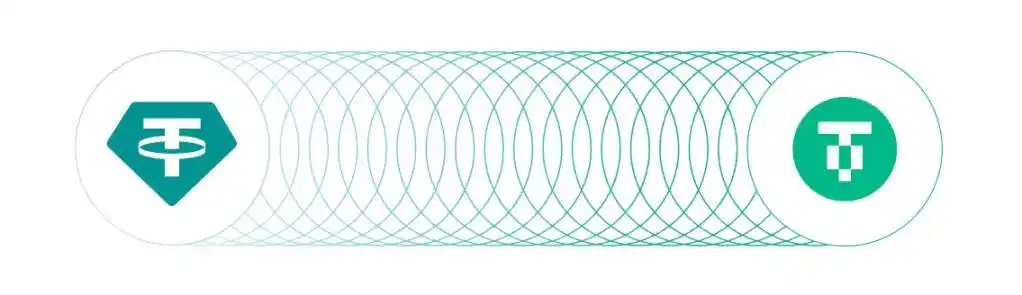
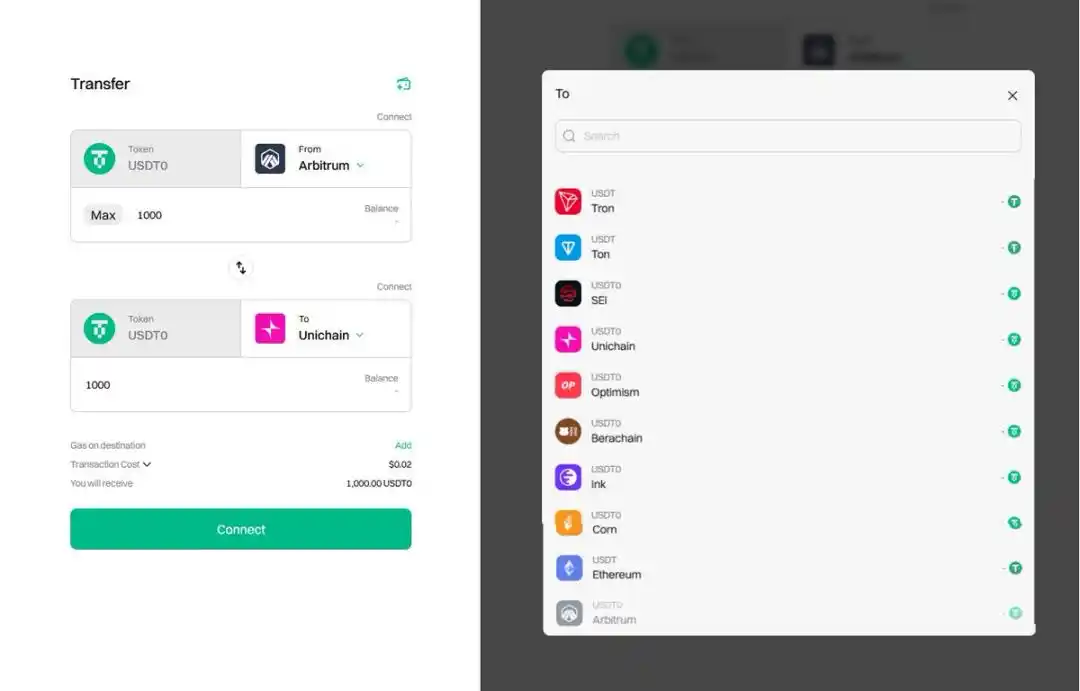
In simple terms, USDT0 is the cross-chain version of USDT. The parent asset USDT exists on ETH and, through Layer0, can cross-chain to other chains, becoming USDT0.
Supporters of USDT0 can also cross among themselves, for example, ETH-Arb-Unichain-BearChain-megaETH, and so on.
Who is Behind USDT0?
This is the most tricky part, and it took me a long time to figure it out.
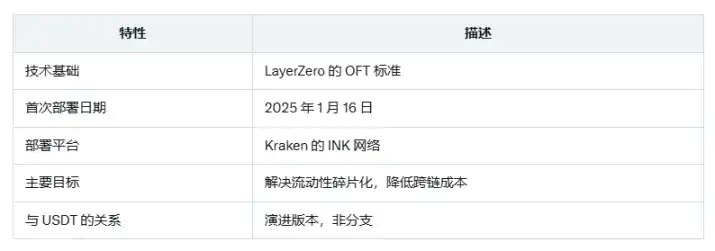
Behind this project, USDT0, is a collaboration of 1+3:
1. Led by Everdawn Labs;
2.1 Built on Layer0 technology;
2.2 Endorsed by Tether;
2.3 Endorsed by the INK public chain (issued by Kraken).
However, Everdawn Labs is a complete mystery online. I strongly suspect that it is a front for Tether. This is quite consistent with their style:
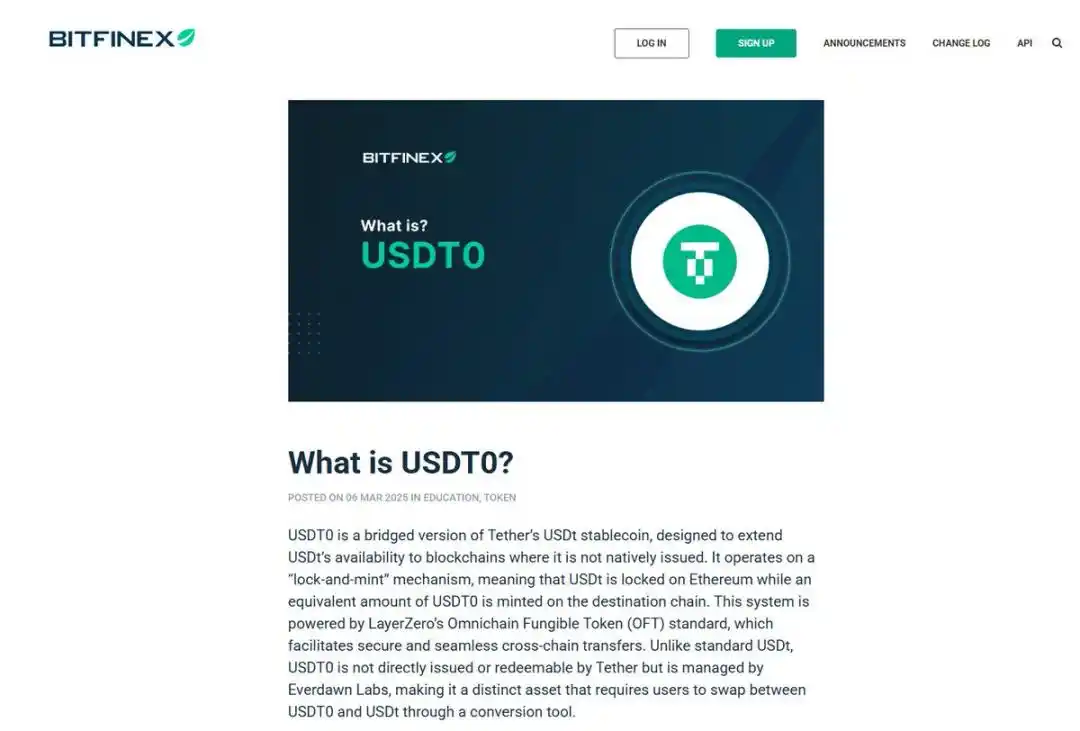
If nothing goes wrong—everyone benefits from the multi-chain convenience of USDT; if something goes wrong—then it's Everdawn Labs' fault, not Tether's. One reason for this speculation is that after the launch of USDT0 this year, the Tether team immediately expressed their support, followed by a dedicated article by Bitfinex. Without a strong relationship, they (BF and Tether) would not provide this kind of support.
What's the Evaluation?
In my opinion, if Tether is personally involved in this bridge, it's definitely a great move. This way, each chain's USDT can cross without loss, avoiding the need for various awkward third-party cross-chain bridges.
However, my level of trust in Layer0 is limited. In the past, there have been numerous high-profile cross-chain bridge failures, from multichain to thorchain. The technology behind cross-chain transactions is fundamentally simple, mainly relying on multi-signature setups. In the past, USDT used official bridges and did not utilize Layer0, a third-party bridge.
Official bridges are generally considered more secure, but they suffer from liquidity fragmentation. For example, if you want to move a large amount of capital from Arb to OP in a flash loan manner, you would need to first go back from Arb to ETH and then proceed to OP, which incurs additional costs for a faster transaction. PS: Not to mention chains like Sei, where even official bridge transactions incur fees for entry and exit.
On the other hand, if you opt for the USDT0 solution, Arb can directly move to OP in a flash and without loss. PS: Of course, there is a historical issue on OP where the USDT used is an older version of the ETH cross-chain version, while USDT0 represents the newer version. Thus, although theoretically viable to move funds from Arb to OP, in practice, it has been futile in the past. This is just an illustrative example.
New public chains, as they support USDT0 from the outset and lack historical issues, offer much higher usability. However, Tether itself is reluctant to directly engage in building this bridge and insists on sending a proxy like Everdawn Labs, which is a bit...
In the past, when I provided liquidity for $UNI on ETH, I only had to consider the minor third-party risks of Tether and Uniswap. Now, I have to bear an additional 4 risks: Everdawn going rogue, L0 going rogue, Unichain going rogue, USDT0 supporting other N chains, and each one potentially going rogue.
It sounds a bit overwhelming.
You may also like

Perp DEX: The Next Generation Exchange "War"

10 Counterintuitive Insights on Latin American Payments

The AI gamble of mining companies: Valuations enter a phase of differentiation, and it's hard to turn the tide

A letter from Alliance to entrepreneurs: Written on the occasion of Cursor selling for 60 billion dollars

Stablecoins Finally Find Real Returns: On-Chain Reinsurance Re Explained | Interview with Re Founder Karan Saroya

The impossible triangle is simply a pseudo problem

Will MicroStrategy fall into a death spiral? What will the macro trend be in the second half of the year?

Blockchain Capital Partner: The Core Secret of Arbitrage
STRC unanchored by 11%, can the perpetual motion machine of Strategy still operate?

Bitcoin Market Analysis 2026: Can BTC Reach $150K by Year-End?
Bitcoin ETF Outflows Hit a Record $4.4 Billion: What Are Traders Doing With Their Cash?
WEEX App Just Got Smarter – New Tabs for Faster Trades & Easy Asset Management

WEEX All-New Search Features: Find, Trade & Earn Faster Than Ever

Morning Report | Illinois signs the strictest digital asset tax law in the U.S.; RWA tokenization market size surpasses $43 billion, institutions accelerate the migration of on-chain assets
Full version of the debut Q&A! Federal Reserve Chairman Waller: Sticking to the 2% inflation target, establishing five special working groups, individual did not submit the dot plot

From Disruptor to Shadow Market: The Crypto Market is Becoming a Colony of Traditional Finance
Dalio's important long article: How to position in the current market environment?
OKX Star analyzes Binance's competitive advantages: when regulation levels the playing field, competition has just begun
Perp DEX: The Next Generation Exchange "War"
10 Counterintuitive Insights on Latin American Payments
The AI gamble of mining companies: Valuations enter a phase of differentiation, and it's hard to turn the tide
A letter from Alliance to entrepreneurs: Written on the occasion of Cursor selling for 60 billion dollars
Stablecoins Finally Find Real Returns: On-Chain Reinsurance Re Explained | Interview with Re Founder Karan Saroya
The impossible triangle is simply a pseudo problem


