
 Buy Crypto
- Markets
 Futures
- Spot
- Copy Trade
- Earn
- More
These former crypto builders have joined the world's hottest AI project


Someone who can be at the top of a certain field is often not because they caught the wave but because they have the ability to make things happen.
These abilities are transferable. So we can see an interesting phenomenon: in the past few years, the smartest, most aggressive, and most restless group of people in the cryptocurrency industry are now frequently appearing in the AI world.
Some are writing macro essays that influence Silicon Valley's judgment, some are leading strategic decisions at top AI companies, and some are building the infrastructure that developers use every day.
Although many who have moved away are reluctant to mention cryptocurrency again, it is undeniable that cryptocurrency, like a training camp, has cultivated batch after batch of people with judgment, risk awareness, and an exceptional sensitivity to the "power structure," reshaping another industry.
Alex Atallah
If you have done AI development, you have most likely used or heard of OpenRouter, a unified API that connects to hundreds of large models, from the GPT series to Claude to Llama to various open-source models, allowing you to use whichever one you want.
Its emergence solved a very practical problem: by 2026, model layer iterations were too fast, each company had different interface standards, and developers could easily get overwhelmed just by managing "which model to use."
And the founder of OpenRouter is Alex Atallah.
Before AI, he had an even more famous identity, the co-founder and CTO of OpenSea.

Prior to dominating the AI infrastructure race, Alex had already established himself in the tech world. As one of the rare breakout products in the cryptocurrency industry, OpenSea propelled the NFT market from a niche gadget to a multi-billion-dollar valuation platform.
From OpenSea to OpenRouter, he transferred his integration thinking from the cryptocurrency industry to AI. He realized that the models of the AI era are like the tokens or protocols of the Web3 era, inevitably undergoing a process from chaos to aggregation. Currently, he is leveraging his experience in high-concurrency processing accumulated in the crypto world and a profound understanding of decentralized distribution to build OpenRouter as the underlying "app store" of the AI era.
Kris Marszalek
In 2025, someone spent $70 million to acquire the domain AI.com.
This person was Kris Marszalek, Co-Founder and CEO of Crypto.com.
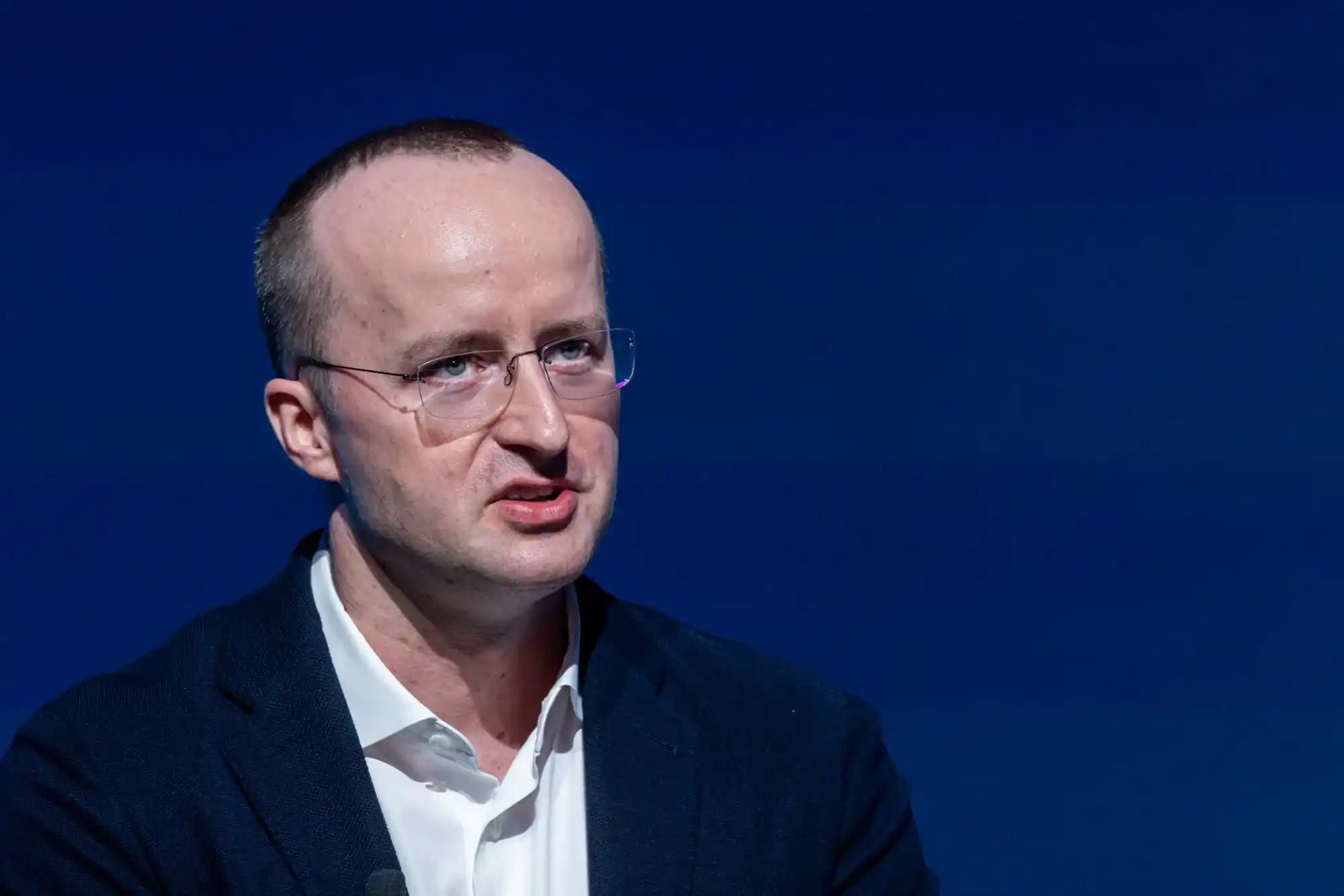
In the crypto community, Kris is most famous for renaming the Staples Center in Los Angeles to Crypto.com Arena, as well as the Super Bowl ad that ingrained the name "Crypto.com" in countless people's minds.
After acquiring AI.com, he plans to turn this domain into an AI Agent integration platform. No longer keeping AI confined to a "chat box," but transforming it into a "digital employee" capable of booking tickets for users, managing finances, and even handling complex workflows.
Leopold Aschenbrenner
If you've been around the AI scene for a while, you've probably heard this name before, a Columbia University graduate who was just 19 years old, later expelled from OpenAI, and then turned to managing a multi-billion dollar fund.

As one of the most controversial and talented young talents in the modern AI field, Leopold Aschenbrenner has become a top AI macro strategist and investment tycoon in Silicon Valley. He currently heads the multi-billion dollar investment fund Situational Awareness LP, specializing in betting on the underlying core supporting the AGI process: power infrastructure, cutting-edge semiconductors, and massive computing centers.
Many people came to know him through his famous 165-page essay "Situational Awareness," predicting the arrival of AGI around 2027. He is not only a core member of the former "super-alignment" team at OpenAI but also a key advocate driving the United States to elevate AI development to the level of a "Manhattan Project," recognized as one of the few prophets able to foresee the evolution of large models' black boxes.
Interestingly, Leopold's starting point was not in AI but in crypto.
Around 2022, at the age of just 19, after graduating from Columbia University, he joined the FTX Future Fund, funded by the founder of the cryptocurrency exchange FTX, Sam Bankman-Fried (SBF). In this fund with a strong Effective Altruism (EA) color, Leopold was not delving into the secondary market speculation of the crypto world but was responsible for evaluating how to use crypto wealth to mitigate existential risks to humanity.
It was this experience working at the top-tier think tank in the crypto space that allowed him to get an early look into in-depth research on AI Risk and taught him how to think about the ultimate trajectory of technology in the context of large-scale capital flows.
Avital Balwit
In addition to Leopold Aschenbrenner, former senior assistant at FTX Future Fund, Avital Balwit, has also entered the AI industry, becoming a core decision-maker at Anthropic, the currently most-watched AI startup globally.
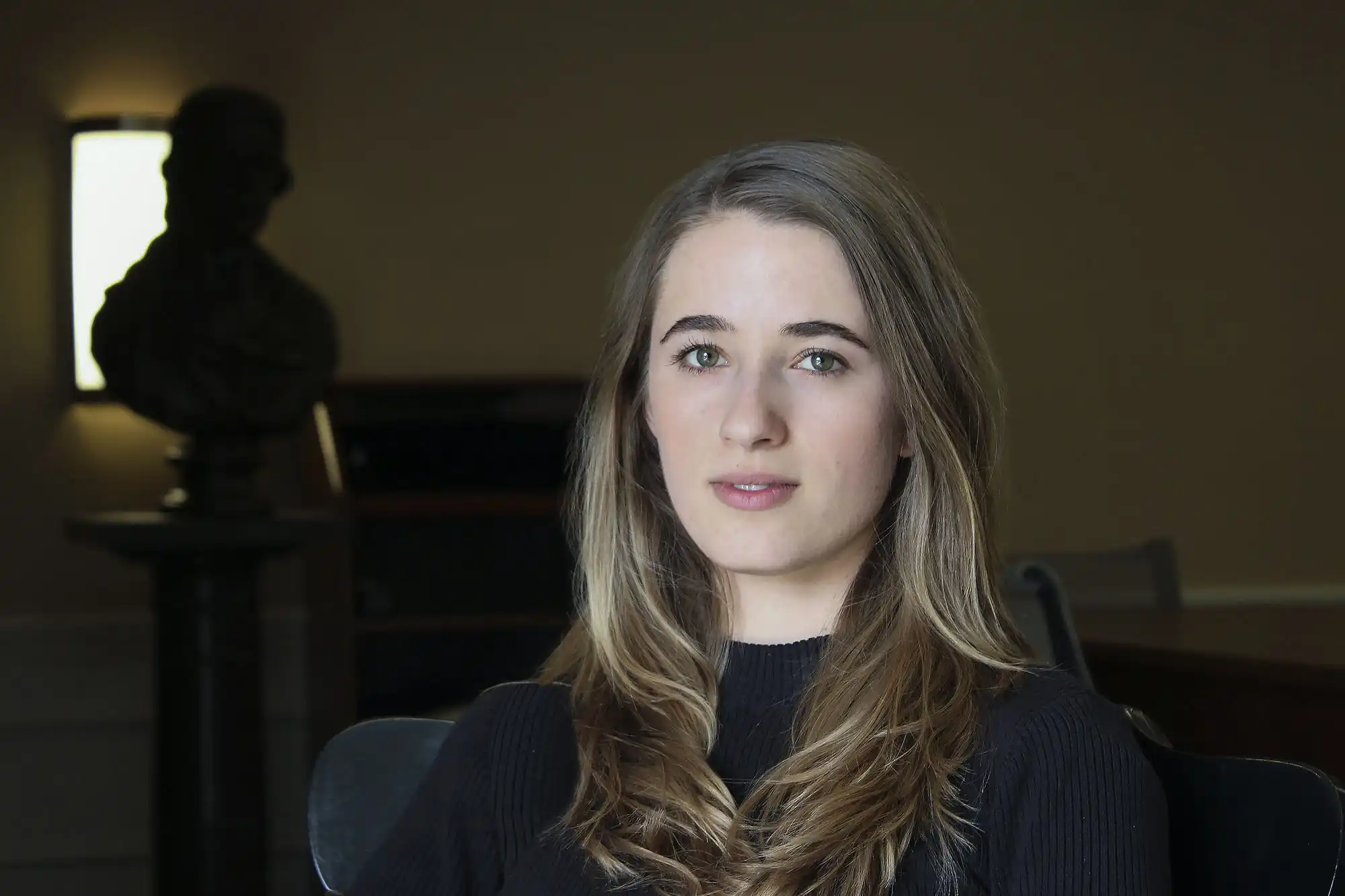
Avital Balwit currently serves as Chief of Staff to Anthropic's CEO Dario Amodei, where she is involved in top-level strategic decisions for the company and coordinates resources in this model competition between Anthropic and OpenAI. After all, Anthropic's star product, Claude, is gradually catching up with ChatGPT.
Avital Balwit is most famous in the AI circle not solely for this role, but for the articles she has written. She has earnestly discussed "Where Does Humanity's Sense of Meaning Come From in a Post-Work Era," profoundly shaping Silicon Valley's contemplation on social forms post-AGI proliferation, thus becoming one of the most influential cultural commentators in the AI era.
Back in the lab funded by the cryptocurrency giant SBF, she was responsible for screening and evaluating projects that could withstand AI-induced existential risks, biosecurity, and long-term governance. Anthropic, at that time, was one of their investment projects under the FTX Future Fund, with SBF investing $580 million in this AI project in 2023.
Furthermore, Avital's recent perspectives on "UBI in the AI Era" are very unique, largely benefiting from her early research on decentralized distribution in the Web3 space.
Emad Mostaque
Many know Emad from Stable Diffusion.
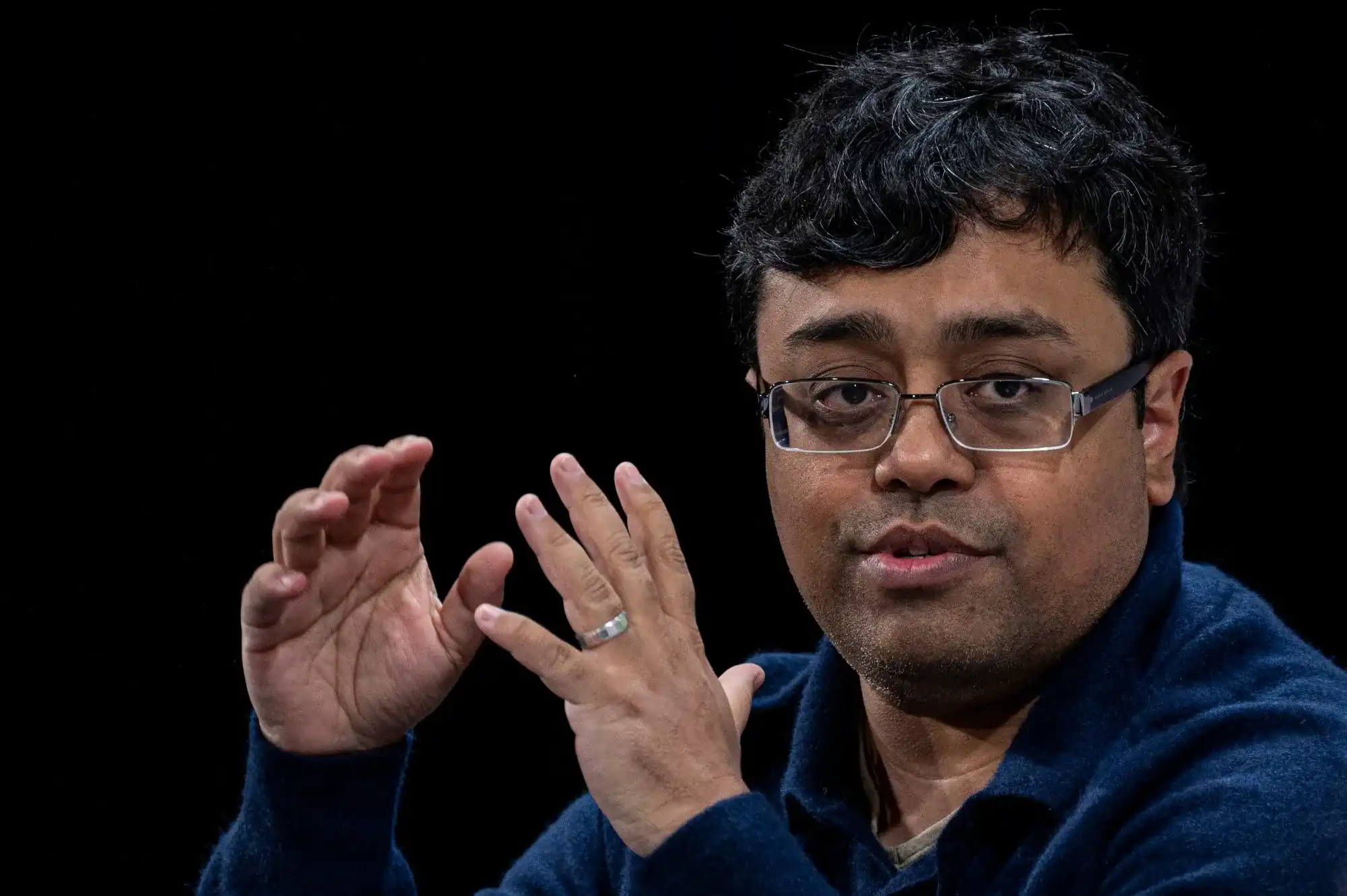
But in fact, Emad's career started in finance. He began managing his own hedge fund at the age of 23 and later served as co-CIO at Capricorn Long/Short EM, focusing on emerging market strategies. In 2017, the fund he led received the Annual Emerging Markets Risk-Adjusted Hedge Fund Award. From 2005 to 2020, he spent a full fifteen years in the global macro hedge fund space, researching "systemic trends" such as economic cycles, policy changes, and the long-term impact of technological disruptions on asset prices.
In 2013, he started to get involved with btc-42">Bitcoin and Ethereum, initially as an investor and later as an angel investor in several early-stage crypto projects.
In 2019, Emad worked on a project called Symmitree, aiming to leverage blockchain technology to reduce the barriers for underprivileged populations to access digital technologies. The project ran for about a year but eventually stalled as it faced a major challenge – various centralized institutions, including hospitals, governments, and tech companies, were unwilling to open up their data and models, even in the face of a global public health crisis.
Emad later mentioned that this experience was pivotal in making him realize that centralization is not just an efficiency issue but a systemic one. No one would voluntarily relinquish control over their data and computing power unless the design incentivizes cooperation. Thus, in 2020, Emad founded Stability AI. He believed that AI should not be confined to a few exclusive labs; models should be open-source, training processes should be transparent, and anyone should be able to build on top of them.
In 2022, Stable Diffusion was released, marking the first significant breach of the fortress of commercial proprietary models by an open-source image generation model. During that period, Stability AI's valuation skyrocketed to the billion-dollar range, and Emad himself became a prominent figure in the open-source AI movement.
However, internal issues within the company were also accumulating. Controversies regarding his management style, questions about the mismatch between the burn rate and revenue, the departure of several key researchers... In early 2024, amidst growing controversy, he departed from Stability AI.
You may also like

Morning News | The Hong Kong Securities and Futures Commission announced the regulatory framework for secondary market trading of tokenized investment products; Strategy increased its holdings by 34,164 bitcoins last week; KAIO completed a strategic fi...

What Is an XRP Wallet? The Best Wallets to Store XRP (2026 Updated)
An XRP wallet lets you safely store, send, and receive XRP on the XRP Ledger. Learn what wallets support XRP and discover the best XRP wallets for beginners and long-term holders in 2026.

What are the Top AI Crypto Coins? Render vs. Akash: 5 Gems Solving the 2026 GPU Crisis
What are the best AI crypto coins for the 2026 cycle? Beyond the hype, we analyze top tokens like RNDR, AKT, and FET that provide real-world solutions to the global GPU shortage and the rise of autonomous agents.

What Is a Token in AI? What Is an AI Token + 3 Gems You Can't Miss in 2026
The era of AI hype has transitioned into an era of utility. As we move through Q2 2026, the market is no longer rewarding "narrative-only" projects. At WEEX Research, we are seeing a massive capital rotation into Decentralized Compute (DePIN) and Autonomous Agent coordination layers. This guide analyzes which AI tokens are capturing institutional liquidity and how to spot high-conviction setups in a maturing market.

Consumer-grade Crypto Global Survey: Users, Revenue, and Track Distribution

Prediction Markets Under Bias

Stolen: $290 million, Three Parties Refusing to Acknowledge, Who Should Foot the Bill for the KelpDAO Incident Resolution?

ASTEROID Pumped 10,000x in Three Days, Is Meme Season Back on Ethereum?

ChainCatcher Hong Kong Themed Forum Highlights: Decoding the Growth Engine Under the Integration of Crypto Assets and Smart Economy

Why can this institution still grow by 150% when the scale of leading crypto VCs has shrunk significantly?

Anthropic's $1 trillion, compared to DeepSeek's $100 billion

Geopolitical Risk Persists, Is Bitcoin Becoming a Key Barometer?

Annualized 11.5%, Wall Street Buzzing: Is MicroStrategy's STRC Bitcoin's Savior or Destroyer?
An Obscure Open Source AI Tool Alerted on Kelp DAO's $292 million Bug 12 Days Ago

Mixin has launched USTD-margined perpetual contracts, bringing derivative trading into the chat scene.
The privacy-focused crypto wallet Mixin announced today the launch of its U-based perpetual contract (a derivative priced in USDT). Unlike traditional exchanges, Mixin has taken a new approach by "liberating" derivative trading from isolated matching engines and embedding it into the instant messaging environment.
Users can directly open positions within the app with leverage of up to 200x, while sharing positions, discussing strategies, and copy trading within private communities. Trading, social interaction, and asset management are integrated into the same interface.
Based on its non-custodial architecture, Mixin has eliminated friction from the traditional onboarding process, allowing users to participate in perpetual contract trading without identity verification.
The trading process has been streamlined into five steps:
· Choose the trading asset
· Select long or short
· Input position size and leverage
· Confirm order details
· Confirm and open the position
The interface provides real-time visualization of price, position, and profit and loss (PnL), allowing users to complete trades without switching between multiple modules.
Mixin has directly integrated social features into the derivative trading environment. Users can create private trading communities and interact around real-time positions:
· End-to-end encrypted private groups supporting up to 1024 members
· End-to-end encrypted voice communication
· One-click position sharing
· One-click trade copying
On the execution side, Mixin aggregates liquidity from multiple sources and accesses decentralized protocol and external market liquidity through a unified trading interface.
By combining social interaction with trade execution, Mixin enables users to collaborate, share, and execute trading strategies instantly within the same environment.
Mixin has also introduced a referral incentive system based on trading behavior:
· Users can join with an invite code
· Up to 60% of trading fees as referral rewards
· Incentive mechanism designed for long-term, sustainable earnings
This model aims to drive user-driven network expansion and organic growth.
Mixin's derivative transactions are built on top of its existing self-custody wallet infrastructure, with core features including:
· Separation of transaction account and asset storage
· User full control over assets
· Platform does not custody user funds
· Built-in privacy mechanisms to reduce data exposure
The system aims to strike a balance between transaction efficiency, asset security, and privacy protection.
Against the background of perpetual contracts becoming a mainstream trading tool, Mixin is exploring a different development direction by lowering barriers, enhancing social and privacy attributes.
The platform does not only view transactions as execution actions but positions them as a networked activity: transactions have social attributes, strategies can be shared, and relationships between individuals also become part of the financial system.
Mixin's design is based on a user-initiated, user-controlled model. The platform neither custodies assets nor executes transactions on behalf of users.
This model aligns with a statement issued by the U.S. Securities and Exchange Commission (SEC) on April 13, 2026, titled "Staff Statement on Whether Partial User Interface Used in Preparing Cryptocurrency Securities Transactions May Require Broker-Dealer Registration."
The statement indicates that, under the premise where transactions are entirely initiated and controlled by users, non-custodial service providers that offer neutral interfaces may not need to register as broker-dealers or exchanges.
Mixin is a decentralized, self-custodial privacy wallet designed to provide secure and efficient digital asset management services.
Its core capabilities include:
· Aggregation: integrating multi-chain assets and routing between different transaction paths to simplify user operations
· High liquidity access: connecting to various liquidity sources, including decentralized protocols and external markets
· Decentralization: achieving full user control over assets without relying on custodial intermediaries
· Privacy protection: safeguarding assets and data through MPC, CryptoNote, and end-to-end encrypted communication
Mixin has been in operation for over 8 years, supporting over 40 blockchains and more than 10,000 assets, with a global user base exceeding 10 million and an on-chain self-custodied asset scale of over $1 billion.

$600 million stolen in 20 days, ushering in the era of AI hackers in the crypto world
Vitalik's 2026 Hong Kong Web3 Summit Speech: Ethereum's Ultimate Vision as the "World Computer" and Future Roadmap
On the same day Aave introduced rsETH, why did Spark decide to exit?
Morning News | The Hong Kong Securities and Futures Commission announced the regulatory framework for secondary market trading of tokenized investment products; Strategy increased its holdings by 34,164 bitcoins last week; KAIO completed a strategic fi...
What Is an XRP Wallet? The Best Wallets to Store XRP (2026 Updated)
An XRP wallet lets you safely store, send, and receive XRP on the XRP Ledger. Learn what wallets support XRP and discover the best XRP wallets for beginners and long-term holders in 2026.
What are the Top AI Crypto Coins? Render vs. Akash: 5 Gems Solving the 2026 GPU Crisis
What are the best AI crypto coins for the 2026 cycle? Beyond the hype, we analyze top tokens like RNDR, AKT, and FET that provide real-world solutions to the global GPU shortage and the rise of autonomous agents.
What Is a Token in AI? What Is an AI Token + 3 Gems You Can't Miss in 2026
The era of AI hype has transitioned into an era of utility. As we move through Q2 2026, the market is no longer rewarding "narrative-only" projects. At WEEX Research, we are seeing a massive capital rotation into Decentralized Compute (DePIN) and Autonomous Agent coordination layers. This guide analyzes which AI tokens are capturing institutional liquidity and how to spot high-conviction setups in a maturing market.



 App
App