
- Buy Crypto
- Markets
 Futures
- Spot
- Copy Trade
- Earn
- More
「Zero Fee」 Illusion: Lighter Nodes Shifted Costs with High Latency

Original Article Title: Lighter's "0% Fees" Are Actually 5-10x More Expensive Than Other Exchanges
Original Article Author: @PerpetualCow, Crypto Influencer
Original Article Translation: AididiaoJP, Foresight News
There's a saying in the market: If a product is free, then you are the product.
Lighter DEX is currently promoting "zero fees" to retail traders. It sounds too good to be true, and indeed it is.
However, what Lighter didn't prominently display is the toll structure behind these "free" trades.
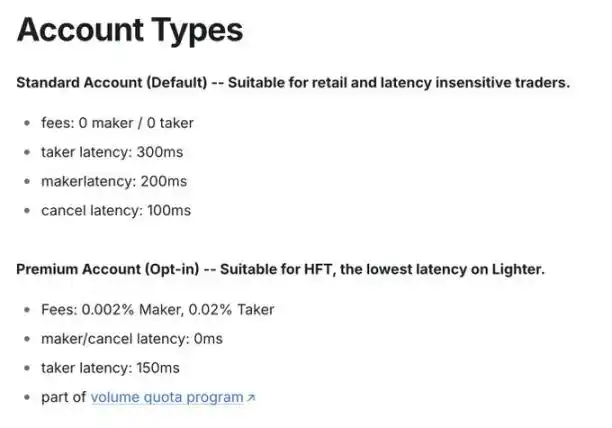
Lighter offers two account types: once you understand how the toll structure works, you'll realize that the 0% fee is actually the most expensive tier on the platform.
That 200-300 millisecond delay is the crux of their business model.
What Does 300 Milliseconds Really Mean?
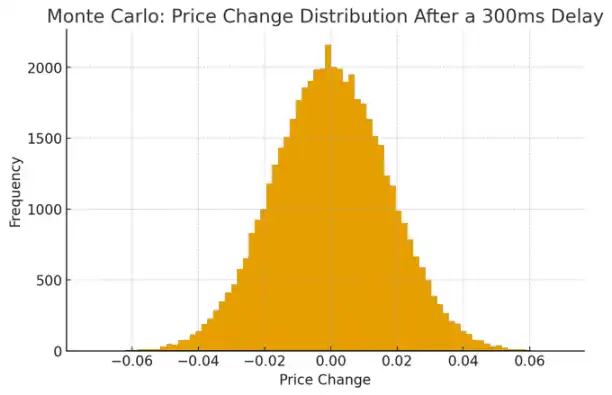
An average human blink takes about 100-150 milliseconds. By the time you blink twice, faster traders have already captured price movements, adjusted positions, and engaged in a trade against you.
The crypto market is highly volatile, with typical volatility levels (50-80% annualized), causing prices to move about 0.5 to 1 basis point per second.
This means that within 300 milliseconds, market noise alone can cause prices to move on average 0.15-0.30 basis points.
The True Cost of "Free"
If we quantify it:
Academic research on adverse selection costs (Glosten & Milgrom, Kyle's Lambda, etc.) indicates that the informational advantage of informed traders is usually 2-5 times the magnitude of price random walk.
If the random slippage within 300 milliseconds is about 0.2 basis points, then adverse selection would add an additional 0.4-1.0 basis points.
For active traders and liquidity providers, the actual costs are roughly as follows:
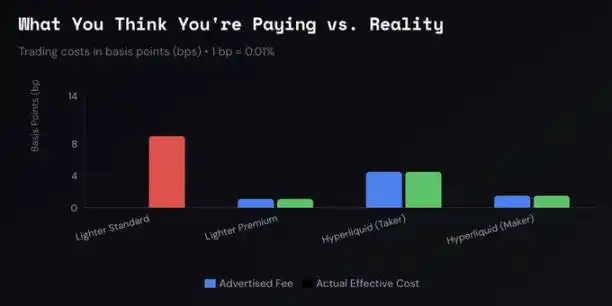
· Standard Account Actual Cost: 6–12 basis points (0.06%–0.12%) per transaction
· Advanced Account Actual Cost: 0.2–2 basis points (0.002%–0.02%) per transaction
The cost of a "free" account is 5–10 times higher than that of a paid account.
Zero transaction fee is just a marketing number; the real cost is hidden in the latency.
The advanced account is actually more cost-effective, without a doubt
In any case, the standard account (0% fee) is not the preferable choice.
It is not suitable for small retail investors, large holders, scalpers, day traders, or even passive investors. Especially not for liquidity providers, or anyone, for that matter.
"I am just a small retail investor; I don't need an advanced infrastructure."
Wrong.
Small retail investors are more vulnerable to slippage. If you trade with $1,000 and lose 10 basis points per trade, it is like losing $1 each time. After 50 trades, 5% of your account will silently disappear.
"I don't trade frequently; latency doesn't affect me."
Also wrong.
If you don't trade frequently, the cost of an advanced account is negligible anyway.
Yet even in a few trades, the execution price you receive is still worse. Since the cost of avoiding such losses is almost zero, why accept any disadvantage?
Directly upgrade to an advanced account.
This model has a precedent
The traditional financial markets have long witnessed this tactic, known as payment for order flow.
@RobinhoodApp once attracted retail investors with "commission-free trading," then routed orders to liquidity providers, allowing them to profit by trading against the uninformed orders of retail investors, thus popularizing this model.
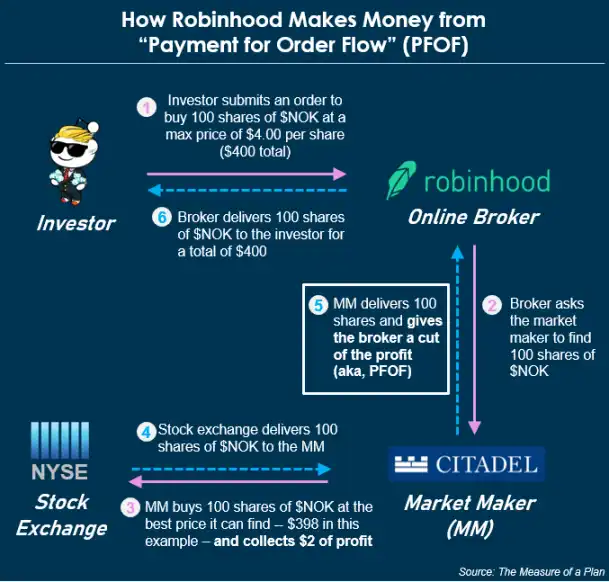
Lighter's model is structurally similar to this. Standard accounts do not receive free trades; they receive slower trades. This latency is transformed into profit by faster participants.
The trading platform does not need to charge you a fee because you are actually paying with execution quality.
What Lighter Did Right and Wrong
Lighter did not conceal latency data, as it was clearly stated in the documentation.
However, transparency does not equal clarity.
By highlighting "0% Fee" in the headline but burying "300ms Latency" in the fine print, Lighter employed a strategy focused on registration conversion rates rather than user understanding.
Most retail traders do not understand the implications of latency, are unaware of adverse selection, and naturally cannot calculate the equivalent actual cost.
Lighter is clear about this.
Advanced accounts are more cost-effective in every way compared to the standard "zero-fee" account—there is no debate about this.
You may also like

What are the key highlights of this year's Ethereum's most important upgrade, the Glamsterdam upgrade?

March 6 Key Market Update You Can't Miss! | Alpha Morning Report

Sell Nvidia, Buy Power Plant: 27-Year-Old AI Investor Earns $5 Billion in One Year
The $24 Million Heist Behind It: The Most Dangerous Vulnerability in the Crypto World is Actually Human

Justin Sun Lawsuit Dismissed, BlackRock Bullish on Tokenization, What Is the English-Speaking Community Paying Attention To?

Morning News | NYSE parent company invests in OKX; Morgan Stanley provides $500 million loan to Core Scientific; Western Union partners with Crossmint to launch stablecoin USDPT

These former crypto builders have transitioned to the hottest AI projects globally

Ethereum Overhaul 2026 Blueprint, this time to abandon "gradualism"

What Is OpenClaw? How AI Agents Could Change Crypto Exchange Trading
OpenClaw is a rapidly growing open-source AI agent that can autonomously execute tasks and interact with software, including connecting to crypto exchanges through APIs to analyze markets and automate trading strategies. While this creates new opportunities for smarter trading, it also introduces security and operational risks. Through this article, WEEX aims to help users better understand the potential and risks of AI trading agents so they can explore new technologies while trading more safely and responsibly.
Ethereum 2029 Strawmap Guide: Ultra-Fast Consensus, Native Privacy, and the "Acceleration Variables" Brought by AI

Altcoin ETF Surge: SOL and XRP Inflows Total $23 Million as Institutions Diversify
Key Takeaways Institutional interest in altcoin ETFs is expanding, with SOL and XRP showing significant inflows on March…
Vitalik Drops Ethereum Endgame Bombshell: ETH USD to $3,000?
Key Takeaways Vitalik Buterin introduces the “Sanctuary Tech” manifesto to address Ethereum’s non-financial limitations. A current lack of…
Exclusive: Yuliya Barabash Predicts the Most Regulated Could Be the Biggest Crypto Winners
Key Takeaways The aftermath of FTX and Celsius collapses has ushered a new regulatory era, reshaping the crypto…

iPhone Crypto Wallets Under Threat from State-Grade Malware
Key Takeaways: The Coruna exploit kit exploits 23 iOS vulnerabilities, threatening iPhone users’ crypto wallets. Initially state-level surveillance,…

Bitcoin Nears Two-Year ‘Make-or-Break’ Resistance: Future Implications
Key Takeaways Bitcoin’s price is approaching key resistance levels around $73,000, observed for the first time since early…
Bitcoin Price Prediction: Analyst Says $220,000 BTC Is Coming — But Only After This Happens
Key Takeaways: Bitcoin may experience a significant drop before the next major rally begins, potentially revisiting the $50,000…

Solana Price Outlook: All Eyes Focused on $95 — Could This Trigger New SOL Highs?
Key Takeaways Solana’s price is approaching a pivotal $95 mark, which may indicate potential support or resistance for…

Advanced AI Predicts Future Prices for XRP, Solana, and Cardano by 2026
Key Takeaways: Claude AI predicts significant price increases for XRP, Solana, and Cardano by the end of 2026.…


 App
App