
PayPal Stock Jumps 17% on Stripe and Advent's $53 Billion Takeover Bid: What Investors Should Know

 Prefer us on Google


PayPal stock produced one of its best single day performances in years on July 15, and the reason is straightforward. Stripe, the privately held payments giant founded by Patrick and John Collison, and private equity firm Advent International jointly approached PayPal's board with an acquisition offer valuing the company at approximately $53 billion. The bid landed at $60.50 per share, a roughly 28% premium to the prior close, backed by approximately $50 billion in committed bank financing.
PayPal stock at approximately $55 after the jump is still trading below the bid price. That gap tells you something specific about how investors are reading the situation. A stock trading at a meaningful discount to a takeover offer is not a market that believes the deal closes at the offered terms. It is a market pricing the probability that the deal does not happen, that it happens at a different price, or that regulators create complications neither side anticipated when the offer was assembled.
Those three scenarios, and what each means for investors holding or considering PayPal stock, are what the rest of this guide addresses.
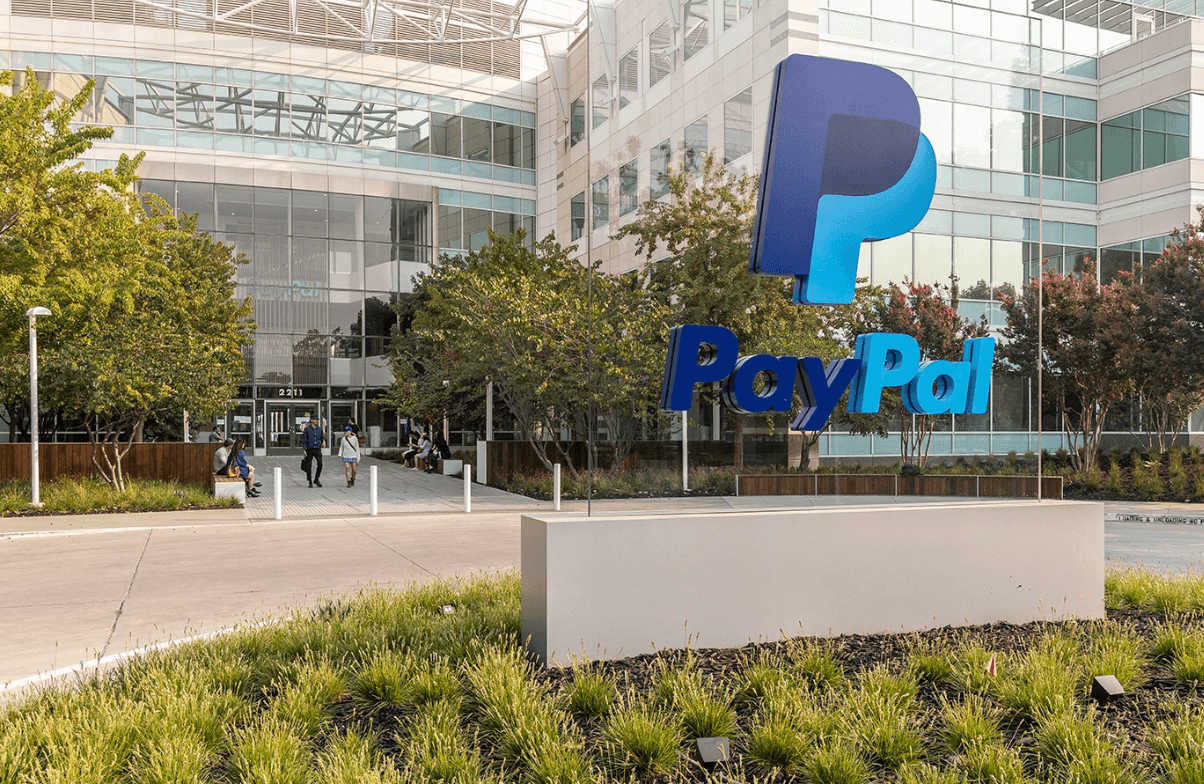
What Stripe and Advent Actually Proposed
The offer reported by Bloomberg and confirmed by CNBC's David Faber involves Stripe, the privately held payments company founded by Patrick and John Collison, and Advent International, one of the world's largest private equity firms, making a joint acquisition approach to PayPal's board.
The proposed terms value PayPal at $60.50 per share, representing a roughly 28% premium to the prior closing price. The transaction is reportedly backed by approximately $50 billion in committed bank financing, which indicates this is a serious financial proposal rather than an exploratory expression of interest. Committed bank financing at that scale requires significant due diligence and credit committee approvals before it is assembled, which means Stripe and Advent have been working on this approach for some time before it became public.
The proposed structure would have Stripe and Advent each hold an equal stake in PayPal and keep the company intact as a combined entity rather than separating its consumer and merchant businesses. That structure is strategically meaningful because one of the persistent questions about PayPal has been whether its consumer-facing business, the PayPal wallet and Venmo, and its merchant-facing business, the payment processing infrastructure, would be worth more separated than combined. The Stripe and Advent proposal implicitly answers that question by choosing to preserve the integrated structure.
The strategic logic from Stripe's perspective is direct. Stripe has built one of the world's strongest merchant-focused payment platforms, serving online businesses, marketplaces, and financial technology companies. PayPal brings a consumer network of hundreds of millions of active accounts, the Venmo platform with its social payments functionality, and a global merchant acceptance network that would combine with Stripe's technology platform to create a payments entity with coverage across both sides of the transaction.
Why the Market Is Not Trading PayPal at $60.50
If the market believed the deal would close at $60.50, PayPal stock would be trading at or very near $60.50. The fact that it closed at approximately $55 and is trading near that level today tells investors that the market is assigning a meaningful probability to one of three alternative scenarios rather than treating the deal as done.
The first alternative is that the deal does not happen at all. PayPal's board rejects the offer, Stripe and Advent walk away, and the stock retraces toward the pre-announcement range in the low-to-mid $40s. A stock that is trading at a significant discount to a bid reflects the probability-weighted average of the deal closing at $60.50 and the deal not closing at a much lower price.
The second alternative is that the deal happens but at a higher price. William Blair analyst Andrew Jeffrey suggested PayPal's new CEO may not embrace what could be seen as a low offer, and that Stripe and Advent could potentially move closer to $70 per share if negotiations advance. If the market believes there is a meaningful probability of a higher offer, the stock trading at $55 rather than $60.50 is rational because it is pricing a blend of the $60.50 scenario, the higher offer scenario, and the no-deal scenario.
The third alternative is regulatory. A combination of Stripe and PayPal would create one of the most dominant payments entities in the world. Regulatory scrutiny in the United States, the European Union, and other jurisdictions where both companies operate could block or significantly delay the transaction regardless of whether the parties reach agreement on price.
What William Blair Said About the $60.50 Offer
The specific analyst commentary that has received the most attention in the deal coverage is William Blair's assessment that $60.50 may be too low and that $70 is a more likely endpoint if negotiations proceed.
The argument behind the $70 figure is based on PayPal's fundamental valuation rather than on any specific deal mechanics. At $60.50, the transaction values PayPal at approximately 9 times trailing earnings, which is a multiple that reflects the market's recent skepticism about PayPal's growth trajectory rather than the strategic value of the combined Stripe-PayPal entity.
PayPal's trailing price-to-earnings ratio of approximately 9 times is extraordinarily low for a company with $8.35 billion in quarterly revenue, $1.1 billion in quarterly net income, 46% gross margins, and approximately $903 million in quarterly free cash flow. When PayPal was trading at peak enthusiasm a few years ago, the multiple exceeded 60 times earnings. The compression from 60 times to 9 times reflects a period of slowing growth, competitive pressure, and strategic uncertainty rather than any fundamental impairment of the business's cash generation ability.
At $70, the transaction would value PayPal at approximately 10.5 times trailing earnings, which is still a modest multiple for a business with PayPal's cash generation profile but represents the incremental premium that would be required to make the offer compelling enough for PayPal's board and new CEO to recommend.
What PayPal Is Doing With Goldman Sachs and Evercore
The engagement of Goldman Sachs and Evercore to review strategic options is significant information that goes beyond the specific Stripe and Advent offer.
Companies engage investment banks to review strategic options when the board has decided that the status quo is not the optimal outcome for shareholders and wants to understand the full range of alternatives. That review could result in acceptance of the Stripe and Advent offer at $60.50, negotiation of a higher price, identification of alternative bidders, or a determination that an independent path creates more value than any acquisition offer.
The involvement of two separate banks, Goldman Sachs and Evercore, rather than a single adviser is notable because it suggests the scope of the review is broad enough to require two distinct advisory relationships. In major corporate transactions, companies sometimes engage one bank for M&A advisory and a second for financing advice or independent valuation. The dual engagement signals that PayPal's board is taking the strategic review seriously rather than simply going through the motions before rejecting an unwelcome approach.
For investors evaluating PayPal stock at current prices, the Goldman Sachs and Evercore engagement is the most concrete signal that the board views the current situation as requiring active management rather than patience. A board that was comfortable with the independent trajectory would not be running a formal strategic review with two investment banks simultaneously.
The Open USD Stablecoin Development That Arrived Simultaneously
One PayPal development that has been partially overshadowed by the acquisition news but that represents a meaningful strategic development in its own right is the company's participation in Open USD, a new dollar backed stablecoin backed by more than 140 partners including Visa and Mastercard.
PayPal is backing Open USD alongside Visa and Mastercard, with revenue sharing on reserves and governance rights for consortium partners. For a company that already launched PYUSD, its own dollar-backed stablecoin on Ethereum and Solana, the Open USD participation reflects a strategic judgment that the stablecoin market is moving toward industry consortia rather than proprietary solutions.
For PayPal stock investors, the Open USD participation is relevant in two ways. First, it demonstrates that PayPal is actively positioning for the evolution of digital payments rather than defending its existing position from a posture of decline. Second, it creates a specific strategic asset that any acquirer would incorporate into their valuation, because the revenue sharing and governance rights that come with Open USD participation have long-term value that is not visible in PayPal's current income statement.
What the Fundamentals Say About PayPal's Standalone Value
The acquisition news should not obscure the fact that PayPal's standalone fundamental value, independent of any deal, has not been adequately reflected in the stock price at the pre-announcement levels near $44.
PayPal generated approximately $8.35 billion in quarterly revenue with $1.11 billion in net income, approximately 19.4% EBIT margins, and approximately $903 million in free cash flow. A price-to-earnings ratio of approximately 9 times on those metrics is extremely compressed for a company with PayPal's scale, brand recognition, and network effects.
The compression reflects genuine business concerns. PayPal faces intensifying competition from Apple Pay, Google Pay, Block, and Stripe itself in the consumer payments market. Transaction volume growth has slowed from the extraordinary pandemic-era rates. The company has gone through multiple leadership transitions that created strategic uncertainty.
But the fundamental business has not broken. It is generating real profits at real scale. PayPal has hundreds of millions of active accounts that represent a consumer network any acquirer would value. Venmo has established a specific social payments identity with younger consumers that competitors have not replicated. The merchant network that processes trillions of dollars in annual payment volume is a physical and digital distribution asset that requires years and billions of dollars to build.
The $60.50 offer is the market's first explicit signal that sophisticated buyers with billions in committed financing see more value in PayPal than the public market has been willing to assign. Whether $60.50 or $70 or some other number captures that value accurately is what the strategic review with Goldman Sachs and Evercore will determine.
What Happens to PayPal Stock If the Deal Falls Through
The most important question for investors who are considering buying PayPal stock at current levels rather than waiting for deal clarity is what happens if the deal does not happen.
A deal failure scenario that returned PayPal stock to the pre-announcement range near $44 would represent approximately a 20% decline from current levels. That downside scenario is the specific risk that explains why the stock is trading at $55 rather than at the $60.50 bid price.
However, the deal failure scenario is not the same as the pre-announcement business situation. PayPal's board has now publicly acknowledged through the Goldman Sachs and Evercore engagement that it is reviewing strategic options. Once a company runs a formal strategic review, the outcome is not simply returning to the prior status quo. The review either results in a transaction, identifies operational improvements that the market assigns incremental value to, or demonstrates that the standalone path is more valuable than available alternatives. In any of those outcomes, the strategic clarity that the review provides has value relative to the prior uncertainty.
William Blair's note titled Don't Chase It specifically cautions investors against buying at current levels specifically because the deal uncertainty creates downside risk that is not offset by a compelling fundamental thesis at $55. That caution is analytically coherent and investors should incorporate it alongside the bull case rather than dismissing it.
For those looking to participate in global financial markets, having access to the right trading platform matters. WEEX offers crypto and stock trading products, covering major global markets including US stocks and digital assets.
Conclusion
PayPal stock's 17% jump on the Stripe and Advent takeover bid is the market pricing a probability-weighted range of outcomes rather than accepting the $60.50 offer as the final answer. The stock trading at a discount to the bid reflects deal uncertainty, regulatory risk, and the possibility that PayPal's board negotiates for a higher price before accepting any offer.
The fundamental case for PayPal stock at current prices rests on a business generating approximately $900 million in quarterly free cash flow at approximately 9 times trailing earnings, a strategic review with two investment banks signaling that the board is actively seeking to maximize shareholder value, and the William Blair assessment that $70 is a more appropriate price if negotiations advance.
The risk case rests on William Blair's Don't Chase It caution, the regulatory complexity of combining two dominant payments platforms, and the downside to the low to mid $40s if the deal falls through entirely without an alternative buyer or improved standalone strategy emerging.
The deal uncertainty will resolve on a timeline determined by PayPal's board and the strategic review process rather than by any market driven catalyst. What PayPal stock does between now and that resolution will reflect the market's continuously updating assessment of which outcome is most probable.
FAQ
1. What is the Stripe and Advent takeover offer for PayPal?
Stripe, the privately held payments company, and Advent International, a private equity firm, jointly offered approximately $53 billion to acquire PayPal at $60.50 per share, representing a roughly 28% premium to the prior close. The proposal is backed by approximately $50 billion in committed bank financing and would have Stripe and Advent each hold equal stakes while keeping PayPal intact.
2. Why is PayPal stock trading below the $60.50 bid price?
The stock trading at approximately $55 rather than $60.50 reflects the market pricing deal uncertainty rather than accepting the offer as final. The discount incorporates the probability that PayPal's board rejects the offer, that regulators block the transaction, or that the deal closes at the $60.50 level rather than a higher price that some analysts believe is more appropriate.
3. Why do analysts think $60.50 is too low?
William Blair analyst Andrew Jeffrey suggested the new PayPal CEO may not embrace what could be seen as a low offer and that negotiations could push the price closer to $70. At $60.50, the transaction values PayPal at approximately 9 times trailing earnings, which is a compressed multiple for a business generating approximately $900 million in quarterly free cash flow at 46% gross margins.
4. What is PayPal doing with Goldman Sachs and Evercore?
PayPal is working with Goldman Sachs and Evercore to review strategic options including a potential sale or breakup. The dual bank engagement signals the board is running a serious strategic review rather than simply responding to an unsolicited approach, and the outcome could include accepting the Stripe and Advent offer, negotiating a higher price, identifying alternative bidders, or determining that the independent path creates more value.
5. What happens to PayPal stock if the deal falls through?
A deal failure scenario would likely return PayPal stock toward the pre-announcement range in the low-to-mid $40s, representing approximately 20% downside from current levels. However, the ongoing strategic review with two investment banks means the board has acknowledged the need to maximize shareholder value through some path, and the outcome is not simply a return to prior business-as-usual regardless of whether the Stripe and Advent deal closes.
Disclaimer: This content is provided for general branding and informational purposes only and doesn't constitute financial, investment, legal, or tax advice. Any events, rewards, online events, or related information mentioned herein should not be considered a recommendation, solicitation, or invitation to purchase, sell, trade, or otherwise deal in any crypto assets or to use any services. Crypto assets are highly volatile and may result in loss. WEEX services and online events may not be available in all regions and are subject to applicable laws, regulations, and eligibility requirements. You are responsible for ensuring that your use of WEEX services complies with local laws and for carefully assessing the risks before participating in any crypto-related activities.
You may also like

Messi vs Mbappe Golden Boot Prediction Market: Who Wins the Race After the World Cup Final
Spain vs Argentina World Cup Final: What the Prediction Market Says and Why Traders Are Backing Spain
How to Buy TSMC Stock: What International Investors Need to Know Before Placing an Order

Is SPCX Stock Price a Buy Below Its IPO Price? What Happens Before August 6
SPCX Stock Price Falls Below IPO Price for the First Time: What Investors Should Do Now
TSMC Stock Price Prediction 2026-2027: Can TSM Reach $600 After the Q2 Beat?
Is TSMC Stock a Buy After Q2 Earnings? What 22x Forward Earnings and 61% AI Revenue Tell Investors

TSMC Stock Jumps After Record Q2 Earnings: What the AI Chip Boom Looks Like From the Inside
How to Buy Netflix Stock: A Guide for International Investors
NFLX Stock Price Prediction 2026-2027: Can Netflix Recover to $100?

Is NFLX Stock a Buy Before Q2 Earnings? What the 46% Decline From the High Tells Investors
FIFA World Cup 2026 Final Date: Time, Venue, and the Spain vs Argentina Showdown
NFLX Stock: What Moves Netflix and How to Trade It 24/5
ATAI Stock Soars on Eli Lilly's $2.8B Buyout: What It Means

ISRG Stock: Why Intuitive Surgical Fell After a Q2 Beat
TSMC Stock After Record Q2 Earnings: Why TSM Slipped
CXMT Pre-IPO Perpetual: How to Trade Hyperliquid's Chip Bet

NFLX Stock Q2 Earnings Today: What Netflix Needs to Deliver to End the 2026 Selloff
Is ASML Stock a Buy After Q2 Earnings? What the €43-45 Billion Full Year Guidance Tells Investors

ASML Stock Price Prediction 2026–2027: Can ASML Reach $2,500?
ASML Stock Jumps After Q2 Beat: What the €9.3 Billion Quarter and Raised Guidance Mean for Investors
Robinhood Chain Takes Off—What Are the Key Highlights and Opportunities?
Stock Trading Platform Guide: How to Choose the Best Platform for Your Trading Style
Stock Analysis Guide: How to Read P/E Ratio, RSI, Volume, and Key Market Metrics
How to Use Grok AI for Crypto Trading: A Practical Guide for 2026
Polymarket vs. Kalshi: Which Prediction Market Platform Survives the Regulatory Crackdown?
How to Read Prediction Market Odds: A Complete Beginner's Guide
What Is Liquidity in Prediction Markets and Why Does It Matter?
How Accurate Are Prediction Markets? What the Research Actually Says
Is Polymarket Legal in the US? What the CFTC Approval Actually Means
Messi vs Mbappe Golden Boot Prediction Market: Who Wins the Race After the World Cup Final
Spain vs Argentina World Cup Final: What the Prediction Market Says and Why Traders Are Backing Spain
How to Buy TSMC Stock: What International Investors Need to Know Before Placing an Order
Is SPCX Stock Price a Buy Below Its IPO Price? What Happens Before August 6
SPCX Stock Price Falls Below IPO Price for the First Time: What Investors Should Do Now
TSMC Stock Price Prediction 2026-2027: Can TSM Reach $600 After the Q2 Beat?
Contents
Popular coins
Latest articles





