
- Buy Crypto
- Markets
 Futures
- Spot
- Copy Trade
- Earn
- More
Ethereum 2025 Major Upgrade Completed, Faster and Cheaper Mainnet Is Here

On December 4, Ethereum's second major upgrade of the year, Fusaka, was officially activated on the Ethereum mainnet (corresponding to Epoch 411392). This upgrade took place both at the Ethereum consensus layer and execution layer, enhancing Ethereum's ability to process large-scale transactions from various Layer 2 networks. It increased the block Gas limit to 60 million and paved the way for subsequent blob parameter adjustments through BPO forks, with an expected 40% to 60% reduction in L2 fees.
Prior to the completion of this upgrade, it received positive feedback from some well-known figures in the industry. For example, Bitwise's Chief Investment Officer, Matt Hougan, stated on November 23 that "the current market pullback has caused many signals to be ignored, such as the increasing value capture of UNI, ETH, and XRP. I believe the market will soon begin to reprice around the positive impact of the Ethereum Fusaka upgrade, especially if it delivers as expected on December 3. This is an underrated catalyst and one of the reasons Ethereum may lead the rebound in this round of the crypto market."
The Fusaka upgrade actually includes a total of 13 EIPs, and it might not be very intuitive to introduce them all. So, what changes have occurred after this Ethereum upgrade was completed?
Faster, Cheaper
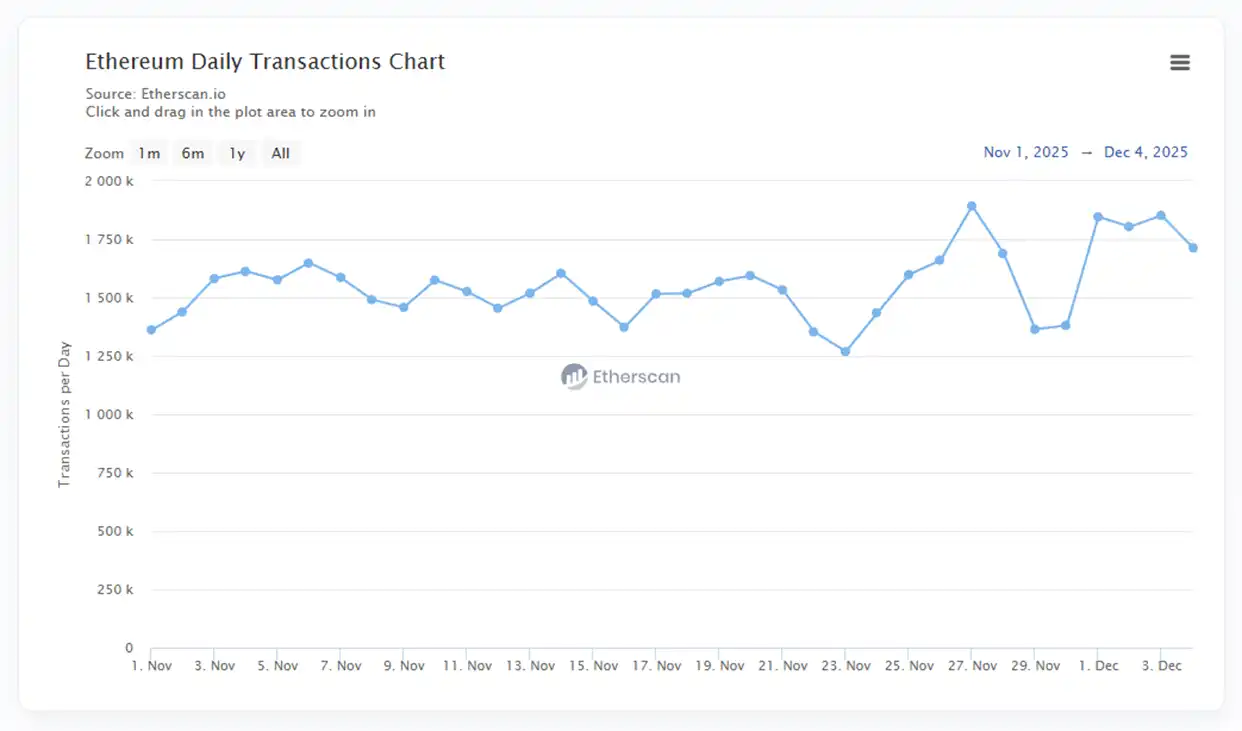
Let's directly observe the current Gas levels:

Over the past 7 days, the average Gwei value has been around 0.1, while over the past 30 days, the average Gwei value has been around 0.3. At the same time, the change compared to the transaction volume at the beginning of November is not significant.
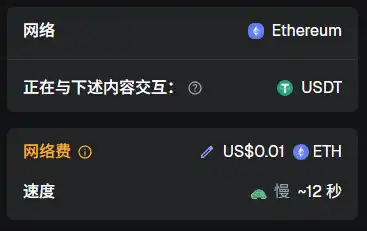
Currently, the Gas fee required for a single USDT transfer on the Ethereum mainnet has dropped to $0.01. I tried a transaction of this kind in a block with approximately 0.029 Gwei and it was completed in less than 1 minute.
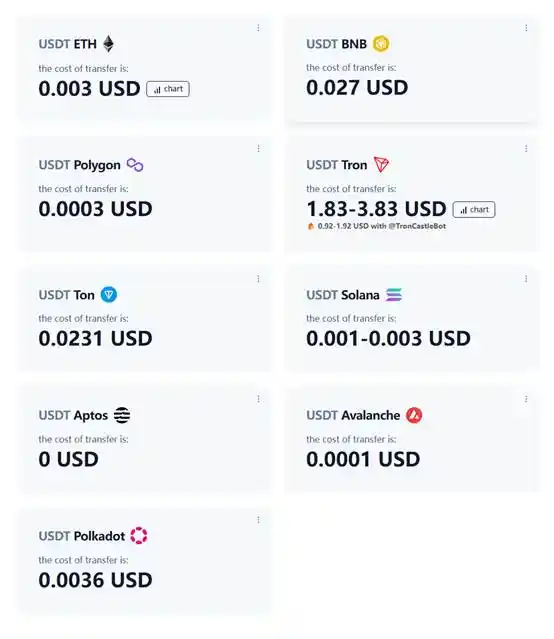
According to GasFeesNow data, the current Gas cost for transferring USDT on the ETH mainnet is only about 0.016% of that on the Tron blockchain:
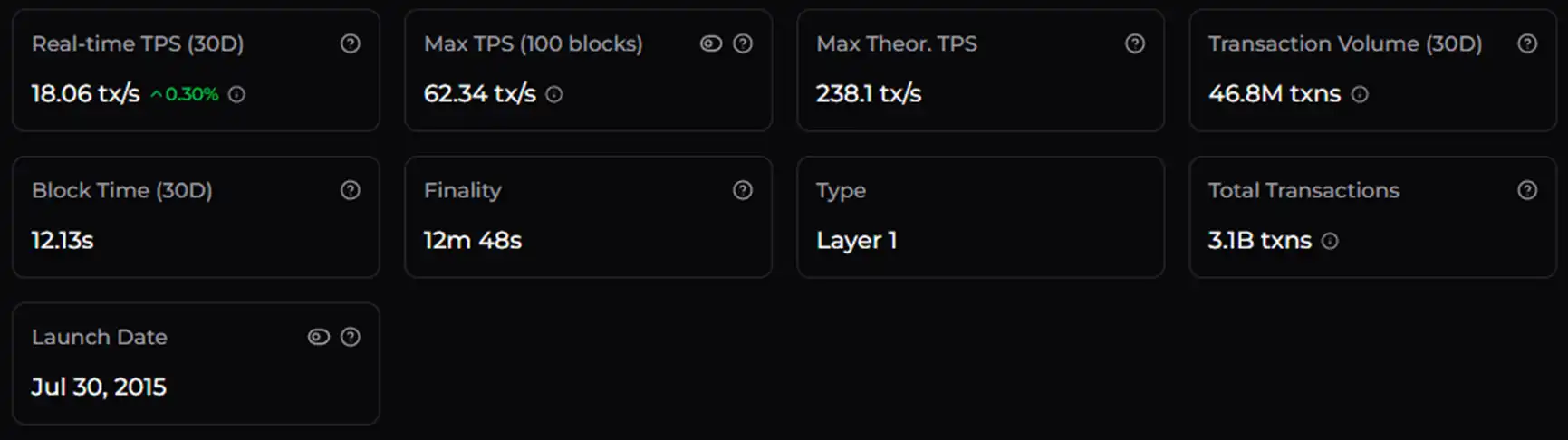
Following the Pectra upgrade's EIP-7783, the Fusaka upgrade's EIP-7935 once again increased the default Gas limit, raising the Gas limit to 60 million. A higher Gas limit means each block can process more transactions, reducing both block congestion and transaction fees.
According to Chainspect's data, the current theoretical TPS peak of the Ethereum mainnet has reached 238.1, while early Ethereum only had a theoretical TPS peak of 15. In 10 years, it has increased nearly 16 times, a significant leap akin to a decade-long transformation.
PeerDAS, a Significant Milestone in Sharding
"The significance of PeerDAS in Fusaka is profound because it is essentially sharding. Ethereum can achieve block consensus without any single node having to view even a tiny fraction of the data. Moreover, it can resist 51% attacks—it employs client-side probabilistic verification rather than validator voting. Sharding has been Ethereum's dream since 2015, and data availability sampling has been ongoing since 2017; now, we have finally achieved it."
From Vitalik's tweet above, we can understand why PeerDAS is the most highlighted advancement in the Fusaka upgrade. PeerDAS (EIP-7954) introduces a data availability sampling mechanism using KZG proofs, allowing nodes to sample a small portion (1/8) of blob data and compare it with data held by peer nodes.
This enables Ethereum to increase the blob capacity per block without increasing the node size, allowing validation of L2 transactions with only a partial data download. For L2, this not only means theoretically 8 times the data throughput but also lower blob costs and user fees.
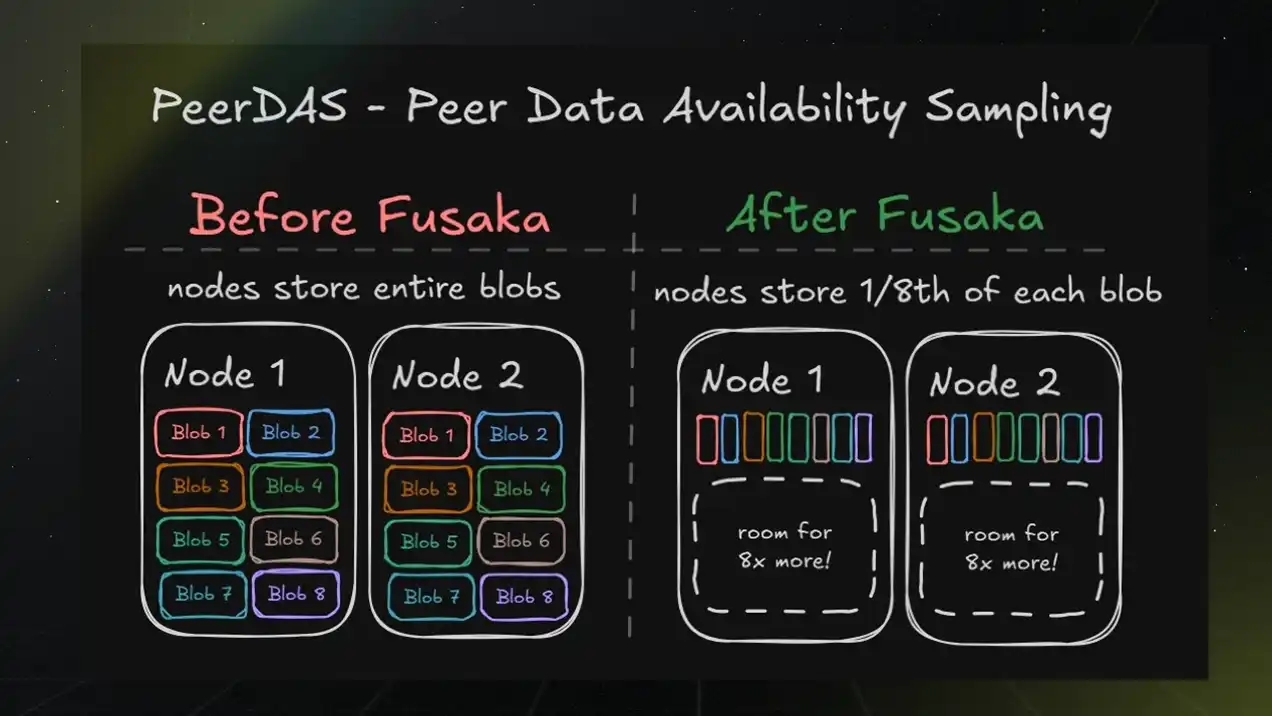
(Image Source: @jarrodwatts)
However, Vitalik also pointed out three aspects in which Fusaka's sharding mechanism is still imperfect:
· It can handle O(c^2) transactions at the L2 level (where c is the computational load per node), but this cannot be achieved on the Ethereum mainnet. To achieve a direct boost to the mainnet's scalability, besides the improvements from constant factor upgrades like BAL and ePBS, a mature ZK-EVM is also needed.*
· Proposal/Developer Bottlenecks. Currently, developers need to possess all the data and construct the entire block. It would be great if distributed block construction could be realized.
· We still need to shard the mempool.
Vitalik stated that over the next two years, the PeerDAS mechanism will continue to be improved, cautiously scaling it up while ensuring its stability, and leveraging it to scale Layer 2. Once ZK-EVM matures, it will be redirected to the Ethereum mainnet to scale it further and continue to improve L1 gas fees.
Surging blob Fee
blob Gas fees surge by millions:
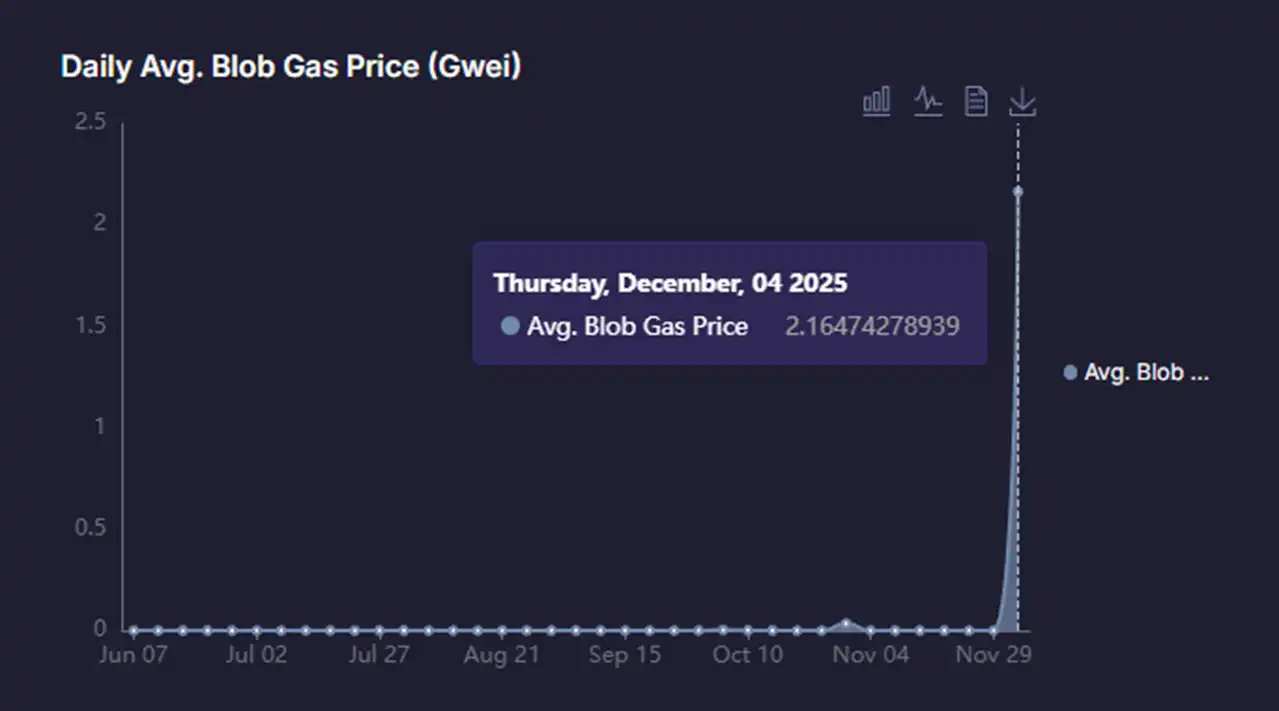
Before the Fusaka upgrade, blob Gas was essentially free because L2s submitting blob data to the mainnet were not subject to a minimum fee. As mainnet gas prices increased, L2s also stopped submitting blob data to the mainnet. This means that the Ethereum mainnet was essentially providing security for L2s free of charge.
Take Lighter, for example, they accounted for approximately 92% of all Rollup L2 TPS in the past day but paid less than $100 to the mainnet. Over a year's period, their average daily payment to the mainnet was only about $670.
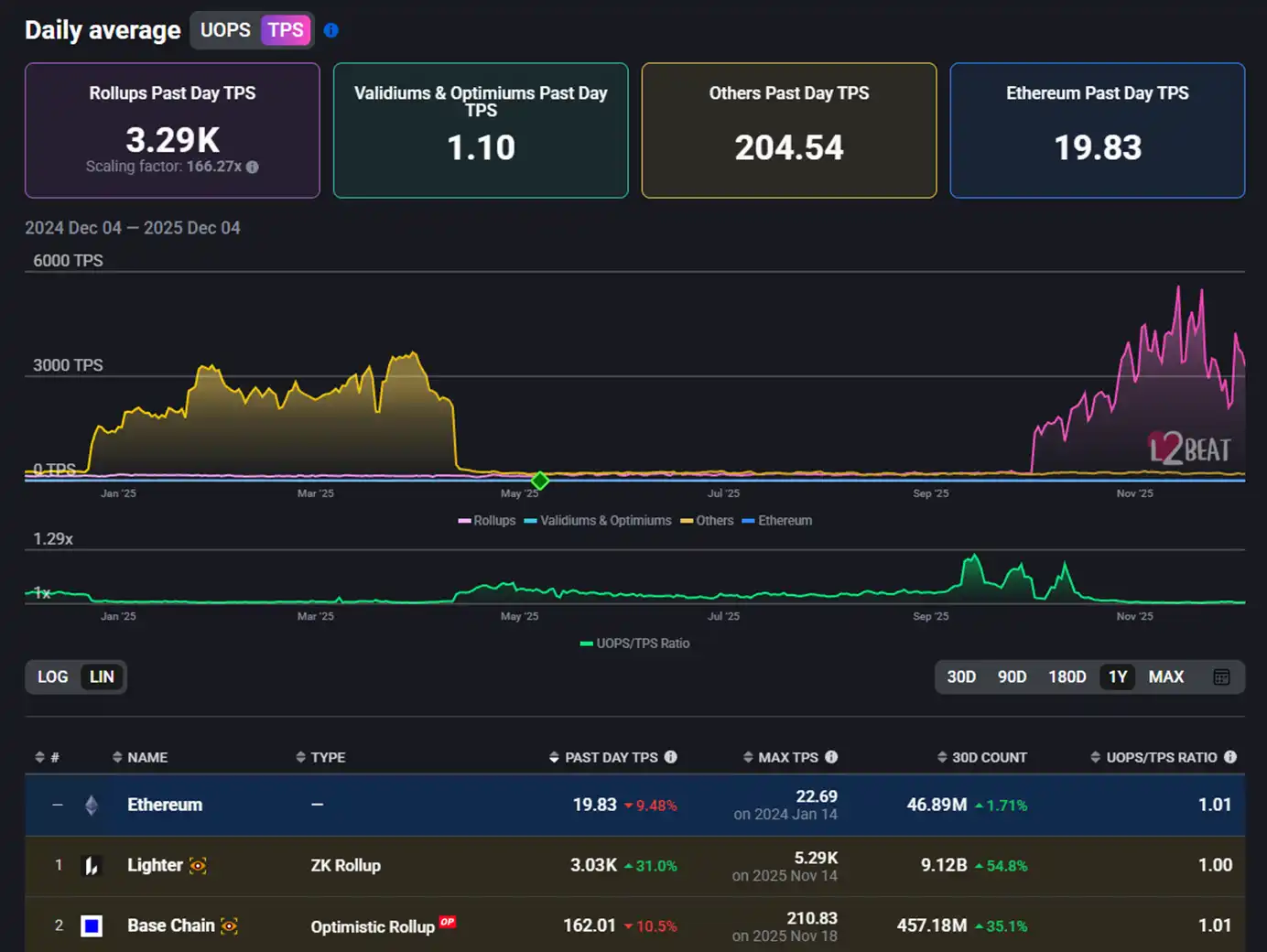
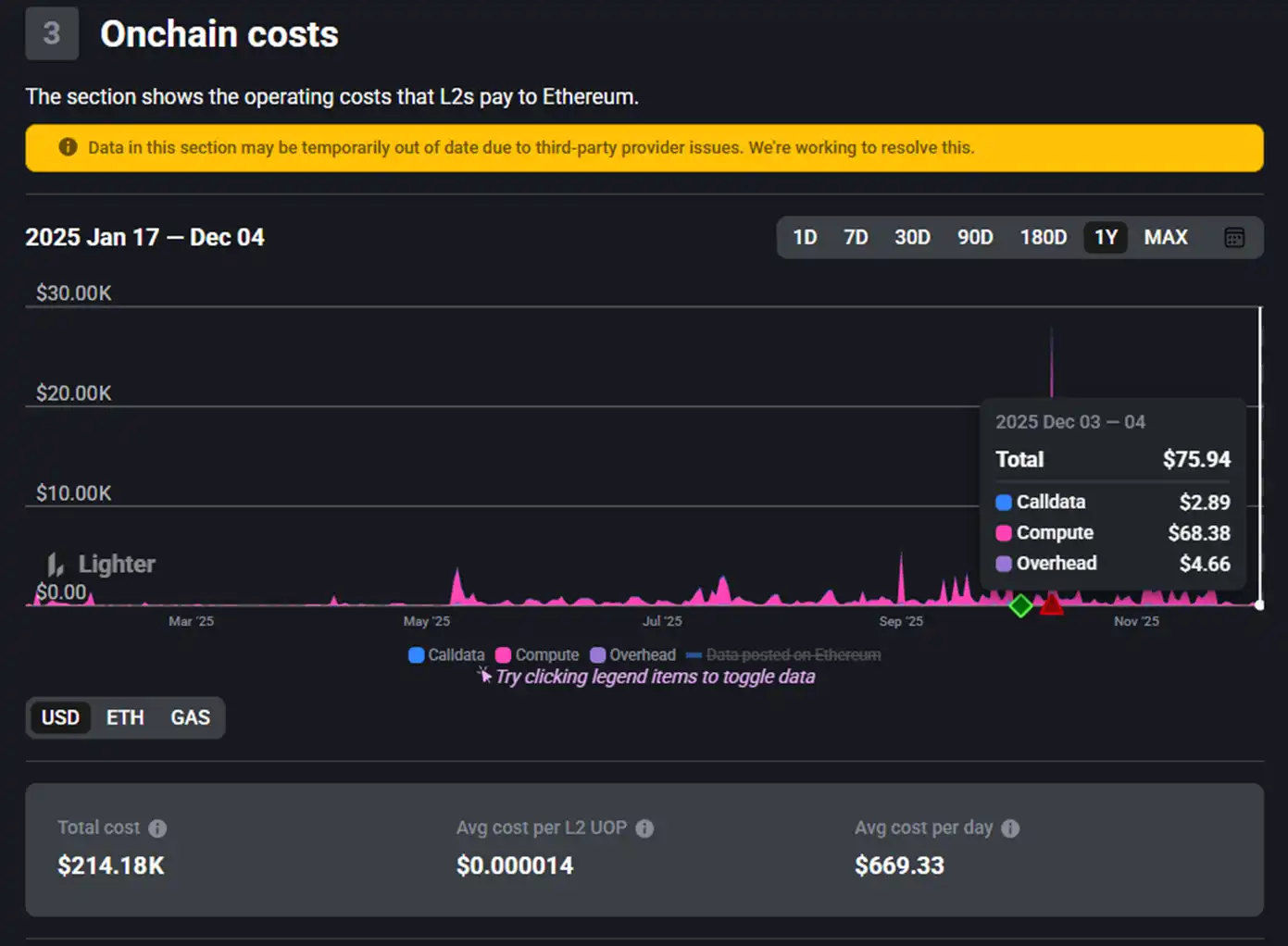
Therefore, it can be said that there was a "misalignment of incentives" regarding blob Gas fees between the mainnet and L2. L2s wanted blobs to be as small as possible to reduce user gas fees, while the mainnet wanted blob Gas fees to be as high as possible because it was providing security for L2s.
The EIP-7918 proposal of the Fusaka upgrade linked blob Gas fees to the mainnet's gas fees, providing a floor for blob Gas fees and making them more stable and predictable. Bitwise analysts state that after the Fusaka upgrade, the minimum threshold for blob Gas fees is roughly the mainnet's base execution fee divided by 16, which will create a more stable income and burn flow for the mainnet.
Of course, the actual impact on mainnet revenue and burn growth will depend on how each L2 grows.
You may also like

Wall Street Shorts ETH: Vitalik is aware and has front-run, while Tom Lee remains oblivious

Social Capital CEO: How Equity Tokenization is Reshaping Capital Markets from US Stocks to SpaceX?

CoinGecko Report: Surge of 346% vs Dip of 20.8%, The Wild Rise of DEX

a16z: The Real Opportunity of Stablecoins Lies Not in Disruption but in Filling Gaps

Mining Exodus: Someone Holds $12.8 Billion AI Order

March 6 Market Key Intelligence, How Much Did You Miss?

a16z: The True Opportunity of Stablecoins is in Complementing, Not Disrupting

Predict LALIGA Matches, Shoot Daily & Win BTC, USDT and WXT on WEEX
The WEEX × LALIGA campaign brought together football excitement and crypto participation through a dynamic interactive experience. During the event, users predicted matches, completed trading tasks, and took daily shots to compete for rewards including BTC, USDT, WXT, and exclusive prizes.

Ray Dalio Dialogue: Why I'm Betting on Gold and Not Bitcoin

Who Took the Money in the AI Era? A Must-See Investment Checklist for HALO Asset Trading
Wall Street Bears Target Ethereum: Vitalik In the Know Takes Flight, Tom Lee Remains Bullish
Pump.fun Hacker Steals $2 Million, Receives 6-Year Prison Sentence, Opts for 'Self-Detonation'

6% Annual Percentage Yield as Musk Declares War on Traditional Banks
36 years, 4 wars, 1 script: How does capital price the world in conflict?

Mining Companies' Great Migration: Some Have Already Secured $12.8 Billion in AI Orders
What Is Vibe Coding? How AI Is Changing Web3 & Crypto Development
What is vibe coding? Learn how AI coding tools are lowering the barrier to Web3 development and enabling anyone to build crypto applications.
The parent company of the New York Stock Exchange strategically invests in OKX: The intentions behind the $25 billion valuation
WEEX P2P update: Country/region restrictions for ad posting
To improve ad security and matching accuracy, WEEX P2P now allows advertisers to restrict who can trade with their ads based on country or region. Advertisers can select preferred counterparty locations for a safer, smoother trading experience.
I. Overview
When publishing P2P ads, advertisers can now set the following:
Allow only counterparties from selected countries or regions to trade with your ads.
With this feature, you can:
Target specific user groups more precisely.Reduce cross-region trading risks.Improve order matching quality.
II. Applicable scenarios
The following are some common scenarios:
Restrict payment methods: Limit orders to users in your country using supported local banks or wallets.Risk control: Avoid trading with users from high-risk regions.Operational strategy: Tailor ads to specific markets.
III. How to get started
On the ad posting page, find "Trading requirements":
Select "Trade with users from selected countries or regions only".Then select the countries or regions to add to the allowlist.Use the search box to quickly find a country or region.Once your settings are complete, submit the ad to apply the restrictions.
When an advertiser enables the "Country/Region Restriction" feature, users who do not meet the criteria will be blocked when placing an order and will see the following prompt:
If you encounter this issue when placing an order as a regular user, try the following solutions.
Choose another ad: Select ads that do not restrict your country/region, or ads that allow users from your location.Show local ads only: Prioritize ads available in the same country as your identity verification.
IV. Benefits
Compared with ads without country/region restrictions, this feature provides the following improvements.
Aspect
Improvement
Trading security
Reduces abnormal orders and fraud risk
Conversion efficiency
Matches ads with more relevant users
Order completion rate
Reduces failures caused by incompatible payment methods
V. FAQ
Q1: Why are some users not able to place orders on my ad?
A1: Their country or region may not be included in your allowlist.
Q2: Can I select multiple countries or regions when setting the restriction?
A2: Yes, multiple selections are supported.
Q3: Can I edit my published ads?
A3: Yes. You can edit your ad in the "My Ads" list. Changes will take effect immediately after saving.


 App
App