
- Buy Crypto
- Markets
 Futures
- Spot
- Copy Trade
- Earn
- More
Exploring the Dynamics of Stablecoin Regulation in U.S. Congress

Key Takeaways
- Recent U.S. Congressional hearings highlighted confusion over the terminology and regulation of stablecoins.
- Federal Reserve Vice Chair Michelle Bowman’s comments at a conference sparked scrutiny over digital asset frameworks.
- The GENIUS Act mandates the Federal Reserve and other agencies to establish a regulatory framework for stablecoins.
- There are ongoing efforts led by Congress and regulatory bodies to develop guidelines for stablecoin issuers.
- The stablecoin market remains stable despite past disruptions, like the Terra crash.
WEEX Crypto News, 2025-12-03 07:42:13
In recent years, stablecoins have become a focal point in discussions surrounding digital currencies, underscoring significant shifts within the financial and regulatory landscapes. Recent Congressional hearings have scrutinized the nuanced terminology and broader implications surrounding stablecoin regulation. This article provides an in-depth exploration into the regulatory dynamics, key legislative acts, including the GENIUS Act, and the roles of central figures like Federal Reserve Vice Chair Michelle Bowman.
Unpacking the Congressional Hearing
During the oversight hearing on a Tuesday, U.S. Representative Stephen Lynch engaged with Michelle Bowman, the Vice Chair for supervision at the Federal Reserve, regarding her previous remarks on digital assets. Lynch sought clarity on the distinctions between “digital assets” and the more narrowly defined “stablecoins.” This line of questioning was prompted by Bowman’s remarks at a conference held in November in Madrid, where she had advocated for banks to more comprehensively engage with digital assets.
Bowman clarified her stance, emphasizing that the term “digital assets” does not exclusively pertain to cryptocurrencies, such as Bitcoin or Ethereum, but can include a broader range of financial instruments including stablecoins. Her remarks at the conference spurred discussions that have since precipitated into formal inquiries on Capitol Hill, reinforcing the necessity for clearer definitions and regulatory oversight within the financial sector.
The GENIUS Act: A Legislative Framework
At the crux of these regulatory efforts is the GENIUS Act, a pivotal legislative initiative intended to construct a comprehensive regulatory framework specifically for payment stablecoins. This act, which gained presidential assent in July, obligates financial authorities, including the Federal Reserve and the FDIC, to formalize regulations that govern the operation and integration of stablecoins within traditional banking frameworks. The act aims to strike a balance between innovation and regulatory oversight, ensuring that the burgeoning sector of digital payments does not outpace regulatory capabilities.
Michelle Bowman underscored that the GENIUS Act empowers the Federal Reserve with the authority to draft necessary regulations for facilitating stablecoin activities. Her testimony highlights the critical role played by legislative frameworks in navigating the intersection of technology and finance, especially as the boundaries of traditional banking expand.
Stablecoins: Stability Amidst Volatility
Stablecoins, as their name suggests, are designed to minimize volatility, with many being pegged to reliable fiat currencies like the U.S. dollar. This design seeks to combine the advantages of digital transaction systems with the stability of traditional currencies. However, history has demonstrated occasional disruptions, such as the collapse of Terra’s algorithmic stablecoin in 2022, which resulted in a temporary decoupling from its pegged value. Notwithstanding these instances, the majority of stablecoins maintain their peg, fluctuating minimally within a 1% margin, thus preserving their renown as “stable” financial instruments.
This stability presents a paradox when juxtaposed against the backdrop of highly volatile cryptocurrencies. The evolving landscape of digital finance has motivated lawmakers and regulators to ensure that the appropriate mechanisms are in place to support these digital assets without compromising existing monetary systems.
Key Figures and Regulatory Efforts
In addition to Michelle Bowman, the Congressional hearing featured input from Travis Hill, the acting chair of the Federal Deposit Insurance Corporation (FDIC). Hill announced that the FDIC would be presenting a proposed framework for stablecoins within the month. This framework is expected to address regulatory standards that will oversee stablecoin issuers, ensuring adherence to robust supervisory requirements.
This collaborative effort among U.S. government agencies, spearheading the regulation of stablecoin issuers, reflects a broader strategy to integrate digital currencies into the existing financial system, while maintaining economic stability and security.
Examining Market Trends and User Engagement
The stablecoin market continues to garner attention for its perceived stability, particularly amongst users who seek to navigate the volatile crypto landscape securely. The testimonials provided during the Congressional hearings resonated with ongoing market trends, where both retail and institutional investors pursue stablecoins as a dependable medium for transactions and savings.
As stablecoins emerge as a preferred digital asset, discussions have turned towards enhancing user engagement and fostering a more inclusive financial ecosystem. With these evolving trends, platforms and exchanges, like WEEX, continue to adapt to regulatory developments, offering secure financial instruments aligned with user demands.
Conclusion
As stablecoins occupy an increasingly prominent role in global finance, the need for clear regulatory guidelines is paramount. Legislative initiatives such as the GENIUS Act, coupled with efforts by regulatory bodies, underscore the importance of developing a consistent and secure framework for digital assets. While challenges remain, particularly in terms of semantic clarity and regulatory enforcement, these ongoing efforts represent a significant step towards harmonizing traditional financial systems with the burgeoning field of cryptocurrency.
The ongoing discourse in Congress not only highlights the sophistication underlying stablecoin regulation but also encourages a broader discussion on the future of digital banking and financial innovation. As the industry continues to evolve, stakeholders—ranging from policymakers to consumers—must remain vigilant and informed about the implications and opportunities presented by these dynamic digital assets.
FAQs
What is the GENIUS Act?
The GENIUS Act is a legislative initiative aimed at establishing a regulatory framework for payment stablecoins. It mandates financial authorities, such as the Federal Reserve and the FDIC, to develop rules that govern the integration and operation of stablecoins within the existing financial system.
How are stablecoins different from other digital assets?
Stablecoins differ from other digital assets primarily due to their price stability, which is achieved by pegging their value to reliable fiat currencies like the U.S. dollar. This contrasts with cryptocurrencies like Bitcoin, which are known for their high volatility.
Why is the regulation of stablecoins important?
Regulating stablecoins is vital to ensuring that they are securely integrated into the financial system, maintaining economic stability, and protecting investors. Regulatory measures help prevent scenarios like the collapse of Terra’s stablecoin in 2022.
What are the potential challenges in regulating stablecoins?
Challenges in regulating stablecoins include achieving semantic clarity, ensuring compliance with legal standards, and balancing innovation with financial stability. Additionally, coordinating among various financial regulatory bodies can present logistical complexities.
How does the proposed stablecoin framework impact the crypto industry?
The proposed framework will provide guidelines for stablecoin issuers, enhancing their credibility and security. This regulation aims to integrate stablecoins into the existing financial infrastructure while safeguarding against risks associated with digital financial transactions.
You may also like

Wall Street Shorts ETH: Vitalik is aware and has front-run, while Tom Lee remains oblivious

Social Capital CEO: How Equity Tokenization is Reshaping Capital Markets from US Stocks to SpaceX?

CoinGecko Report: Surge of 346% vs Dip of 20.8%, The Wild Rise of DEX

a16z: The Real Opportunity of Stablecoins Lies Not in Disruption but in Filling Gaps

Mining Exodus: Someone Holds $12.8 Billion AI Order

March 6 Market Key Intelligence, How Much Did You Miss?

a16z: The True Opportunity of Stablecoins is in Complementing, Not Disrupting

Predict LALIGA Matches, Shoot Daily & Win BTC, USDT and WXT on WEEX
The WEEX × LALIGA campaign brought together football excitement and crypto participation through a dynamic interactive experience. During the event, users predicted matches, completed trading tasks, and took daily shots to compete for rewards including BTC, USDT, WXT, and exclusive prizes.

Ray Dalio Dialogue: Why I'm Betting on Gold and Not Bitcoin

Who Took the Money in the AI Era? A Must-See Investment Checklist for HALO Asset Trading
Wall Street Bears Target Ethereum: Vitalik In the Know Takes Flight, Tom Lee Remains Bullish
Pump.fun Hacker Steals $2 Million, Receives 6-Year Prison Sentence, Opts for 'Self-Detonation'

6% Annual Percentage Yield as Musk Declares War on Traditional Banks
36 years, 4 wars, 1 script: How does capital price the world in conflict?

Mining Companies' Great Migration: Some Have Already Secured $12.8 Billion in AI Orders
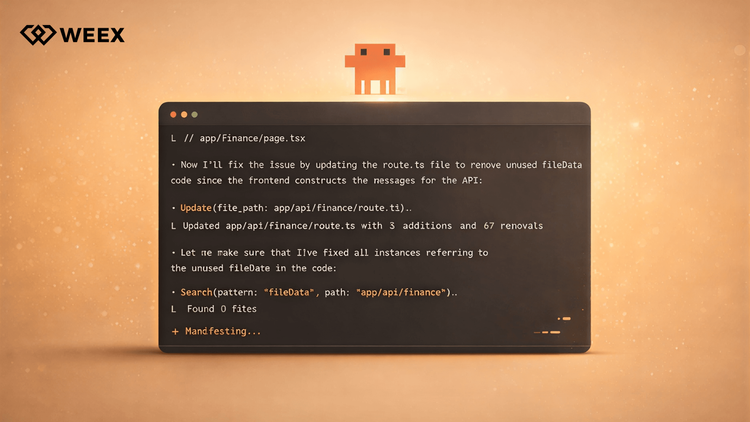
What Is Vibe Coding? How AI Is Changing Web3 & Crypto Development
What is vibe coding? Learn how AI coding tools are lowering the barrier to Web3 development and enabling anyone to build crypto applications.
The parent company of the New York Stock Exchange strategically invests in OKX: The intentions behind the $25 billion valuation

WEEX P2P update: Country/region restrictions for ad posting
To improve ad security and matching accuracy, WEEX P2P now allows advertisers to restrict who can trade with their ads based on country or region. Advertisers can select preferred counterparty locations for a safer, smoother trading experience.
I. Overview
When publishing P2P ads, advertisers can now set the following:
Allow only counterparties from selected countries or regions to trade with your ads.
With this feature, you can:
Target specific user groups more precisely.Reduce cross-region trading risks.Improve order matching quality.
II. Applicable scenarios
The following are some common scenarios:
Restrict payment methods: Limit orders to users in your country using supported local banks or wallets.Risk control: Avoid trading with users from high-risk regions.Operational strategy: Tailor ads to specific markets.
III. How to get started
On the ad posting page, find "Trading requirements":
Select "Trade with users from selected countries or regions only".Then select the countries or regions to add to the allowlist.Use the search box to quickly find a country or region.Once your settings are complete, submit the ad to apply the restrictions.
When an advertiser enables the "Country/Region Restriction" feature, users who do not meet the criteria will be blocked when placing an order and will see the following prompt:
If you encounter this issue when placing an order as a regular user, try the following solutions.
Choose another ad: Select ads that do not restrict your country/region, or ads that allow users from your location.Show local ads only: Prioritize ads available in the same country as your identity verification.
IV. Benefits
Compared with ads without country/region restrictions, this feature provides the following improvements.
Aspect
Improvement
Trading security
Reduces abnormal orders and fraud risk
Conversion efficiency
Matches ads with more relevant users
Order completion rate
Reduces failures caused by incompatible payment methods
V. FAQ
Q1: Why are some users not able to place orders on my ad?
A1: Their country or region may not be included in your allowlist.
Q2: Can I select multiple countries or regions when setting the restriction?
A2: Yes, multiple selections are supported.
Q3: Can I edit my published ads?
A3: Yes. You can edit your ad in the "My Ads" list. Changes will take effect immediately after saving.


 App
App