
Griffain's thousand-fold increase has boosted the Blinks ecosystem. Will "Blinks+AI" be the next Golden Dog incubator?


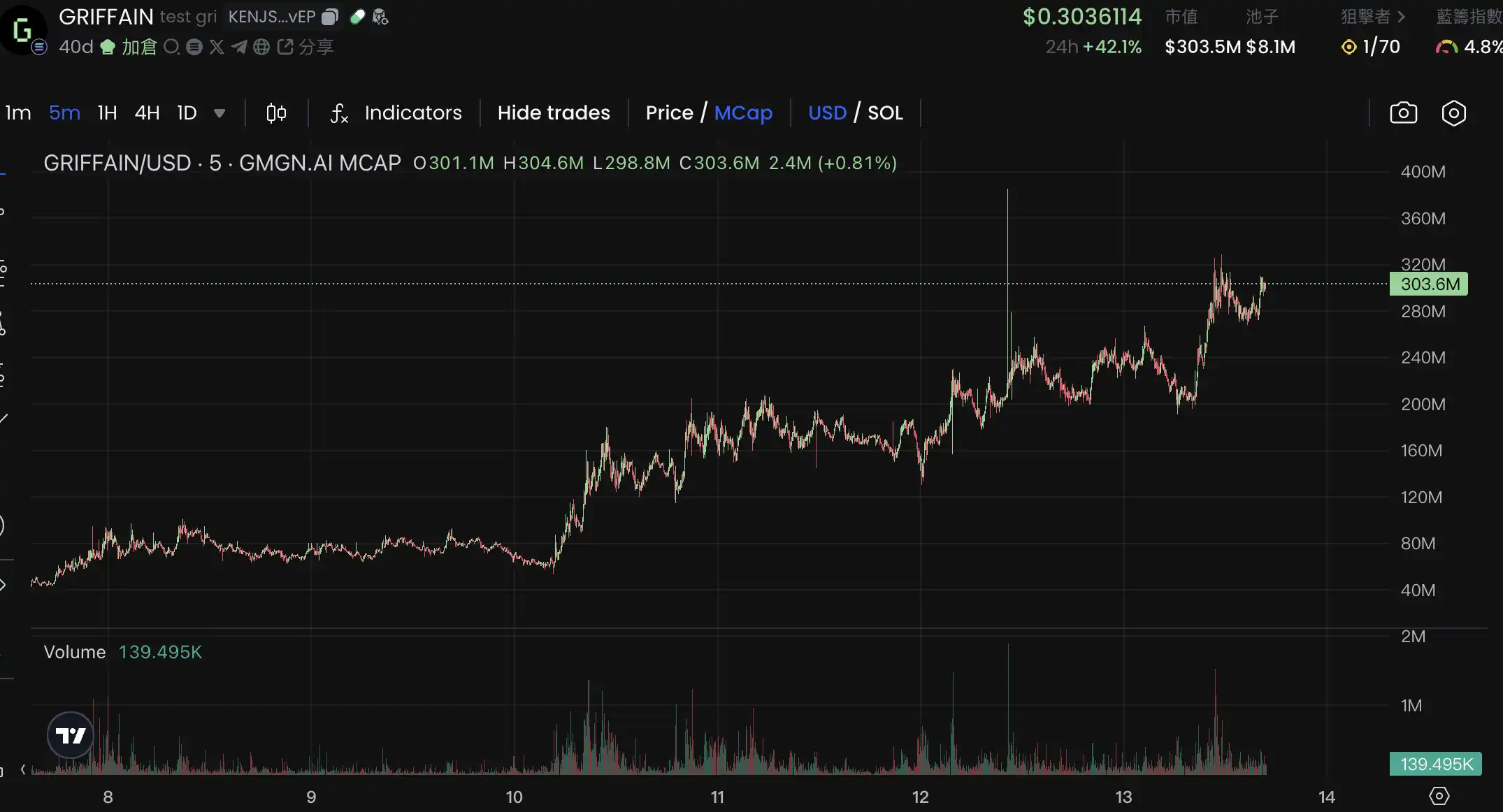
Since Solana announced that it would launch its first AI hackathon, the market's attention to AI Agent has returned to Solana. GriffAIn has a market value of 300 million US dollars, driving Blink to rise nearly 300 times in 48 hours, and BGG1 to rise nearly 10 times in 24 hours. Send returned with Arcade and AI sectors to advance the Blinks ecosystem. It has recently adjusted back, but its potential cannot be ignored. This seems to suggest that Blinks, which was popular this summer, will return in winter.
Solana AI dark horse, Web3 version of Perplexity
The final form of search engines in the AI era should be that the demand side puts forward demands, and AI directly provides results or solutions instead of providing web pages to users. Now Copilot and Perplexity are working hard to realize this vision, and there is also an artificial intelligence agent engine on the Solana chain - GriffAIn.

On November 1, Tony released GriffAIn for the first time at the Hacking for Agentic Finance hackathon, expressing the vision of turning your ideas into a practical agent engine. It immediately attracted a lot of attention from the Solana ecosystem, including Toly, vvAIfu, Jupiter, and Dialect, all of whom expressed their support or further cooperation to improve the product. The market value of its official token has soared since it went online on November 3. The market value has now exceeded 300 million US dollars and is still breaking through the previous high.
If Blinks is a model house, everything you need is in it, but you have to bring what you like and take out what you hate.
GriffAIn is a full-house high-end customization. It can satisfy whatever you want, and you only need to tell it your needs. GriffAIn connects the demand side with the Solana ecosystem. As long as it exists within the scope of Solana's existing technical system, it can basically meet the needs, whether it is sniping certain tokens that meet the requirements or creating tokens on Pumpfun, or wanting to use Solana to buy a bottle of whiskey, or wanting to release a Blink NFT on Twitter for your fans to mint.
Currently only available to users holding Sage phones, users can activate Griffan by minting GriffAIn's Saga Genesis Token. Now GriffAIn also supports mobile terminals.
The same founder, Blinkdotfun, who was suddenly "discovered by value"
In September 2016, a young man from San Francisco State University opened the door to Uber. If nothing unexpected happened, you might never know him until the token of the project he founded recently had a market value of more than 250 million US dollars on the Solana chain. He is the founder of Graffin—Tony Plasencia.
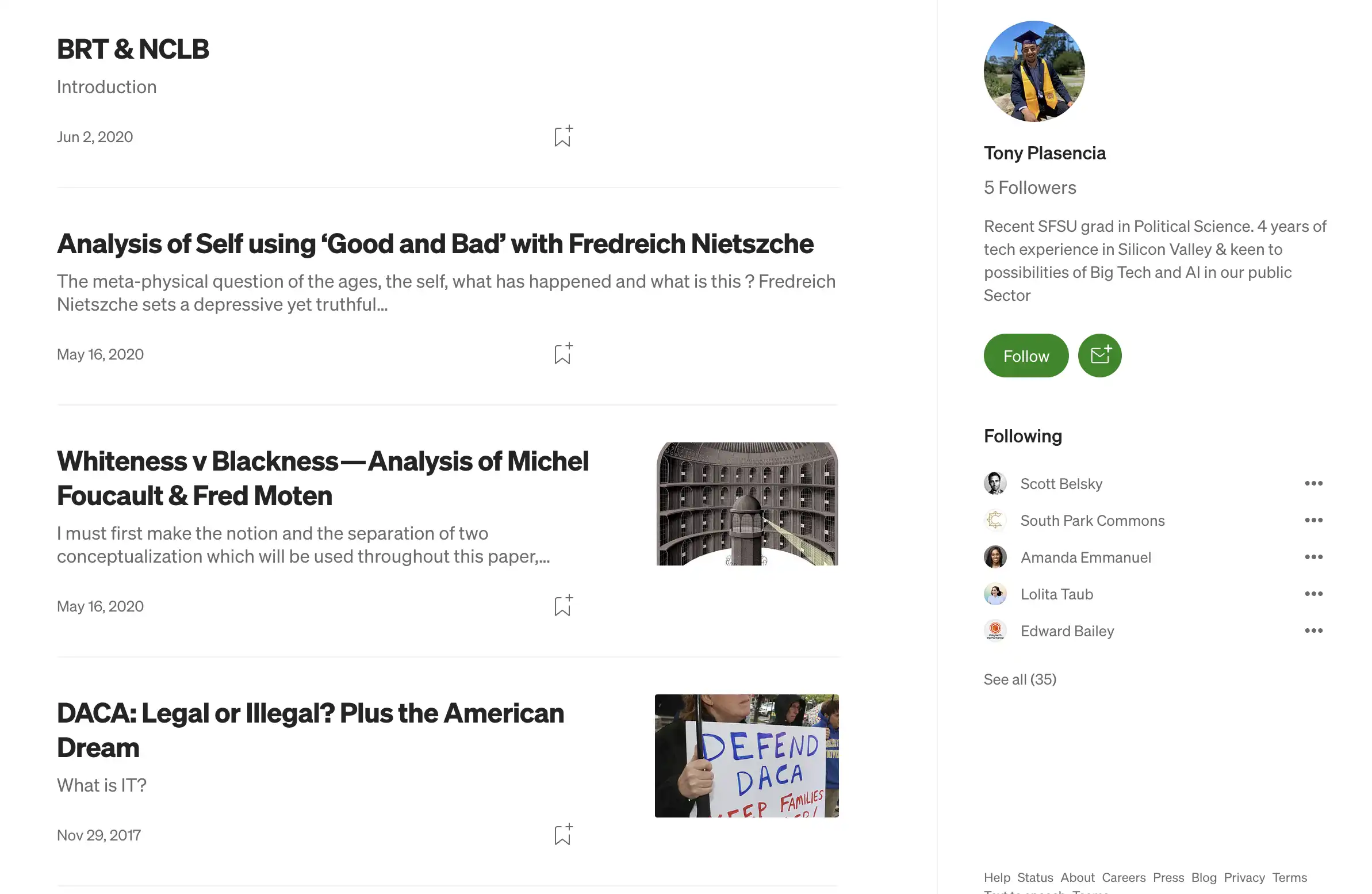
Unlike other cryptocurrency founders who often hide their personal information, you can easily find any information about him online. Until now, you can still see his views on various social phenomena on Medium. After leaving Uber, he participated in and invested in many startups, including the American family service website Thumbtack invested by well-known VCs such as Sequoia Capital, and the meal ordering platform ritual.
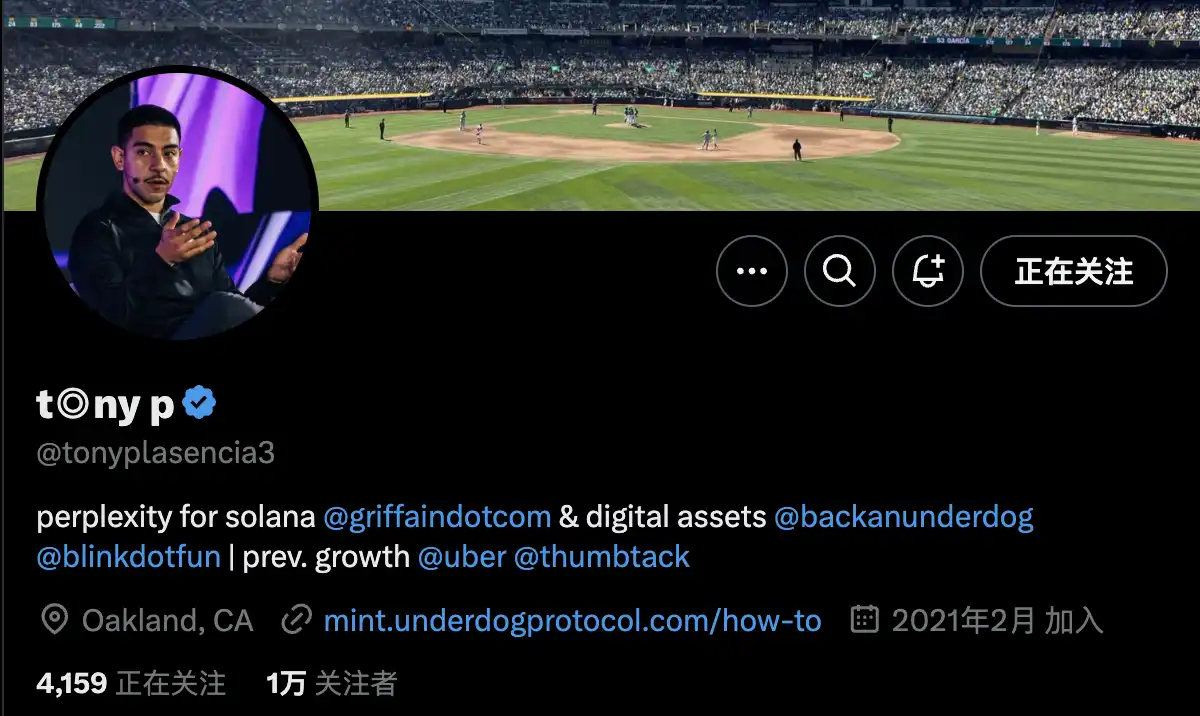
After many twists and turns, he founded his first blockchain project (Underdog Protocol) in 2022. Although it now seems to be a platform for issuing NFTs, Blinks and SPL Tokens without code, the intention in the early days of its establishment was to finance the future of individuals as tokens, which is quite similar to the Human Agent investment platform. Although this project did not cause a big stir in the market, it was also his first stop in blockchain entrepreneurship.
Those who participated in the Solana ecosystem in the middle of this year must have been impressed by Blinks. Blinks consists of two parts: Actions (Solana Actions) and Blinks (BlockchAIn links). Actions provides a compliant API to quickly complete operations such as transfers and execution of smart contracts. It is efficient and has low latency, suitable for various application scenarios; Blinks converts Actions into shareable links, allowing users to directly preview and trigger on-chain transactions on web pages or social platforms.
Under the market's FOMO sentiment at the time, Blinks derived a variety of products, such as Polymarket on X, signing multi-signature wallets directly through blinks in private messages, playing games, and rewarding various types of products.
Related reading:
1.《7 days after launch, a brief description of the 22 existing use cases on Solana Blinks》
2.《Solana version of "Mini Program": Teach you how to use Blinks on the X platform》
Tony, who has been deeply involved in the Solana ecosystem, certainly would not miss this opportunity. He and his team developed a platform for launching Blinks tokens and NFTs at this time - Blinkdotfun, which reflects the rise and fall of the token market value by locking the Sol of the bought and sold tokens in the Bonding Curve. Users can share links on X so that others can buy or sell tokens directly on X, allowing X It became his launch platform.
The platform token "Blink" issued by it was also in the market FOMO at the time, although as the popularity of the Blinks ecosystem in the market gradually faded, the market value also fell to 100,000 US dollars.
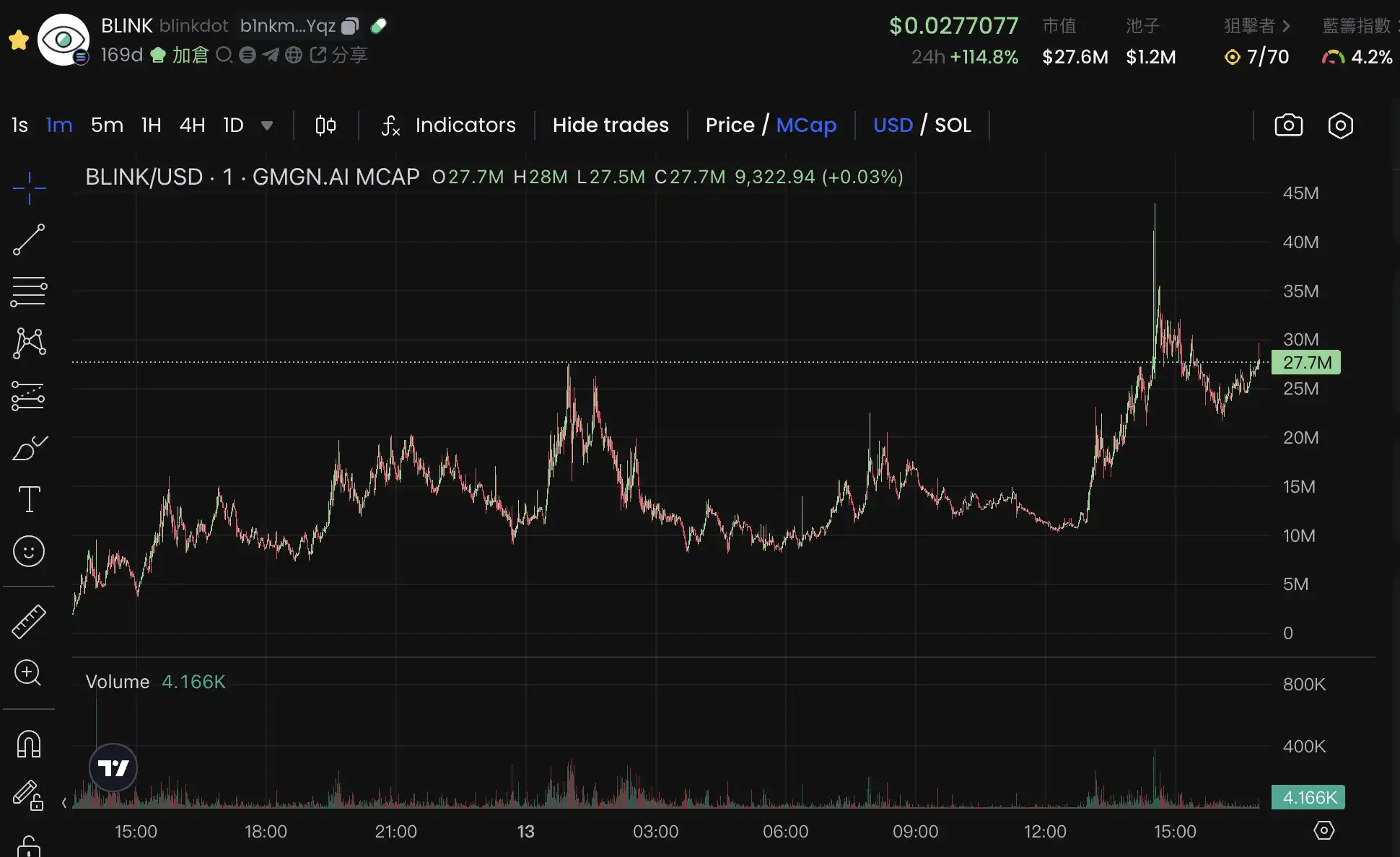
With the recent surge in the market value of GriffAIn, "Blink" has also been rediscovered by value, with the market value rising by 300 times in 48 hours. Until the deadline, the market value of "Blink" exceeded 30 million US dollars, driving the entire Blink ecosystem to become hot again. Although it sounds very confusing, blink this blink that, but in the blink of an eye, Blink has found a new path - Blinks+AI.
Blinks+AI, let the market blink again
Solana has become the channel for most new developers to enter the blockchain in 2024. I believe that in addition to memecoin, what attracted them was Goat's financing to humans through pumpfun as an AI agent in October. From a certain perspective, this is an AI singularity, which has attracted many AI developers to grow wildly in this land.
In a short period of time, a huge number of AI agents appeared on Solana, many of which were full of experiments. Because of the excellent liquidity of the entire chain and the perfect developer community, Solana developers have a sense of relaxation that I will do whatever I think of first. It is not an exaggeration to call it the most imaginative AI Agent culture dish in the world.
At this point in time, Solana did two things:
The first thing is to use GriffAIn as a case of Blink+AI agent to revitalize the Blink ecosystem. Because in order to bring a real "Agentic app szn", in addition to AI, there are also channels for infrastructure.
The second thing is to take the community NFT project SEND, which was once issued on Blinks, and put on AI's new clothes to transform into "SendAI". Together, they invited an all-star lineup to hold the first Solana AI hackathon. In addition to the luxurious lineup, the poster also wrote the AI agents in 6 fields that they wanted to review.
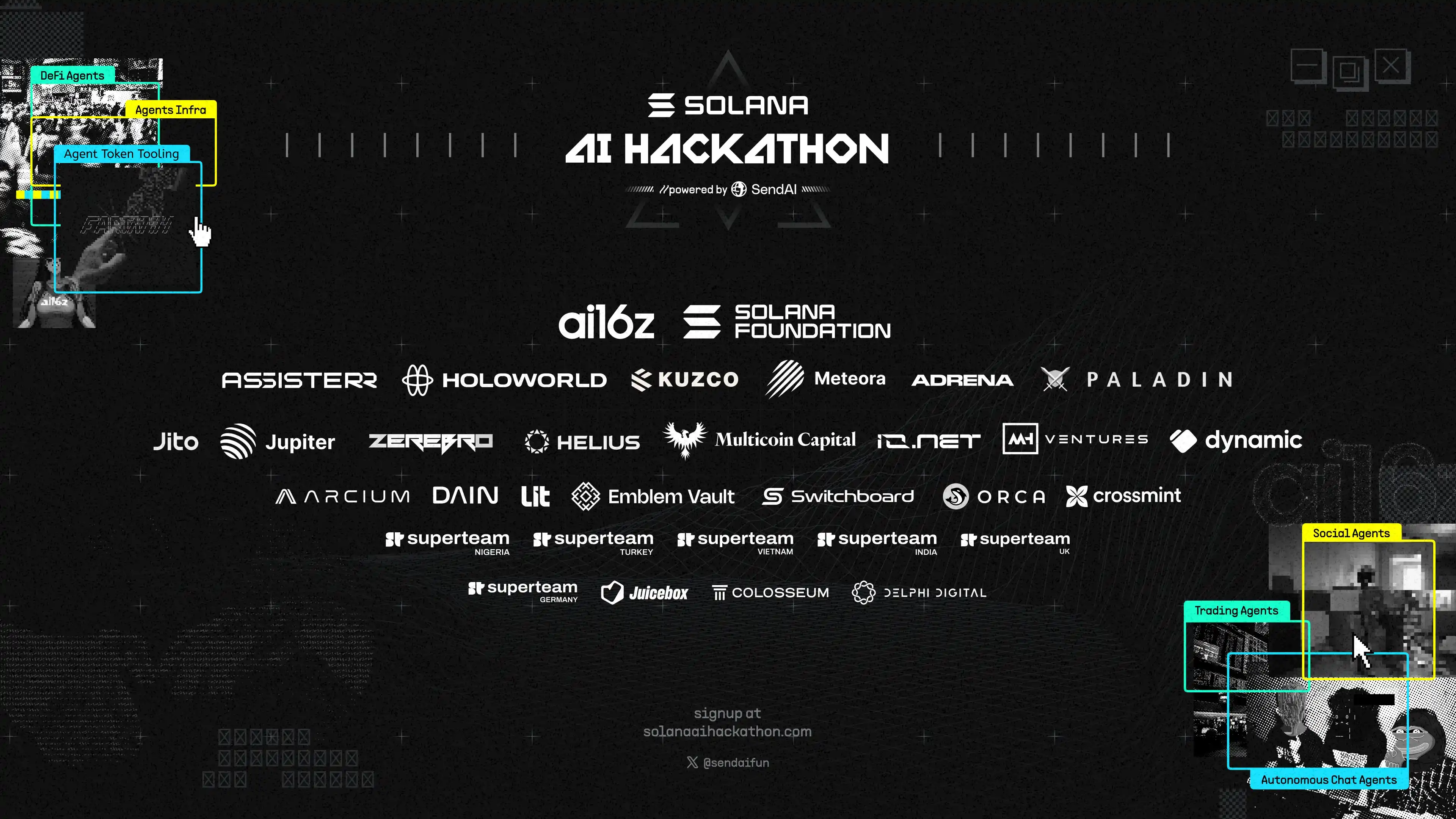
So it is necessary to connect the developers of the two ecosystems. The developers of the Blink ecosystem are responsible for developing new applications and combining the functions of the Solana chain with external platforms or apps, strengthening the platform's influence and the interoperability between the upstream and midstream of Solana.
And the developers of AI Agent only need to use all their imagination to find the usage scenarios that users may have. One is responsible for the supply side, infrastructure, and channels, and the other is responsible for direct connection with users. A complete closed loop of the developer ecosystem is completed.
And because blink is simple enough, it is just a string of addresses or QR codes, which can be easily embedded in the functions of AI, so users do not need to jump to another scene, but only need a sentence.
So, don't blink, the next version of AI is here.
You may also like

Morning Report | BitMine increased its holdings by 126,971 ETH last week; trader Eugene announced his exit from the crypto market

Wang Chuan: How can one not feel anxious after the neighbor Old Wang made thirty times profit by investing in storage stocks? (Seven) - A quarter-century cycle

Cryptocurrency CEXs are flocking to sell US stocks, and traditional brokerages are facing an "uninvited guest."

$75 billion in foreign capital has fled, and South Korean retail investors have absorbed it all using leverage

Japan’s Three Megabanks Plan Joint Stablecoin Issuance in Fiscal 2026
MUFG, SMBC, and Mizuho reportedly plan to jointly issue fiat-pegged stablecoins in fiscal 2026, signaling Japan’s growing push into bank-led digital payment infrastructure.

Humanity Discloses H Token Dual-Chain Attack Details, With Losses on Ethereum and BSC Exceeding $36 Million
Humanity said the H token attack across Ethereum and BSC caused more than $36 million in losses after leaked ProxyAdmin keys enabled malicious contract upgrades and token minting.
White House Discusses CLARITY Act With Law Enforcement Ahead of Senate Vote
The White House discussed the CLARITY Act with law enforcement ahead of a Senate vote, focusing on illicit finance risks and developer protections.

Bitcoin Trading Guide 2026: Strategies for Experienced Traders

What Is XAUT and PAXG? Why Tokenized Gold Is Booming in 2026

Will the SpaceX IPO Hurt Bitcoin? Here's What Traders Are Watching

Foreign selling in the South Korean stock market accelerates, with cumulative net sales reportedly reaching $75 billion this year
On June 9, The Kobeissi Letter, citing Goldman Sachs data, reported that global investors are selling South Korean stocks at an unusually rapid pace. In the latest trading session, foreign investors sold about $801 million worth of Kospi constituent stocks again; total foreign outflows last week reached about $10 billion, and the market has been in net foreign selling on nearly every trading day over the past month. According to the data cited in the report, foreign investors have sold about $75 billion worth of South Korean stocks so far this year. Meanwhile, South Korean retail and institutional investors together recorded roughly $69 billion in net buying over the same period, suggesting that the market’s main buying support has come from domestic capital rather than returning overseas funds. The information currently disclosed still mainly comes from The Kobeissi Letter’s retelling and Goldman Sachs data summaries, while public details on the statistical period and the specific definition of “selling” remain relatively limited.

Fortune Warns of Strategy’s Financing Structure Risks as Bitcoin Premium Narrows
Fortune warned that Strategy’s Bitcoin treasury model faces growing financing risks as MSTR’s net asset premium narrows and preferred stock dividend pressure increases.

Ferrari Challenge Le Mans: Carl Moon to Dominate in WEEX Livery

Sahara AI Responds to SAHARA’s Sharp Drop: No Contract or Product Security Issues Found, Internal Investigation Underway
Sahara AI responded to SAHARA’s 60% price drop, saying no token contract or product security issues have been found and an internal investigation is underway.

WEEX Deposit/Withdrawal Dynamic Island: Your Asset Status, Always in Sight
Scaling Crypto Derivatives: The Digital Asset Infrastructure Behind High-Volume Trading
In the fast-moving digital asset ecosystem, derivatives platforms face an extreme architectural test. High-leverage futures markets demand more than just standard security—they require absolute operational precision, zero-latency matching engines, and ironclad structural scalability, all while navigating intense market volatility.
As global platforms scale to meet these demands, the industry is shifting away from rigid, monolithic setups toward a more agile, "decoupled" infrastructure philosophy.
The Blueprint for High-Volume Copy TradingFor elite global exchanges like WEEX (founded in 2018), this architectural choice becomes critical when scaling high-volume retail features like social copy trading. When thousands of users automatically mirror the real-time strategies of elite traders simultaneously, it triggers sudden, monumental spikes in concurrent transactional volume.
To prevent execution latency or settlement bottlenecks during these peak volatility events, a platform's primary engine must remain entirely dedicated to risk management, copy-trade synchronization, and order matching.
The Architectural Rule: New-generation platforms must separate front-end user execution engines from heavy backend infrastructural overhead to eliminate operational friction.
By separating these layers, platforms can maintain complete sovereignty over their trading environments and user experiences while strategically aligning with institutional-grade infrastructure ecosystems. This strategic framework allows modern exchanges to leverage advanced Digital Asset Custody infrastructure such as Cobo’s behind the scenes, ensuring that backend wallet management scales elastically alongside trading spikes.
Capitalizing on Market Momentum and 400× LeverageIn a derivatives arena where platforms offer up to 400× leverage on perpetual contracts, capital efficiency and market agility are core business metrics. To capture market momentum, an exchange needs the ability to rapidly expand its asset offerings, supporting everything from legacy crypto assets to sudden, trending altcoins across a massive library of trading pairs.
Adopting a flexible, scalable Wallet-as-a-Service (WaaS) solution such as Cobo’s could completely rewrite the development timeline for high-growth exchanges. Instead of spending months of engineering capital building out custom backend wallet architectures for every new blockchain network, platforms can deploy localized infrastructure in days.
This agility allows platforms to instantly scale their listings to over a thousand trading pairs without compromising security or delaying time-to-market. It mirrors the exact operational advantages seen during high-velocity market events, similar to how advanced wallet infrastructure empowers platforms during sudden asset surges; allowing exchanges to pass that speed and liquidity directly to their global user base.
A Mature Foundation for GrowthThe synergy between trusted infrastructure ecosystems and global trading platforms represents the natural evolution of a maturing crypto market. As WEEX continues to scale its global spot and derivatives offerings for over 6 million users, adopting robust backend paradigms proves that platforms no longer have to compromise between cutting-edge trading velocity and uncompromised structural security.

Get Paid to Onboard? Try WEEX’s New Homepage with Rewards for Registration, Deposit & Trade
WEEX Custom Layout: Build Your Perfect Trading Workspace in Seconds
Morning Report | BitMine increased its holdings by 126,971 ETH last week; trader Eugene announced his exit from the crypto market
Wang Chuan: How can one not feel anxious after the neighbor Old Wang made thirty times profit by investing in storage stocks? (Seven) - A quarter-century cycle
Cryptocurrency CEXs are flocking to sell US stocks, and traditional brokerages are facing an "uninvited guest."
$75 billion in foreign capital has fled, and South Korean retail investors have absorbed it all using leverage
Japan’s Three Megabanks Plan Joint Stablecoin Issuance in Fiscal 2026
MUFG, SMBC, and Mizuho reportedly plan to jointly issue fiat-pegged stablecoins in fiscal 2026, signaling Japan’s growing push into bank-led digital payment infrastructure.
Humanity Discloses H Token Dual-Chain Attack Details, With Losses on Ethereum and BSC Exceeding $36 Million
Humanity said the H token attack across Ethereum and BSC caused more than $36 million in losses after leaked ProxyAdmin keys enabled malicious contract upgrades and token minting.


