
- Buy Crypto
- Markets
 Futures
- Spot
- Copy Trade
- Earn
- More
Key Market Intelligence on July 8th, how much did you miss out on?

Top News
2. Pre-market crypto-related stocks in the US see a general rise, with Bit Digital up by 14.66%
3. Binance Wallet BOOM TGE sets the threshold at 200 points
5. Letsbonk.Fun officially announces acquisition of the 'bonk.fun' domain name
Trending Topics
Source: Overheard on CT (tg: @overheardonct), Kaito
PUMP: Discussions around PUMP today are centered on the upcoming token sale. The project is set to launch its sale on July 12th with a valuation of up to $4 billion, sparking a wide debate on the reasonableness of the valuation, especially compared to Bonk, which recently surpassed PUMP in various metrics such as token supply and market share. Despite doubts about its valuation and potential impact on the liquidity of other tokens, the overall hype and anticipation are still high, with many predicting a rapid sellout in this round of sale.
MITOSIS: MITOSIS has garnered attention due to its collaboration with Yarm and Kaito, with market discussions focusing on its potential in programmable liquidity and cross-chain DeFi solutions. The community is generally optimistic about its innovative approach to liquidity through flexible cross-chain mechanisms, driving a transformation in the DeFi landscape. The upcoming TGE (Token Generation Event) and integration with Yarm (combining social interaction with liquidity) have also sparked discussions, with an overall positive sentiment and anticipation of its innovative performance in liquidity management.
CYSIC: Cysic is currently making waves due to the launch of the "Yapper Leaderboard," a mechanism that encourages users to engage in discussions around its innovative concept: transforming GPU, ASIC, and computing power assets into tradable yield-generating assets. The project has received a $18 million investment from top-tier firms such as Polychain and Hashkey, with a focus on the ZK (Zero-Knowledge) computation service sector, aiming to create a computing power-as-a-service platform with a built-in economic model. Its "dual-token mechanism" and focus on ZK computation hardware acceleration have attracted widespread attention from both the crypto and traditional tech communities.
HYPERLIQUID: HYPERLIQUID's popularity surge is attributed to several key developments, including Kinetiq's launch on the HyperEVM mainnet, Etherscan's introduction of the HyperEvmScan tool, and its record $1.7 million fee revenue within 24 hours, surpassing Solana, Ethereum, and Bitcoin. The community is excited about Kinetiq's introduction of a liquid staking mechanism and Hyperliquid's integration with multiple protocols, believing that these developments will drive further growth and ecosystem adoption.
LOUD: Today's discussion around LOUD is centered on its association with the emerging project Yarm. Yarm's popularity on social platforms is on the rise, with many users drawing comparisons to early projects like Loudio and Yapyo. The involvement of KaitoAI and MitosisOrg has also garnered attention, with the community discussing whether they will introduce an AI-driven content quality evaluation mechanism and a "Yap-to-Earn" model. Despite the cautious market sentiment, overall curiosity and potential expectations for Yarm continue to intensify.
Featured Articles
1. "How Should FTX China Creditors Reclaim 380 Million When Discriminated Against?"
As the FTX bankruptcy liquidation enters a critical phase, a highly controversial motion—regarding the handling of claims by users from "restricted countries"—has caused a global uproar among creditors. The FTX liquidation team has stated that they will first seek legal advice to determine if assets can be distributed to these jurisdictions; if the conclusion is that reimbursement is not feasible, the related claims may even be "legally confiscated" and transferred to the liquidation trust account. This means that Chinese creditors may not only receive no compensation but also have their assets confiscated into the trust fund's "forfeited funds." BlockBeats interviewed Will, not only a significant FTX creditor but also a key initiator opposing this motion and raising objections. He elaborated on why he took a stand to lead this struggle, the operational process against the motion, the actual challenges faced by the creditor community, and his in-depth observations on the motives behind the motion.
20 years later, Twitter founder Jack Dorsey returned with a new product, bitchat, embracing simplicity. The biggest highlight of bitchat is that it does not rely on any infrastructure at all—no servers, no Wi-Fi, or mobile signal. Each phone serves as both a "transmitter" and a "relay station," discovering each other via Bluetooth Low Energy (BLE). The reason it attracts the encryption industry is that all messages are end-to-end encrypted. When engaging in private chats, encryption technologies such as X25519+AES-256-GCM are used, and group chats can also be password-protected, with only those who know the password able to view the content. Messages are only stored locally and will automatically disappear upon exiting or shutting down, leaving no traces in the background. Additionally, unlike other encrypted communication products, bitchat completely eliminates the "login" action, requiring no phone number, email, or long key strings. Every time you go online, a random "user ID" is generated, which you can also modify at any time, without worrying about being traced.
On-chain Data
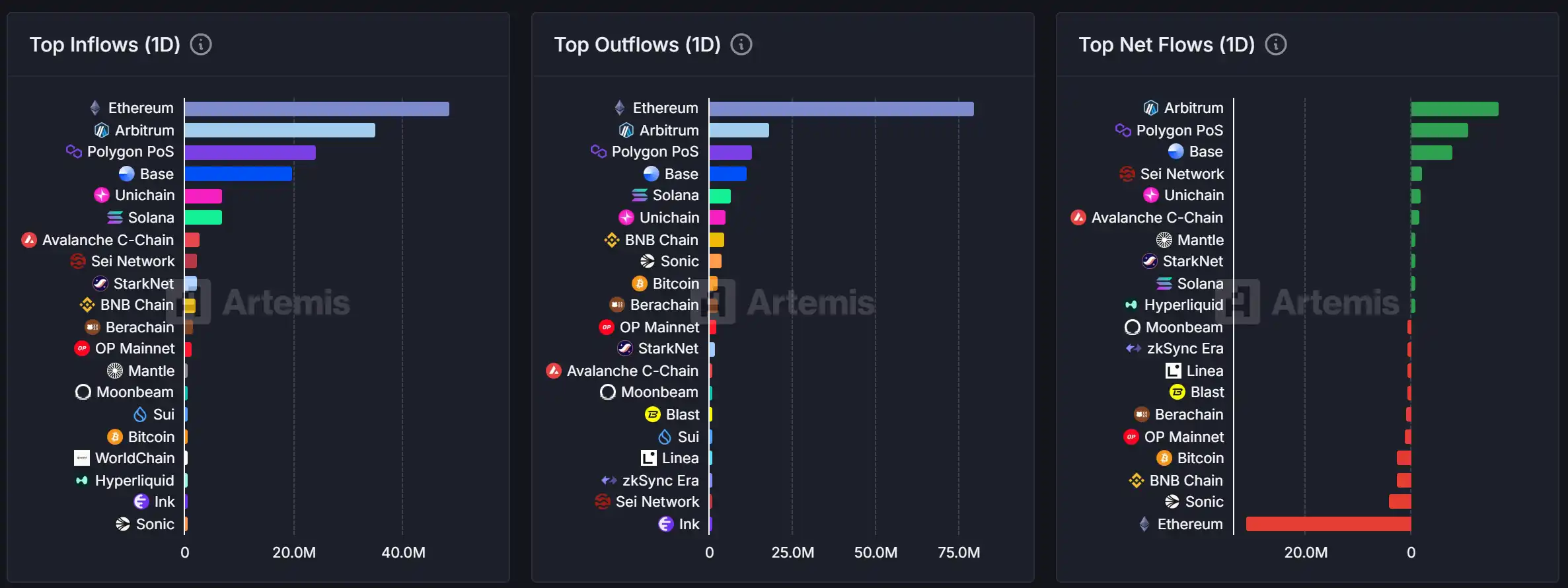
On-chain Fund Movement on July 8
You may also like

Cursor "Shell" Kimi Controversy Reversed: From Copyright Infringement Allegations to Authorized Collaboration, China's Open Source Model Once Again Becomes a Global AI Foundation

The Real Reason Tokens Don't Sell: 90% of Crypto Projects Overlook Investor Relations

Is the income of pump.fun real, earning a million dollars a day despite the market downturn?

The real reason why tokens are not selling: 90% of crypto projects neglect investor relations

Who is the true winner of the "Tokenization" narrative?

Moss: The Era of AI-Traded by Anyone | Project Introduction

Chip Smuggling Case Exposes Regulatory Loophole | Rewire News Evening Update

How a Structured AI Crypto Trading Bot Won at the WEEX Hackathon
Ritmex demonstrates how disciplined risk control and structured signals can make an AI crypto trading bot more stable and reliable on WEEX, highlighting the importance of combining execution discipline with scalable AI trading systems.

Old Indicator Fails, Three Major New Signals Emerge: BTC True Bottom May Still Be Below $60K

Meeting OpenClaw Founder at a Hackathon: What Else Can Lobsters Do?
Huang Renxun's Latest Podcast Transcript: NVIDIA's Future, Embodied Intelligence and Agent Development, Soaring Demand for Inferencing, and AI's PR Crisis
How a Structured AI Crypto Trading Bot Won at the WEEX Hackathon
Crypto_Trade shows how structured inputs and controlled adaptability can build a more stable and reliable AI crypto trading bot within the WEEX AI Trading Hackathon, highlighting a practical path toward scalable AI trading systems.

AI Starts to Devour the Manufacturing Industry | Rewire News Morning Edition

When Scaling Meets Speed, Ethereum Foundation Introduces "Hardness" to Safeguard the Base Layer
Google, Circle, Stripe Flock Together to Let AI Spend Money: Payment Giants' Joys and Worries in 2026 Q1

$100 Billion Factory Purchase: Bezos and Middle Eastern Capital Shift AI Money from Cloud to Shop Floor

Xiaomi and MiniMax both unleash their ultimate moves, signaling the start of the Agent Pricing War.



 App
App