
Nvidia Wants to Fund the Same Company Warning About AI's Pace: A Real Contradiction, or Not?

 Prefer us on Google
Anthropic's CEO spent the weekend publishing an essay warning that AI labs need to slow down how quickly they improve their most advanced models.
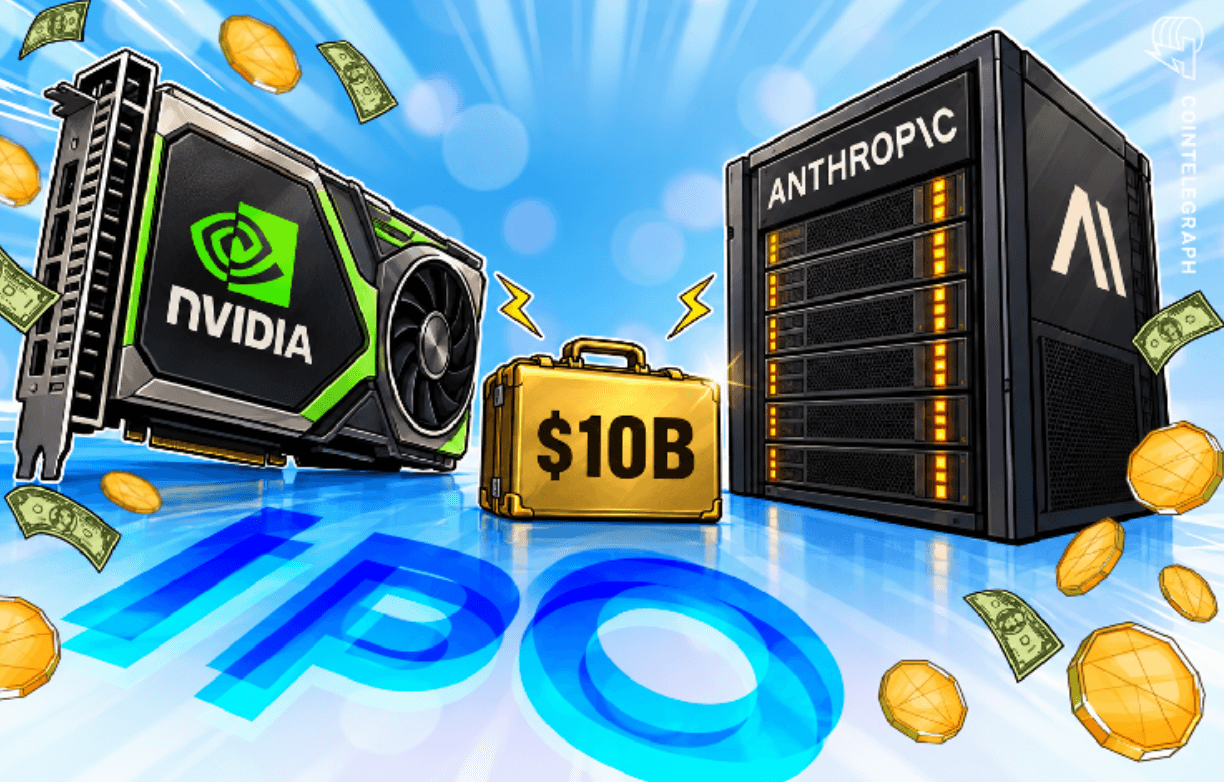
Nvidia is reportedly discussing putting up to $10 billion into that same company's IPO. On its face, that looks like a contradiction: Nvidia, the world's dominant AI chip supplier, funding a company that just told the industry to ease off the accelerator. Whether Nvidia's move is actually contradictory, or whether it just looks that way from a distance, depends on reading the slowdown proposal more carefully than the headline version of it suggests.
What Amodei's Proposal Actually Asks For
The specific wording matters here more than it usually does. Dario Amodei's essay proposed a three-step plan aimed at pacing how quickly AI capabilities improve, explicitly framed as something that shouldn't come at the cost of "commercial advantage or the United States' lead in AI." That's a narrower ask than "slow down AI" as a general concept. It's a proposal about the rate at which model capabilities advance, not a call to reduce compute spending, halt infrastructure buildout, or pull back on AI adoption across the economy.
That distinction changes what Nvidia's potential investment is actually funding. If Anthropic's proposal is specifically about pacing capability jumps rather than reducing overall AI investment, then a chipmaker whose revenue depends on compute demand isn't necessarily backing something that threatens its own business model. The two things, capability pace and infrastructure spending, aren't the same lever, and conflating them is where the apparent contradiction starts to look less solid.
Why Safer AI Development Might Still Be Compute Hungry
There's a specific argument worth taking seriously here: a more cautious, safety focused approach to AI development doesn't necessarily require less compute. It could require more, just applied differently. Interpretability research, red teaming, safety evaluations, and adversarial testing, all the work involved in understanding whether a model is actually safe before deploying it more broadly, consumes significant compute resources in its own right. A lab that slows down raw capability scaling in favor of more extensive safety validation isn't obviously buying fewer GPUs. It may be running more total compute, just directed at verification rather than pure capability advancement.
This is speculative rather than confirmed, since neither Anthropic nor Nvidia has laid out exactly how a paced development approach would affect near-term compute purchasing. But it's a genuinely plausible read of the situation, and one that undercuts the assumption that "slower AI" automatically means "less demand for chips."
The Risk Hedging Case for Nvidia's Investment
There's a separate argument worth considering from Nvidia's side specifically, one that has nothing to do with whether Amodei's proposal is compute-intensive or not. The AI infrastructure spending cycle Nvidia depends on is vulnerable to a specific kind of tail risk: a major AI related accident or scandal severe enough to trigger a sudden, harsh regulatory crackdown that curtails spending abruptly across the entire industry, not just at one company. A gradual, industry endorsed pacing framework, the kind Amodei is proposing, could function as a hedge against that scenario, reducing the odds of a disorderly, externally-imposed shutdown that would hit Nvidia's revenue far harder than a voluntary, negotiated slowdown ever would.
Read this way, funding the company proposing guardrails isn't a contradiction of Nvidia's interests. It's arguably aligned with them, if the alternative to voluntary pacing is a scenario where a serious incident forces far more disruptive intervention later. A anchor investment also gives Nvidia a direct financial stake in Anthropic specifically succeeding as the industry's "responsible" reference point, which carries its own strategic value if regulators or enterprise customers eventually gravitate toward vendors seen as safety-conscious rather than purely fast moving.
-- Price
The Case That This Really Is a Contradiction
It's worth stating the opposing view plainly rather than dismissing it. Critics have pointed out that Amodei's essay landed just as Anthropic is preparing to market a roughly $2 trillion IPO, and some commentary has specifically suggested the timing lets the company frame itself as the responsible actor in the room right as it's asking public markets to underwrite an enormous valuation. If that's the primary function of the slowdown proposal, positioning rather than a genuine operational commitment, then Nvidia's investment isn't funding a meaningful pace change at all. It's funding a well timed piece of IPO messaging, which is a very different thing than funding actual restraint.
There's also a simpler version of the contradiction that doesn't depend on motive at all: regardless of why Amodei published the essay, Nvidia's core business still depends on AI capability advancement continuing to justify ever larger compute purchases. A world where capability gains genuinely plateau, for any reason, is a world where the argument for continuously scaling GPU fleets gets weaker over time, whatever the compute mix looks like in the interim.
Why Both Readings Can Be True at Once
The honest answer is that these two arguments aren't mutually exclusive. Nvidia's investment can simultaneously reflect confidence that Anthropic's compute needs stay elevated regardless of capability pacing, function as a hedge against harsher regulatory outcomes, and still exist alongside a genuine tension between Nvidia's long run interest in continuous capability scaling and Anthropic's stated preference for a more measured pace. Corporate incentives aren't always internally consistent, and a company can hold a financial stake in an outcome while still benefiting from an entirely different outcome playing out instead.
What actually resolves this tension, one way or the other, isn't anything either company has said publicly so far. It's what Anthropic's compute purchasing actually looks like over the next several quarters if the paced development approach is genuinely implemented, versus what it looks like if the proposal ends up mattering less in practice than it did as a headline.
Why This Tension Is Worth Tracking on NVDA Directly
Whichever reading turns out closer to true, hedge, contradiction, or something in between, it plays out through NVDA's own numbers over the coming quarters rather than through anything settled by either company's statements so far. NVDA is available on WEEX as NVDAUSDT through Stock Spot 2.0, funded directly with USDT, giving traders a way to actually hold a position through that uncertainty rather than just read about it. If Anthropic's compute purchasing shifts meaningfully once a paced-development approach takes hold, or if the slowdown talk proves to be mostly IPO framing with little operational follow-through, both outcomes eventually show up in how Nvidia's own revenue guidance evolves.
Trading on WEEX is backed by a publicly disclosed 1,000 BTC protection fund, giving traders a verifiable layer of security when holding a position through a story this unsettled. Combined with spot access that doesn't require a separate brokerage account, that means reacting to new developments, confirmation, denial, or updated terms, isn't held up by account settlement times either. NVDAUSDT is available on WEEX.
Conclusion
Nvidia funding a company that just called for slower AI capability development looks contradictory at first glance, but the proposal itself is narrower than the headline version, focused specifically on pacing model capability jumps rather than reducing compute spending or infrastructure buildout. Safety-focused AI development may still be compute intensive, and a voluntary slowdown framework could function as a hedge against far more disruptive regulatory outcomes down the line, both of which weaken the case that this is a straightforward contradiction. The more skeptical read, that the slowdown essay serves IPO positioning more than operational reality, remains a fair counterpoint that only Anthropic's actual compute purchasing behavior over the coming quarters will settle.
FAQ
1. Does Anthropic's slowdown proposal call for reducing compute spending?
No. The proposal is specifically framed around pacing how quickly AI model capabilities improve, explicitly stated not to come at the cost of commercial advantage, which is a narrower ask than reducing overall infrastructure investment.
2. Could safer AI development actually require more compute, not less?
It's plausible. Interpretability research, safety evaluations, and adversarial testing all consume significant compute resources, meaning a more cautious development approach could redirect rather than reduce overall GPU demand.
3. Why might Nvidia's investment function as a hedge rather than a contradiction?
A voluntary, industry endorsed pacing framework could reduce the risk of a severe AI-related incident triggering a harsher, disorderly regulatory crackdown, an outcome that would likely hurt Nvidia's revenue more than a negotiated slowdown would.
4. What's the strongest argument that this actually is a contradiction?
Critics note the slowdown essay arrived just as Anthropic prepares to market a roughly $2 trillion IPO, raising the possibility that it functions more as positioning ahead of the offering than as a genuine operational commitment.
5. What would actually resolve whether this tension is real?
Anthropic's actual compute purchasing behavior over the coming quarters, whether it meaningfully changes under a paced development approach or continues at the current trajectory, would provide a clearer answer than either company's public statements so far.
This content is provided for general informational purposes only and doesn't constitute financial, investment, legal, or tax advice. Any events, rewards, online promotions, or related information mentioned herein should not be considered a recommendation, solicitation, or invitation to purchase, sell, trade, or otherwise deal in any crypto assets. Crypto assets are highly volatile and may result in loss. The availability of WEEX services, products, and related events may vary by region. You are responsible for ensuring that your participation is in accordance with applicable local laws and regulations.
You may also like

Nvidia Is in Talks to Invest $10 Billion in Anthropic's IPO: Here's What That Means for NVDA Stock
Nvidia is reportedly weighing a $10 billion anchor stake in Anthropic's IPO. An extension of a relationship that already runs far deeper than the headline number suggests.

WEEX Exclusive:NVIDIA Raises Guidance, Lifting Semiconductors and AI Stocks | WEEX TradFi Daily (August 27, 2026)

U.S. Inflation Data in Focus, AI Earnings Enter Validation Phase, TSMC, Unitree and Semiconductor Chain Take Center Stage.WEEX TradFi Weekly Market Preview (August 10-August 14, 2026)

WEEX Daily Market Highlights | 2026.08.03

New Fire Research Institute: The Arrogance of Traditional Trusts is Losing the Next Generation of High-Net-Worth Crypto Clients
Exploit rsETH on Ethereum: a Safe wallet loses $7.73 million
Goldman Sachs Predicts RMB Will Appreciate to 5.5 in Five Years: What Should You Do?

Trump Agreed to Crypto Income Limits — Will It Be Enough to Save the CLARITY Act Today?
Trump agreed to crypto ethics limits in the CLARITY Act, but his existing $1.4B in crypto income is grandfathered in. Here's the full breakdown.
Tesla Stock's Robotaxi Network Story Is Dead: JPMorgan Says the Money Flows to Tesla Alone
JPMorgan projects $320 billion in Tesla robotaxi revenue by 2035 but roughly 98% flows to Tesla's own fleet, not the passive income network Musk promised owners since 2016.
Bitcoin vs Fed 2026: Can BTC Survive Higher Rates?

CLARITY Act Odds Crash to 16%, Then Rebound to 31%: Inside the Ethics Fight That Won't Stay Settled
CLARITY Act odds crashed to 16%, then rebounded on Trump's ethics compromise — only for new opposition to emerge. Here's the full odds timeline explained.
Justin Sun Sues Trump's World Liberty Financial: What It Means for the CLARITY Act's Ethics Fight
Justin Sun sued Trump's World Liberty Financial over frozen tokens, and WLFI countersued for defamation. Here's what the fight means for the CLARITY Act.
AMD Stock Falls Below $500 as CEO Lisa Su Sells Shares: Here's What Her Filing Actually Shows
AMD stock dropped below $500 the same day Lisa Su's SEC filing surfaced but the sale was scheduled months ago and had nothing to do with the drop.

Why Did 7 Senate Democrats Say Trump's Crypto Ethics Deal 'Falls Short' Before Today's Vote?
7 Senate Democrats called the CLARITY Act's ethics language insufficient. Here's each senator's specific objection and whether it's actually been fixed.

Can SKY Reach $0.10 in 2026? Standard Chartered Turns Bullish
Bitcoin self-custody creates a massive cost-basis blind spot on your 2026 crypto tax forms

The End of an Ideal: Why the Crypto Industry is Heading Towards Homogenization?

Why is Gold Still 'Stuck' Despite Soaring Rate Hike Expectations and US Treasury Yields Breaking 5%?
Proposed stablecoin rules might guarantee your dollar while making you wait a week to spend it

BlackRock and Visa Join Forces! A Comprehensive Overview and Practical Guide to Circle's Arc Ecosystem

IOSG: The Expensive Ticket of HIP-3, A Moat That Can't Be Bought

Did LayerZero lose the private key that allows the creation of stablecoins for the State of Wyoming?

5% Rate, Brent at $110: The Fed Stuck Before Wednesday
TRX ETF Launches, TRON's Ambitions Go Beyond "US Stock Compliance"
Bitcoin Direct Ownership vs Treasury Stocks: Which is the After-Tax Profit Winner?…Bitplanet Compares Investment Structures
Satoshi Mystery: Will It Lead to Participation Rewards? K1 Research Analyzes Meme Bitcoin
PENDLE Price Prediction 2026: Can Robinhood Chain Push It to $3?
Cascade Inc. Closes Trading Platform After 5 Years, Instructs Users to Withdraw Balances
"New Federal Reserve News Agency": Waller's Rate Hike Leaves No Retreat, Trump's "Trust" Faces Test

What is the MACD? The trading minute
Nvidia Is in Talks to Invest $10 Billion in Anthropic's IPO: Here's What That Means for NVDA Stock
Nvidia is reportedly weighing a $10 billion anchor stake in Anthropic's IPO. An extension of a relationship that already runs far deeper than the headline number suggests.
WEEX Exclusive:NVIDIA Raises Guidance, Lifting Semiconductors and AI Stocks | WEEX TradFi Daily (August 27, 2026)
U.S. Inflation Data in Focus, AI Earnings Enter Validation Phase, TSMC, Unitree and Semiconductor Chain Take Center Stage.WEEX TradFi Weekly Market Preview (August 10-August 14, 2026)
WEEX Daily Market Highlights | 2026.08.03
New Fire Research Institute: The Arrogance of Traditional Trusts is Losing the Next Generation of High-Net-Worth Crypto Clients
Exploit rsETH on Ethereum: a Safe wallet loses $7.73 million
Contents
Latest articles


Latest coin listings on WEEX


