
- Buy Crypto
- Markets
 Futures
- Spot
- Copy Trade
- Earn
- More
Short the Prediction Market

I am not a gambler, nor do I understand the thrill of staring at a candlestick chart with an accelerated heartbeat. But when CNN and CNBC each announced integrating the digital odds of prediction markets into their live newsrooms, I felt like we were being toyed with by a new kind of "truth."
The Crypto bro preaches: traditional polls will be replaced, experts are the high priests of the old age, and only odds backed by real money can reflect the wisdom of the crowd and the reality of truth. However, the trading logic nurtured by prediction markets is in line with Keynes' "beauty contest," where you no longer care about who is the most beautiful; you only care about "who others think is the most beautiful." The concept of beauty itself has been "erased," just like Duchamp's urinal in the art museum. The prediction market will continue to accelerate, derail until more and more awakened individuals start to "short" this frenzy, "short" the narrative of the prediction market itself.

Exchanges and casinos are two distinct worlds. Farmers worry about a drop in food prices, downstream food processing plants worry about price increases, so they come to the derivatives market to find those willing to take on risk. Due to different demands, trading flows.
However, in the context of the prediction market, this natural counterparty does not exist. This leads to a market where, apart from market makers, there are only smart money with insider information and destined-to-be-harvested gamblers: if a counterparty with an informational advantage is willing to trade with you at this price, then this trade is likely to be a loss for you. Once the "dumb money" is exhausted, liquidity will quickly dry up. As insider traders are allowed to exist in large numbers, a prediction market without a continuous blood supply from gamblers is an unsustainable new Ponzi scheme.
In a natural system, the value of a thermometer will not change the temperature; no matter how we bet, Halley's Comet will still return on time. But in a social system, probability itself has the power to "distort reality stance," and the observer's greed can change the observed reality.
Ethereum can ensure the "economic security" of a blockchain network through a slashing mechanism, but a prediction market cannot guarantee "social security." On the contrary, it even rewards disruption.
If a billionaire bets heavily on an extreme event, he is actually providing financial support for that outcome and using the market's probability signal to sow panic or consensus. Huge funds can form a massive potential energy, coercively entwine media coverage to affect public confidence, forcibly collapsing an uncertain outcome into what the bettors desire.
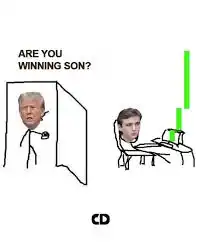
Kaito, who wanted to be a center for information distribution, eventually became a broadcasting station that only outputs noise. The prediction markets pride themselves on being a telescope to foresee the future but cannot prevent themselves from becoming billboards for creating the future.
Many people believe that with regulatory relaxation and an influx of capital, the prediction market is bound to be the next big thing. But things always tend to go too far.
People are gradually realizing that we are at the peak of a "gambling culture" cycle.
Absolute financialization will only bring emptiness. People will eventually tire of this high-frequency dopamine stimulation, returning to the experience of life. We start to turn off screens, go hiking, touch real soil, read paper books, and build deep relationships beyond the screen.

“Shorting” the prediction market is not only betting on “human subjectivity” but also on betting on “life”.
Since we can't go back to the past, perhaps the only way out is to stop wasting time on the virtual gambling table and turn around to walk into the sunlight.
You may also like

Wall Street Shorts ETH: Vitalik is aware and has front-run, while Tom Lee remains oblivious

Social Capital CEO: How Equity Tokenization is Reshaping Capital Markets from US Stocks to SpaceX?

CoinGecko Report: Surge of 346% vs Dip of 20.8%, The Wild Rise of DEX

a16z: The Real Opportunity of Stablecoins Lies Not in Disruption but in Filling Gaps

Mining Exodus: Someone Holds $12.8 Billion AI Order

March 6 Market Key Intelligence, How Much Did You Miss?

a16z: The True Opportunity of Stablecoins is in Complementing, Not Disrupting

Predict LALIGA Matches, Shoot Daily & Win BTC, USDT and WXT on WEEX
The WEEX × LALIGA campaign brought together football excitement and crypto participation through a dynamic interactive experience. During the event, users predicted matches, completed trading tasks, and took daily shots to compete for rewards including BTC, USDT, WXT, and exclusive prizes.

Ray Dalio Dialogue: Why I'm Betting on Gold and Not Bitcoin

Who Took the Money in the AI Era? A Must-See Investment Checklist for HALO Asset Trading
Wall Street Bears Target Ethereum: Vitalik In the Know Takes Flight, Tom Lee Remains Bullish
Pump.fun Hacker Steals $2 Million, Receives 6-Year Prison Sentence, Opts for 'Self-Detonation'

6% Annual Percentage Yield as Musk Declares War on Traditional Banks
36 years, 4 wars, 1 script: How does capital price the world in conflict?

Mining Companies' Great Migration: Some Have Already Secured $12.8 Billion in AI Orders
What Is Vibe Coding? How AI Is Changing Web3 & Crypto Development
What is vibe coding? Learn how AI coding tools are lowering the barrier to Web3 development and enabling anyone to build crypto applications.
The parent company of the New York Stock Exchange strategically invests in OKX: The intentions behind the $25 billion valuation

WEEX P2P update: Country/region restrictions for ad posting
To improve ad security and matching accuracy, WEEX P2P now allows advertisers to restrict who can trade with their ads based on country or region. Advertisers can select preferred counterparty locations for a safer, smoother trading experience.
I. Overview
When publishing P2P ads, advertisers can now set the following:
Allow only counterparties from selected countries or regions to trade with your ads.
With this feature, you can:
Target specific user groups more precisely.Reduce cross-region trading risks.Improve order matching quality.
II. Applicable scenarios
The following are some common scenarios:
Restrict payment methods: Limit orders to users in your country using supported local banks or wallets.Risk control: Avoid trading with users from high-risk regions.Operational strategy: Tailor ads to specific markets.
III. How to get started
On the ad posting page, find "Trading requirements":
Select "Trade with users from selected countries or regions only".Then select the countries or regions to add to the allowlist.Use the search box to quickly find a country or region.Once your settings are complete, submit the ad to apply the restrictions.
When an advertiser enables the "Country/Region Restriction" feature, users who do not meet the criteria will be blocked when placing an order and will see the following prompt:
If you encounter this issue when placing an order as a regular user, try the following solutions.
Choose another ad: Select ads that do not restrict your country/region, or ads that allow users from your location.Show local ads only: Prioritize ads available in the same country as your identity verification.
IV. Benefits
Compared with ads without country/region restrictions, this feature provides the following improvements.
Aspect
Improvement
Trading security
Reduces abnormal orders and fraud risk
Conversion efficiency
Matches ads with more relevant users
Order completion rate
Reduces failures caused by incompatible payment methods
V. FAQ
Q1: Why are some users not able to place orders on my ad?
A1: Their country or region may not be included in your allowlist.
Q2: Can I select multiple countries or regions when setting the restriction?
A2: Yes, multiple selections are supported.
Q3: Can I edit my published ads?
A3: Yes. You can edit your ad in the "My Ads" list. Changes will take effect immediately after saving.


 App
App