
- Buy Crypto
- Markets
 Futures
- Spot
- Copy Trade
- Earn
- More
The Drive Toward a Euro-Pegged Stablecoin: EU Banks’ Ambitious Plans

Key Takeaways
- A consortium of 10 European banks aims to introduce a euro-pegged stablecoin by 2026, under the guidance of Qivalis, which requires regulatory approval from the Dutch Central Bank.
- The planned stablecoin aligns with the Markets in Crypto-Assets (MiCA) framework, offering new opportunities for digital transactions within the European Union.
- The initiative coincides with international regulatory developments, such as the US GENIUS Act, emphasizing the global momentum towards establishing stablecoin frameworks.
- Concerns have been raised by European regulators about potential monetary policy implications, necessitating careful monitoring of stablecoin market growth.
- Tether, a major stablecoin issuer, recently discontinued its euro-pegged stablecoin due to regulatory constraints, highlighting challenges in the evolving landscape.
WEEX Crypto News, 2025-12-03 07:42:13
Introduction to Euro-Pegged Stablecoin Initiative
In a rapidly evolving financial ecosystem, a concerted effort by a group of European banks is set to introduce a euro-pegged stablecoin by 2026. This ambitious initiative marks a significant step towards enhancing digital monetary systems and empowering European businesses and consumers. The strategic move is spearheaded by Qivalis, an entity authorized by the Dutch Central Bank, underscoring a robust framework compliant with the European Union’s MiCA regulatory requirements. By focusing on a euro-pegged stablecoin, this initiative aims to bolster monetary autonomy and facilitate seamless onchain payments and digital transactions across Europe.
Context of the Stablecoin Movement in Europe
The financial landscape has been undergoing transformative changes fueled by technological advancements and regulatory shifts. The move towards developing a euro-pegged stablecoin arises amidst the growing global discussions on the integration of stable digital currencies within traditional monetary systems. A stablecoin, pegged to a tangible currency like the euro, offers predictability and stability amidst volatile cryptocurrency markets. With the rise of digital assets, stablecoins ensure transactional security, making them an attractive proposition for businesses and consumers alike.
The European banking consortium, including heavyweights such as BNP Paribas, underscores the collaborative nature of this initiative. As the banks strive for regulatory compliance, their efforts align with a broader trend of expanding digital finance while adhering to regional regulations. The MiCA framework serves as a cornerstone of their plans, ensuring robust compliance and security measures are in place.
The Strategic Significance of a Euro-Pegged Stablecoin
The introduction of a euro-pegged stablecoin represents a paradigm shift towards digital currency autonomy within Europe. Unlike cryptocurrencies that face unpredictable price fluctuations, stablecoins offer stability by being tethered to established currencies. This stability facilitates their use as reliable means of transaction and earnings, enabling businesses to engage confidently in digital markets.
Qivalis CEO Jan-Oliver Sell elucidates the strategic foresight of this initiative, emphasizing the opportunities it heralds for onchain payments and digital asset interactions within European currency confines. The move aligns with a vision of fostering a modern, interconnected financial ecosystem, which drives innovation and minimizes reliance on non-domestic currencies. Such a development resonates with growing consumer demands for digital transactions that mirror traditional banking experiences in terms of security and reliability.
Comparative Analysis: Global Stablecoin Trends
This strategic initiative in Europe is part of a larger global trend involving stablecoins and digital financial assets. In the United States, the legislative groundwork for payment stablecoins has been laid by the introduction of the GENIUS Act, signed into law in July by then-President Donald Trump. This law establishes a comprehensive framework designed to integrate stablecoins within the traditional financial infrastructure.
The global momentum surrounding stablecoins reflects a shared understanding of their utility in modern financial transactions. With the advent of stablecoins, traditional financial systems are increasingly interwoven with digital innovations, paving the way for more inclusive and dynamic monetary systems. By anchoring transactions with stable value, stablecoins serve as a bridge connecting traditional and modern financial paradigms.
Navigating Regulatory Challenges in Europe
While the promise of euro-pegged stablecoins is significant, regulatory concerns persist. The Dutch Central Bank and European Central Bank (ECB) emphasize the importance of monitoring the exponential growth of the stablecoin market closely. Governor Olaf Sleijpen of the Dutch Central Bank and ECB adviser Jürgen Schaafhe underscore that, despite their potential benefits, stablecoins necessitate careful oversight to prevent potential risks to monetary policy.
The ECB’s November report highlights that, as of publication, euro-denominated stablecoins had a relatively modest market capitalization of under 350 million euros. While this represents less than 1% of the global market as of July, the report advocates for vigilance to address potential scalability and regulatory challenges arising from increased stablecoin adoption.
Challenges and Lessons: Tether’s Exit from the Euro Stablecoin Arena
A noteworthy development in the stablecoin landscape is the exit of Tether from the euro-pegged stablecoin market. Tether’s decision to discontinue support for its EURt stablecoin highlights the challenges of adhering to evolving regulatory frameworks. Although Tether initially launched their euro-pegged stablecoin with optimism, CEO Paolo Ardoino cited complexities stemming from MiCA regulations as a pivotal factor in their withdrawal.
This development underscores the intricate balance required for operating within regulatory boundaries while fostering innovation. Tether’s experience provides valuable insights into navigating the dynamic landscape of digital currencies, thereby informing future strategies for stablecoin initiatives in the European Union.
Exploring Future Prospects
Looking ahead, the trajectory of digital finance within the European Union is poised for significant developments. With regulatory frameworks such as MiCA in place, the path is set for further integration of digital currencies within traditional systems. The anticipated introduction of a euro-pegged stablecoin stands as a testament to proactive measures aimed at alignment with regulatory standards and responsiveness to consumer demands.
The ongoing dialogue about monetary autonomy within the continent resonates with broader global endeavors. Such developments drive the momentum towards ensuring that digital economic frameworks complement traditional monetary systems. With the interplay of market forces, regulatory environments, and technological innovations, the future of stablecoins within Europe appears promising.
FAQ
How will the euro-pegged stablecoin benefit European consumers?
The euro-pegged stablecoin aims to provide stability, security, and reliability in digital transactions. By being pegged to the euro, it minimizes price volatility, making it a practical currency for both consumers and businesses engaging in digital payments.
What is the MiCA framework, and why is it significant?
The Markets in Crypto-Assets (MiCA) framework is a comprehensive set of regulations within the European Union designed to oversee digital financial assets, including cryptocurrencies and stablecoins. It ensures that all digital financial activities meet rigorous compliance and security standards.
How does the euro-pegged stablecoin align with global financial trends?
The euro-pegged stablecoin is part of a broader global movement recognizing the potential of stable digital currencies to complement traditional financial systems. Similar initiatives, like the US GENIUS Act, highlight the international emphasis on integrating stablecoins into established financial frameworks.
Why did Tether discontinue its euro-pegged stablecoin?
Tether’s decision to withdraw from supporting its euro-pegged stablecoin was influenced by regulatory challenges associated with the MiCA framework. Their experience highlights the complexities and dynamic nature of operating within a stringent regulatory landscape, informing future stablecoin initiatives.
What are the next steps for the euro-pegged stablecoin project?
The consortium of European banks, under Qivalis, will work towards obtaining necessary regulatory approvals and ensuring compliance with the MiCA framework. They aim to introduce the euro-pegged stablecoin to the market by the second half of 2026, focusing on enhancing digital transaction capabilities within Europe.
You may also like

Wall Street Shorts ETH: Vitalik is aware and has front-run, while Tom Lee remains oblivious

Social Capital CEO: How Equity Tokenization is Reshaping Capital Markets from US Stocks to SpaceX?

CoinGecko Report: Surge of 346% vs Dip of 20.8%, The Wild Rise of DEX

a16z: The Real Opportunity of Stablecoins Lies Not in Disruption but in Filling Gaps

Mining Exodus: Someone Holds $12.8 Billion AI Order

March 6 Market Key Intelligence, How Much Did You Miss?

a16z: The True Opportunity of Stablecoins is in Complementing, Not Disrupting

Predict LALIGA Matches, Shoot Daily & Win BTC, USDT and WXT on WEEX
The WEEX × LALIGA campaign brought together football excitement and crypto participation through a dynamic interactive experience. During the event, users predicted matches, completed trading tasks, and took daily shots to compete for rewards including BTC, USDT, WXT, and exclusive prizes.

Ray Dalio Dialogue: Why I'm Betting on Gold and Not Bitcoin

Who Took the Money in the AI Era? A Must-See Investment Checklist for HALO Asset Trading
Wall Street Bears Target Ethereum: Vitalik In the Know Takes Flight, Tom Lee Remains Bullish
Pump.fun Hacker Steals $2 Million, Receives 6-Year Prison Sentence, Opts for 'Self-Detonation'

6% Annual Percentage Yield as Musk Declares War on Traditional Banks
36 years, 4 wars, 1 script: How does capital price the world in conflict?

Mining Companies' Great Migration: Some Have Already Secured $12.8 Billion in AI Orders
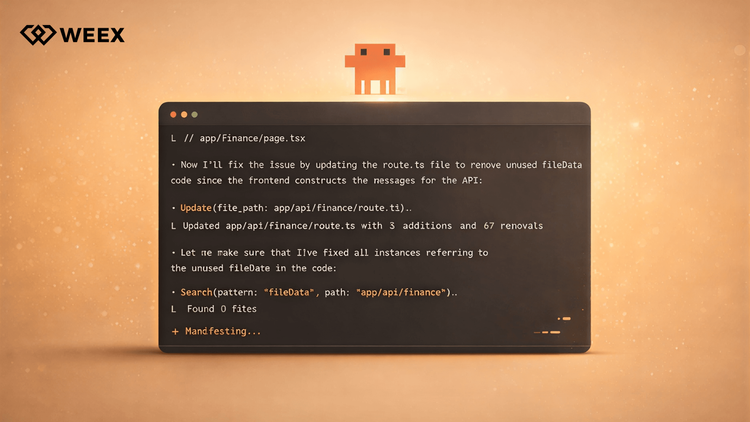
What Is Vibe Coding? How AI Is Changing Web3 & Crypto Development
What is vibe coding? Learn how AI coding tools are lowering the barrier to Web3 development and enabling anyone to build crypto applications.
The parent company of the New York Stock Exchange strategically invests in OKX: The intentions behind the $25 billion valuation

WEEX P2P update: Country/region restrictions for ad posting
To improve ad security and matching accuracy, WEEX P2P now allows advertisers to restrict who can trade with their ads based on country or region. Advertisers can select preferred counterparty locations for a safer, smoother trading experience.
I. Overview
When publishing P2P ads, advertisers can now set the following:
Allow only counterparties from selected countries or regions to trade with your ads.
With this feature, you can:
Target specific user groups more precisely.Reduce cross-region trading risks.Improve order matching quality.
II. Applicable scenarios
The following are some common scenarios:
Restrict payment methods: Limit orders to users in your country using supported local banks or wallets.Risk control: Avoid trading with users from high-risk regions.Operational strategy: Tailor ads to specific markets.
III. How to get started
On the ad posting page, find "Trading requirements":
Select "Trade with users from selected countries or regions only".Then select the countries or regions to add to the allowlist.Use the search box to quickly find a country or region.Once your settings are complete, submit the ad to apply the restrictions.
When an advertiser enables the "Country/Region Restriction" feature, users who do not meet the criteria will be blocked when placing an order and will see the following prompt:
If you encounter this issue when placing an order as a regular user, try the following solutions.
Choose another ad: Select ads that do not restrict your country/region, or ads that allow users from your location.Show local ads only: Prioritize ads available in the same country as your identity verification.
IV. Benefits
Compared with ads without country/region restrictions, this feature provides the following improvements.
Aspect
Improvement
Trading security
Reduces abnormal orders and fraud risk
Conversion efficiency
Matches ads with more relevant users
Order completion rate
Reduces failures caused by incompatible payment methods
V. FAQ
Q1: Why are some users not able to place orders on my ad?
A1: Their country or region may not be included in your allowlist.
Q2: Can I select multiple countries or regions when setting the restriction?
A2: Yes, multiple selections are supported.
Q3: Can I edit my published ads?
A3: Yes. You can edit your ad in the "My Ads" list. Changes will take effect immediately after saving.


 App
App