
John Ternus Is Apple's New CEO: What He Inherits After 15 Years of Tim Cook

 Prefer us on Google
Apple has a new chief executive for the first time in fifteen years. John Ternus officially took over on Tuesday, September 1, 2026, ending Tim Cook's long run atop the world's most valuable technology company and handing the job to an engineer who built his career on hardware rather than the software and AI expertise many assumed the moment would demand.
The handover marks a genuine shift in the kind of leader Apple has chosen at this specific moment. Cook built his career and his tenure around operations and supply chain management, the discipline that turned Apple into a manufacturing and logistics powerhouse. John Ternus represents something different: an engineer who has spent more than two decades inside Apple's hardware organization, now taking the wheel at a moment when the company's biggest strategic question isn't about supply chains at all. Understanding what John Ternus actually inherits requires looking past the title itself and into the specific challenges now sitting on his desk.
Who John Ternus Actually Is
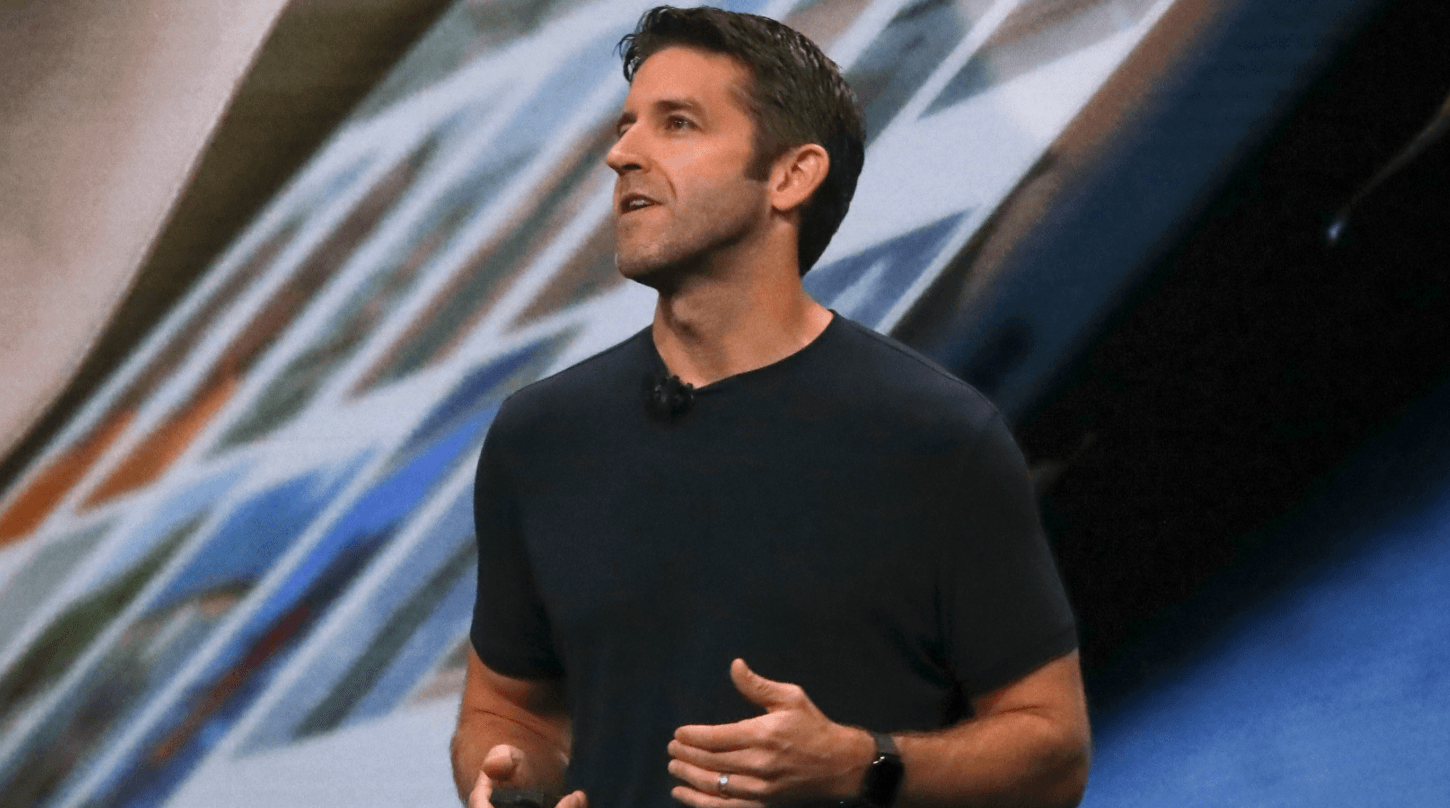
Ternus is 51 years old and joined Apple's design team back in 2001, working his way up through the hardware organization over more than two decades before becoming senior vice president of hardware engineering, according to Al Jazeera's reporting. In that role, he led the engineering teams responsible for Apple's entire product lineup, including the iPhone, the single product line that generates the majority of the company's revenue.
His path to the top job wasn't a surprise development. He was promoted to senior vice president of hardware engineering in 2021, replacing longtime hardware chief Dan Riccio, and was later put in charge of Apple Watch hardware specifically in late 2022, according to background compiled on Wikipedia. Bloomberg had previously described him as the youngest member of Apple's executive team and characterized him as charismatic and well liked internally, details that fed years of succession speculation before the announcement became official.
That speculation intensified well before this week. Reporting from Fortune traced the succession narrative back to at least October 2025, when Bloomberg's Mark Gurman identified Ternus as the most likely heir apparent following the departure of COO Jeff Williams, who had previously been considered a natural successor before stepping down from operational responsibilities. By the time Tuesday's transition became official, Ternus had already spent close to a year as the presumed favorite.
What The Handover Actually Changes
Cook's fifteen-year tenure reshaped Apple into a company valued at roughly $4.6 trillion, driven overwhelmingly by the iPhone's continued dominance, according to NBC News. That achievement was built on operational discipline: Cook was, first and foremost, the executive who perfected Apple's global supply chain before ever becoming CEO, and that operations first instinct defined how the company ran for a decade and a half.
Ternus inherits a company built on that foundation but facing a different kind of challenge than the one Cook spent his tenure solving. According to analysis from Al Jazeera, one industry observer noted there's little reason to fix what's already working, predicting Ternus will concentrate on hardware innovation while leaving Cook's supply chain infrastructure largely intact rather than attempting to rebuild what already functions well. The job isn't to fix Apple's operations. It's to figure out what Apple's hardware-centric culture does next in an industry increasingly defined by software and AI capability rather than device design alone.
The AI Question Hanging Over His Appointment
The most direct challenge facing Ternus is one that his own background doesn't naturally answer. Apple has gotten off to a rough start in AI, according to NBC News, after stumbling in its efforts to deliver features it had promised nearly two years earlier, and some analysts had specifically argued that software chief Craig Federighi represented the more logical choice for a company scrambling to catch up in the category that's currently reshaping the entire technology industry.
Apple's own messaging around the decision pushed back directly on that framing. Carolina Milanesi, an analyst at Creative Strategies, argued that this read misunderstands how consumers actually adopt new technology, noting that people still buy hardware first and that this pattern is likely to hold for a long time, since discovering the value of AI requires being interested in the hardware carrying it in the first place. Cook echoed a similar sentiment in his final memo to employees, reinforcing that the choice of a hardware-focused successor reflected a specific bet on how AI adoption actually happens rather than an oversight.
Whether that bet proves correct is a question Ternus will start answering almost immediately. Apple's AI stumbles weren't abstract strategic missteps; they involved concrete features the company had publicly committed to and then failed to ship on the promised timeline, and Ternus now owns the responsibility for closing that gap regardless of whether his background specifically prepared him for a software-and-AI-centric turnaround.
-- Price
The Political and Supply Chain Pressures He Also Inherits
Beyond the AI question, Ternus takes over a company still navigating acute political pressure tied to its dependence on China for manufacturing, according to NBC News. Cook spent years cultivating a working relationship with President Donald Trump specifically to manage this exposure, including navigating trade and tariff disputes targeting countries across Asia where Apple's manufacturing supply chains run deep. That relationship management work doesn't automatically transfer with the title, and Ternus, an engineer by background and training rather than a diplomat or operations specialist, will need to build his own version of those relationships largely from scratch.
Separately, MacDailyNews reported that Apple is contending with a global memory shortage that's already pushing device prices upward, a supply side pressure that sits directly at the intersection of Ternus's hardware background and the kind of external, macro level challenge that operations expertise, not engineering talent alone, typically addresses.
What Ternus's Pay Package Signals About Apple's Expectations
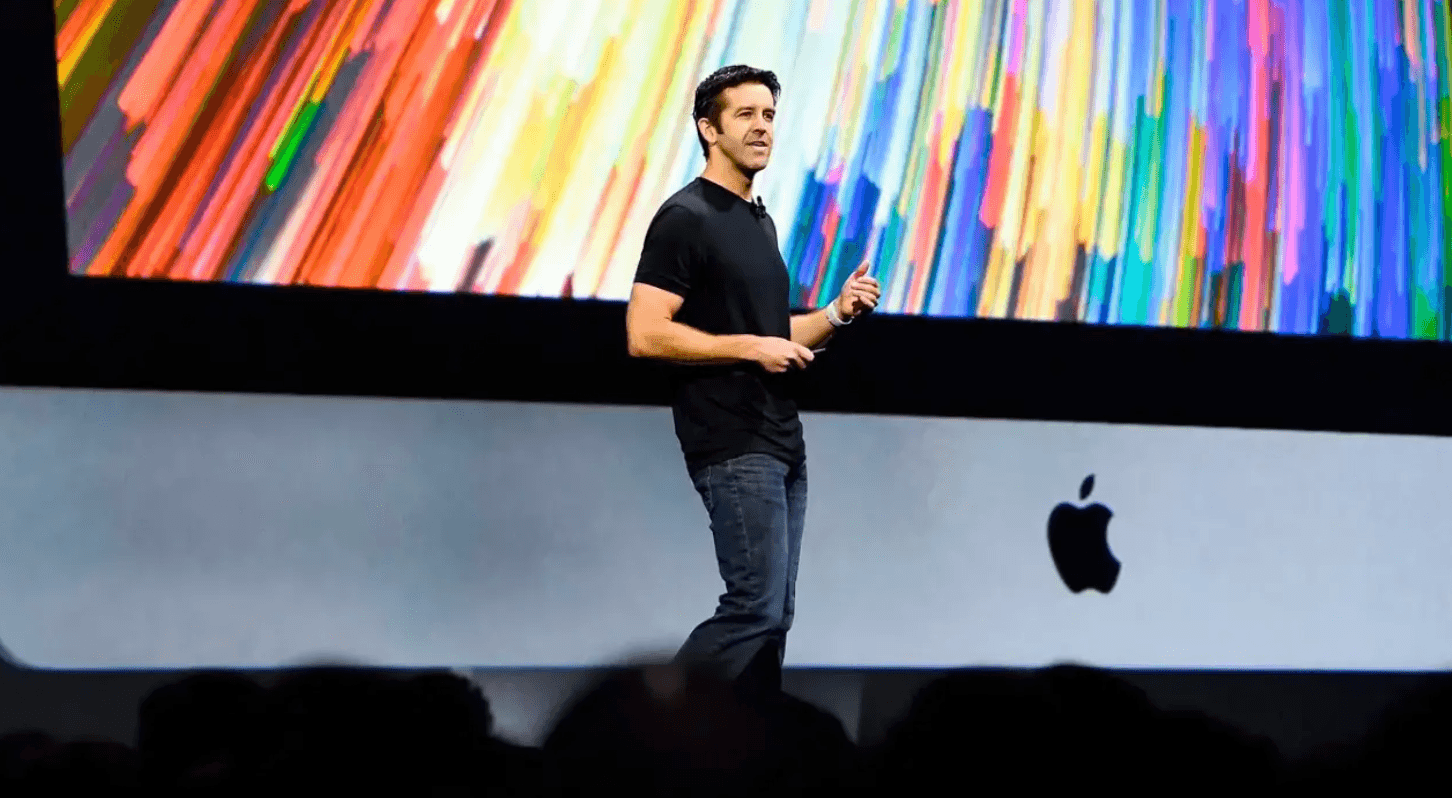
Apple disclosed the financial terms of the transition in an SEC filing, revealing that Ternus's compensation package totals roughly $58 million, according to 9to5Mac's review of the filing. That figure breaks down into a $3 million annual salary and equity grants valued at $55 million to be awarded starting in Apple's fiscal 2027, which begins in October, according to Deadline's reporting. A portion of that equity is performance based, tied specifically to Apple's total shareholder return relative to other S&P 500 companies, while the remaining time based shares vest at 12.5% every six months over four years.
Cook's own new arrangement as executive chairman was disclosed alongside Ternus's package: a $2 million annual salary effective September 26, plus an equity award for fiscal 2027 valued at $45 million, according to the same filing. The structure of both packages, particularly the performance-linked equity tied to shareholder returns relative to peers, signals that Apple's board is tying a meaningful share of leadership compensation directly to whether Ternus can keep pace with, or outperform, rivals during exactly the AI transition his hardware background is being tested against.
The First Public Test Is Already on the Calendar
Ternus won't have long to settle into the role before facing his first major public moment as CEO. Apple has scheduled a media event for Wednesday, September 9, at 10 a.m. Pacific Time, widely expected to unveil the iPhone 18 Pro, iPhone 18 Pro Max, and the company's first ever foldable iPhone, according to MacRumors. Additional products expected at the same event include a new Apple Watch Series 12 with a ceramic case option, an Apple Watch Ultra 4, and new AirPods models.
MacDailyNews described this event specifically as Ternus's first major public test, with investors watching closely for signs of whether he can push Apple beyond what one report characterized as his predecessor's iterative playbook, rather than simply continuing Cook's approach under a new name. Whether Ternus uses this specific event to signal a genuinely different direction, or whether the September 9 announcements look largely consistent with Apple's recent release cadence, is likely to shape early market and analyst perception of his leadership far more than anything said during the formal transition itself.
Conclusion
John Ternus inherits a company at a genuinely unusual inflection point: a $4.6 trillion business built on operational excellence and iPhone dominance, now facing a strategic challenge, competing in AI, that sits somewhat outside the core hardware expertise that earned him the job in the first place. His $58 million pay package, with performance-based equity tied directly to shareholder returns relative to peers, signals that Apple's board is measuring his tenure specifically against how well he closes that AI gap, not simply against whether iPhone sales remain strong. His first public test arrives quickly, on September 9, giving the market an early, concrete signal of what an Apple led by an engineer rather than an operations specialist actually looks like in practice.
FAQ
1. When did John Ternus become Apple's CEO?
Ternus officially took over as Apple's CEO on Tuesday, September 1, 2026, succeeding Tim Cook after a fifteen-year tenure. Cook transitioned into the role of executive chairman.
2. What was John Ternus's role at Apple before becoming CEO?
Ternus served as senior vice president of hardware engineering, a role he was promoted into in 2021, leading the engineering teams behind Apple's entire product lineup, including the iPhone.
3. Why do some analysts see AI as Ternus's biggest challenge?
Apple has struggled to deliver AI features it promised nearly two years earlier, and some analysts argued a software-focused executive would have been better positioned to lead Apple's AI catch-up, given Ternus's background is primarily in hardware engineering.
4. How much is John Ternus being paid as Apple's new CEO?
His compensation package totals roughly $58 million, including a $3 million annual salary and $55 million in equity grants, with a portion tied to Apple's shareholder returns relative to other S&P 500 companies.
5. What is John Ternus's first major public test as CEO?
Apple has scheduled a media event for September 9, 2026, expected to unveil the iPhone 18 Pro lineup and the company's first foldable iPhone, widely viewed as his first significant public moment leading the company.
This content is provided for general informational purposes only and doesn't constitute financial, investment, legal, or tax advice. Any events, rewards, online promotions, or related information mentioned herein should not be considered a recommendation, solicitation, or invitation to purchase, sell, trade, or otherwise deal in any crypto assets. Crypto assets are highly volatile and may result in loss. The availability of WEEX services, products, and related events may vary by region. You are responsible for ensuring that your participation is in accordance with applicable local laws and regulations.
You may also like
What Is Tangem Wallet? A Complete Beginner's Guide

MetaMask Transaction Stuck or Failed? Here's How to Fix It
Meta Stock Rallied After a $16.68 Billion Settlement: Why a Legal Loss Sent Shares Higher

Easypaisa P2P Payments: How to Choose a Merchant and Confirm a USDT Order

XST Stock: Why This Ticker Points to Four Completely Different Companies
Should You Buy AVGO Stock? What a Street Wide "Strong Buy" Rating Actually Requires
Broadcom Stock Price Fell After 86% Revenue Growth: What the Q4 Guidance Gap Actually Means

AAPL Under Ternus: What Apple's CEO Change Means for Traders
CyberLeek Crypto: The GTA 6 Token's Exit Liquidity Problem

AIINU After LongX: What the NVDA 3x Fee Loop Actually Pays
MetaMask Seed Phrase & Private Key Security Guide
How to Install and Set Up MetaMask (2026 Updated Guide)
What Is MetaMask? A Complete Beginner's Guide
What Is Arbitrum (ARB) and How Does This Ethereum Layer 2 Work?
Is Arbitrum (ARB) Worth Buying After Its 30% Rally? An Analysis About Utility, Supply and Risks

GoPro Stock Soared 40%: What the $1.14 Merger Actually Pays
Stealth XST Coin: The $1,806 Daily Volume Behind a $2.3M Cap
Dell Earnings: $95B AI Backlog Now Dwarfs Its Own Guidance
Fable 5.1: What Anthropic's New Model Means for AI Tokens
Dell Stock Surges 9.4% After Smashing Earnings Estimates: What Drove the AI Server Beat
Why Is GoPro Stock Surging 80%? A YouTuber's 8.5% Stake and a Short Squeeze Collide
XST ETF vs XST Coin (XSolut): Don't Confuse These Two Completely Different Assets
What Is PONS? Inside the "100x Coin" Taking Over Robinhood Chain

Stock Spot vs Perpetuals vs Real Stocks: Key Differences
WEEX Stock Spot 2.0 Rewards Guide: Trade & Share $100K
ARK Invest Crypto Stocks vs ARKB: How Cathie Wood Gets Crypto Exposure
Which ARK ETFs Hold Coinbase Stock? COIN Exposure in ARKK, ARKW and ARKF
How Much Coinbase Stock Does Cathie Wood Own? ARK’s COIN Position Explained
Why Is Cathie Wood’s ARK Invest Buying Coinbase, Circle, BitMine and Bullish?
Cathie Wood’s $50 Million Crypto Stock Bet Explained: What Did ARK Invest Buy?
What Is Tangem Wallet? A Complete Beginner's Guide
MetaMask Transaction Stuck or Failed? Here's How to Fix It
Meta Stock Rallied After a $16.68 Billion Settlement: Why a Legal Loss Sent Shares Higher
Easypaisa P2P Payments: How to Choose a Merchant and Confirm a USDT Order
XST Stock: Why This Ticker Points to Four Completely Different Companies
Should You Buy AVGO Stock? What a Street Wide "Strong Buy" Rating Actually Requires


