
How Polymarket and Kalshi Turned Predictions Into a Billion-Dollar Business

 Prefer us on Google


Prediction markets are no longer just academic experiments. Platforms like Polymarket and Kalshi have turned future events into tradable markets, attracting investors, media companies, and millions of users.
Their growth is built on a simple idea: information about the future has value. By allowing users to trade their expectations, prediction markets attempt to create real-time signals about uncertain events. However, their rapid expansion also raises questions about regulation, market accuracy, and whether they represent financial innovation or a new form of speculation.
From Academic Experiment to Billion-Dollar Prediction Markets
Prediction markets began as a way to study whether markets could improve forecasting. In 1998, researchers at the University of Iowa launched the Iowa Electronic Markets, allowing participants to trade contracts related to political outcomes. The experiment showed that market-based predictions could sometimes outperform traditional forecasts.
The concept later evolved into commercial platforms. Polymarket and Kalshi became two of the most recognized prediction market companies, expanding the idea from academic research into a broader financial and media product. The video notes that both platforms have gained significant attention through partnerships, marketing, and growing user activity.
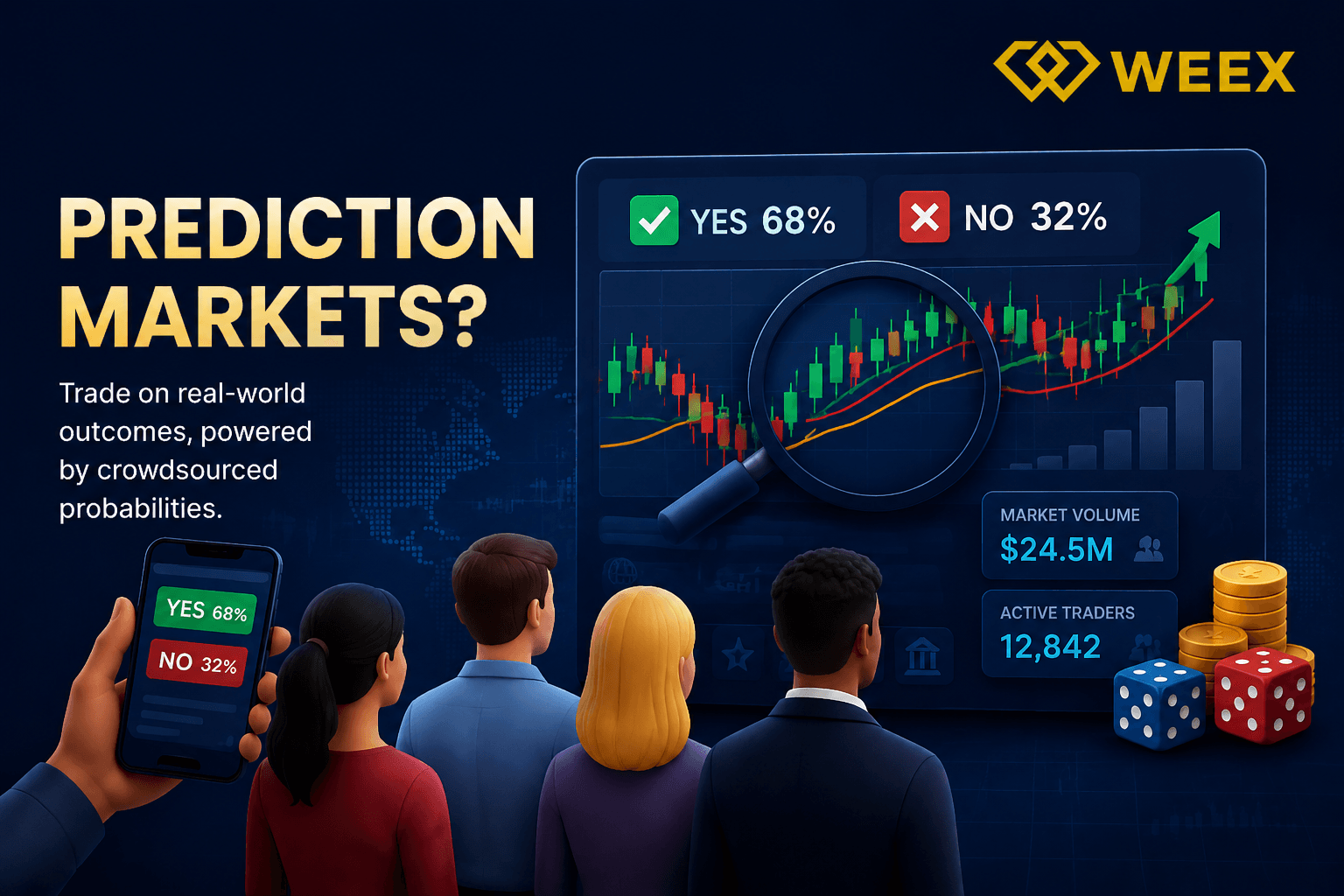
How Prediction Markets Turn Opinions Into Tradable Assets
Prediction markets work by allowing users to trade contracts linked to future events. Instead of buying company shares or commodities, users trade their expectations about whether an event will happen.
For example, a contract related to an economic indicator or political outcome may increase or decrease in price as new information enters the market. This creates a probability-based pricing system where market participants collectively express their views.
Supporters believe this mechanism can capture “wisdom of crowds.” When many people with different information participate, market prices may provide useful signals about future outcomes. The video highlights that early research on prediction markets found strong forecasting performance in some political events, including comparisons with traditional polling methods.
However, prediction markets are not guaranteed to be accurate. Their effectiveness depends on liquidity, participant diversity, and whether enough informed traders are involved.
Why Polymarket and Kalshi Became Market Leaders
The rise of Polymarket and Kalshi is closely linked to the growing demand for real-time information.
Financial institutions, investors, and media companies have shown interest because prediction markets provide another way to measure expectations around uncertain events. The video explains that many supporters view information as a valuable asset, which is why traditional financial players have started paying attention to this market.
At the same time, prediction markets fit naturally into internet culture. Unlike traditional financial products, they cover topics people already discuss every day, including elections, sports, and major news events. This combination of finance and online engagement has helped prediction markets reach a much wider audience.
The Regulatory Challenge: Finance or Gambling?
The biggest challenge for prediction markets is not how they work, but how they should be classified. Unlike traditional financial products or betting platforms, prediction markets combine elements of both trading and gambling, creating uncertainty for regulators.
Platforms such as Kalshi argue that event contracts should be treated as financial derivatives rather than gambling products. Since users trade contracts based on future outcomes, these platforms operate under the derivatives framework overseen by the U.S. Commodity Futures Trading Commission (CFTC).
This classification allows prediction markets to operate differently from traditional sports betting platforms, which are generally regulated at the state level. However, as prediction markets expand beyond economic indicators and policy events into areas such as sports and entertainment, the distinction becomes increasingly difficult to define.
The core debate is whether these contracts provide valuable market information or simply create a new form of speculation. This regulatory uncertainty remains one of the biggest factors shaping the future of prediction markets.
Are Prediction Markets the Future of Finance or a New Form of Speculation?
Prediction markets represent a new way of trading uncertainty. Their strongest value is the ability to transform scattered opinions into measurable market signals.
But their biggest challenge is maintaining a balance between information and speculation. As prediction markets expand into more areas, questions remain about whether they are helping users understand the future or simply encouraging more forms of betting.
The future of Polymarket, Kalshi, and the wider prediction market industry will depend on whether they can prove long-term value beyond short-term attention. Clear regulation, transparent market design, and responsible participation will determine whether prediction markets become a meaningful financial tool or remain a controversial experiment.
Disclaimer: This content is provided for general branding and informational purposes only and doesn't constitute financial, investment, legal, or tax advice. Any events, rewards, online events, or related information mentioned herein should not be considered a recommendation, solicitation, or invitation to purchase, sell, trade, or otherwise deal in any crypto assets or to use any services. Crypto assets are highly volatile and may result in loss. WEEX services and online events may not be available in all regions and are subject to applicable laws, regulations, and eligibility requirements. You are responsible for ensuring that your use of WEEX services complies with local laws and for carefully assessing the risks before participating in any crypto-related activities.
You may also like
Tesla Stock Is Down 17% in 2026: What Q2 Earnings Need to Deliver to Turn the Story Around

What Is Mark Cuban's Stock Options Philosophy? How SpaceX Turned Welders Into Millionaires
SPCX Stock Price and the $25 Billion Short Position: Is a Short Squeeze Coming?

Is SPCX Stock Price a Buy? What Uber, Airbnb and Rivian's IPO Crashes Tell Investors
SPCX Stock Price Hits All Time Low: What Investors Should Do Right Now

How Will the CLARITY Act and Bank-Grade Stablecoin KYC Rules Change Crypto Trading in 2026
Why Is BitMine Buying Millions of Ethereum Tokens and Staking $9 Billion in ETH in 2026
How to Protect Your Bitcoin from Physical Attacks: Lessons From the NYC Crypto Torture Case in 2026
What Is the NYC Crypto Kidnapping Case? The Soho Bitcoin Attack Explained — 2026 Case Analysis

SpaceX Stock (SPCX): Now Public, and Back Where It Started
USA Rare Earth (USAR): What It Is and How to Trade the Token
NVIDIA Stock in 2026: Real Shares, Tokenized NVDA, and Perpetuals Compared
How to Buy USAR Coin: Buying Tokenized USA Rare Earth Stock the Right Way
WEEX Poker Party Series 4: Draw Cards to Split a $1M USDT Pool
Can TENDIES Coin Recover After the Pullback? Price Outlook Explained
Who Really Makes Money on Prediction Markets? Smart Money vs Retail Traders
The Hidden Problem With Prediction Markets: Who Pays the Winners?
Prediction Markets Are the Future of Finance or Just Gambling?

Why Prediction Markets Are So Hard to Regulate: The CFTC vs SEC Debate
Are Prediction Markets Legal? CFTC vs SEC Regulation Explained
Why Is TSMC Stock Down After a 77% Profit Jump? What Wall Street Is Actually Worried About
Is Samsung Stock a Buy at Its Lowest Level Since the AI Boom Began?
Samsung Stock and the KOSPI Bear Market: What the 30% Decline From Peak Tells Investors
Oil Price Above $90: What the US-Iran War Means for Your Portfolio Right Now
Iran War and Bitcoin: Why Crypto Is Not Acting Like a Safe Haven at $90 Oil
KOSPI Stock Market Enters Bear Market: What a 25% Drop From the Peak Means for Investors
KOSPI Stock Bear Market: What It Means for Samsung, SK Hynix and Korean Chip Stocks
Is the KOSPI Stock Market a Buy After Entering Bear Market Territory?
SK Hynix Leveraged ETFs SKHL SKHX SKHZ: What Each One Does and Who Should Use Them
Barclays Sees 70% Upside for SK Hynix Stock: What the Overweight Rating Means
Tesla Stock Is Down 17% in 2026: What Q2 Earnings Need to Deliver to Turn the Story Around
What Is Mark Cuban's Stock Options Philosophy? How SpaceX Turned Welders Into Millionaires
SPCX Stock Price and the $25 Billion Short Position: Is a Short Squeeze Coming?
Is SPCX Stock Price a Buy? What Uber, Airbnb and Rivian's IPO Crashes Tell Investors
SPCX Stock Price Hits All Time Low: What Investors Should Do Right Now
How Will the CLARITY Act and Bank-Grade Stablecoin KYC Rules Change Crypto Trading in 2026
Contents
Popular coins
Latest articles





