
Is Samsung Stock a Buy at Its Lowest Level Since the AI Boom Began?

 Prefer us on Google


Samsung stock at its lowest level since the AI boom began is a specific and historically meaningful entry point that is worth examining precisely rather than treating as either an obvious buy or an obvious continuation of a trend. The last time Samsung stock traded at current levels, the AI memory supercycle had not yet produced the extraordinary earnings that the company subsequently reported. Buying Samsung stock today means buying a company whose business has transformed dramatically since the last time the stock was at this price, at a valuation that reflects maximum pessimism rather than the business trajectory that the transformation has produced.
That framing does not automatically make the current price a buy. It establishes why the question deserves serious analysis rather than a reflexive response in either direction.
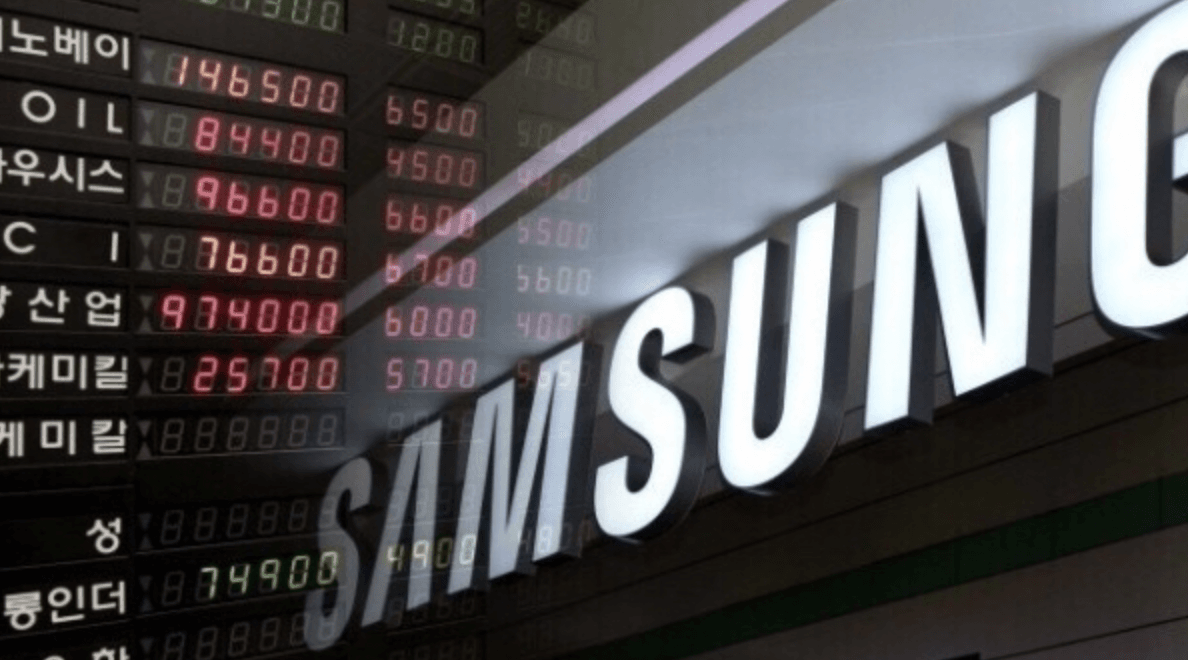
What Current Prices Actually Imply About the Business
The most useful starting point for the Samsung stock buy decision is understanding what the current price implies about the business rather than comparing it to recent higher prices.
Samsung stock at current levels is pricing a specific scenario about the future rather than reflecting the past performance that the 1800% profit growth represents. The market is not ignorant of the Q2 preliminary results. Every institutional investor covering Samsung processed the 1800% profit growth when it was released on July 7. The current price reflects their collective assessment of what comes after Q2 rather than their assessment of Q2 itself.
The implied scenario in current prices combines two concerns that each compress Samsung's appropriate multiple independently and that together produce the current valuation level. First the AI demand efficiency concern that Kimi K3 crystallized, specifically that lower-cost Chinese AI models reduce the memory intensity of AI workloads faster than Samsung's capacity investments assume. Second the capital allocation concern about the $270 billion southwestern Korea hub investment in a location outside the established chipmaking corridor that analysts have been questioning since the announcement.
For the buy decision, the relevant question is not whether these concerns are real. They are real and they are priced. The relevant question is whether the price reflects concerns that are fully warranted, partially warranted, or significantly overweighted relative to the actual probability of the negative scenarios materializing.
The Valuation Level That No Previous AI Boom Analysis Addressed
One dimension of the Samsung stock buy decision at current levels that is genuinely new and has not been addressed in any previous coverage of Samsung stock at higher prices is the specific valuation multiple that the current price implies on the earnings trajectory the Q2 results have established.
Samsung's Q2 preliminary operating profit of 89.4 trillion won on revenue of 171 trillion won represents an operating margin of approximately 52%, the highest in the company's history. Annualizing Q2 operating profit gives a run rate that makes the current stock price extraordinarily compressed on a trailing earnings basis relative to any comparable technology company with similar margins and growth rates.
The specific compression is a function of the gap between Samsung's margin profile and the multiple the market is willing to assign given the uncertainty about whether those margins are sustainable. A company delivering 52% operating margins at Samsung's scale in a normal valuation environment would command a multiple that makes the current price look dramatically undervalued. The market is not applying a normal valuation environment multiple because it is pricing a scenario where margins compress significantly from 52% as AI demand efficiency improvements reduce HBM pricing and as conventional DRAM and NAND oversupply risks re-emerge from the capacity additions that Samsung's $270 billion commitment will eventually produce.
The buy decision at current levels therefore requires taking a specific view on margin sustainability rather than on revenue growth, which is the more unusual version of the Samsung investment question that current prices present.
The Harman Factor That Almost Nobody Is Pricing
One specific dimension of Samsung's business that the uniform AI memory discount has essentially removed from the market's valuation calculation is the Harman International division that Samsung acquired for $8 billion in 2017.
Harman produces connected car technology, professional audio equipment, and consumer audio products including JBL, Harman Kardon, and AKG brands. It is a business with approximately $9 billion to $10 billion in annual revenue that is growing through the automotive technology and premium audio markets at rates entirely unrelated to AI chip demand or Chinese model efficiency.
At current Samsung stock levels, the implicit valuation being assigned to Harman is minimal. The market is treating Samsung as though it were purely a semiconductor company whose entire value derives from the AI memory cycle, which means the Harman business is being provided at essentially zero incremental cost relative to the semiconductor business alone.
For investors who are willing to do the segment-level analysis that the current market environment discourages by lumping all AI-exposed Korean stocks together, the Harman embedded value at current Samsung stock prices is a specific and identifiable source of upside that does not depend on any view about AI memory demand.
The Dividend Argument That Changes the Floor Calculation
Samsung Electronics pays a regular dividend that provides a specific and calculable floor for the buy decision that pure growth stock analysis ignores.
At current prices, Samsung's dividend yield is at one of its highest levels since the company established its consistent dividend policy. The dividend provides a specific return component that is independent of whether AI memory margins sustain at 52% or compress toward historical averages. An investor buying Samsung stock at current levels is not solely dependent on capital appreciation to generate returns.
The dividend also carries a specific signal about management's confidence in cash generation durability. Companies that maintain or grow dividends through periods of stock price weakness are expressing confidence through capital allocation that is more credible than management commentary because it has direct financial consequences. Samsung maintaining its dividend while the stock falls 30% from peak is management expressing through action rather than words that the cash generation supporting the dividend is not at risk.
For international investors accessing Samsung through OTC markets or Korean brokerage accounts, the dividend yield at current prices adds a return component that makes the hold case during any recovery period more rewarding than simply waiting for capital appreciation.
Why the Buy Decision Is Harder Than It Looks
The specific factors that make Samsung stock genuinely difficult to buy at current levels despite the valuation compression are worth stating directly rather than as footnotes to a bull case.
Samsung's HBM competitive position relative to SK Hynix is the most specific fundamental concern that current prices have not fully resolved. Samsung has been attempting to close the HBM qualification and yield rate gap with SK Hynix for multiple product generations without achieving the market share that its scale and investment would suggest should be achievable. If Samsung's HBM yield rates remain below SK Hynix's in the critical next product generation cycle, the segment that is driving the most extraordinary margins in the semiconductor industry continues to be dominated by SK Hynix while Samsung captures a smaller share of the highest-value product.
The $270 billion southwestern Korea hub investment adds a specific timeline and execution uncertainty that is harder to dismiss at current price levels than it was when Samsung was trading 30% higher. A greenfield construction project creating utilities, facilities, and infrastructure from scratch in a region outside the established chipmaking corridor is a multi-year execution challenge whose cost overrun and delay risk is difficult to quantify before construction begins.
The Kimi K3 and broader Chinese AI model efficiency trajectory is the structural uncertainty that all previous Samsung stock analyses at higher prices did not need to incorporate. Buying Samsung stock today requires accepting that the relationship between AI capability and AI infrastructure spending is less certain than it appeared when the stock was 30% higher.
The July 30 Binary That Governs Everything
Every dimension of the Samsung stock buy decision converges on July 30 in a way that makes the ten days between today and the full earnings report the most information-rich period available before committing.
July 30 provides segment-by-segment revenue and profit detail that the preliminary results did not include. The HBM revenue within Device Solutions, the margin profile of the semiconductor business excluding conventional DRAM and NAND, and the Q3 guidance that management provides on July 30 will be the most important new information available about whether current prices represent the floor or a waypoint in a continuing decline.
The specific question that July 30 answers for the buy decision is whether Samsung's semiconductor margin at 52% in Q2 is a sustainable trajectory or a peak that Q3 guidance will signal is moderating. A Q3 guidance that implies continued margin strength in the semiconductor division refutes the bear case that current prices embed. A Q3 guidance that signals margin compression from HBM pricing pressure or from conventional memory oversupply confirms the bear case and removes the valuation compression argument as a basis for buying.
For investors who are genuinely uncertain about which scenario July 30 will reveal, waiting ten days for the most important available information before committing to a position at current prices is the rational choice. The cost of waiting is the potential upside from any pre-earnings recovery. The benefit of waiting is avoiding the downside if July 30 confirms the bear case and the decline extends beyond current levels.
The Case for Buying Before July 30
The specific argument for buying Samsung stock before July 30 rather than waiting for the earnings confirmation rests on two observations that the wait for clarity approach does not adequately weight.
Foreign investors net bought Samsung stock today as domestic institutions sold, at the lowest level since the AI boom began, with Kimi K3 shock and US-Iran oil above $90 providing the most acute simultaneous negative sentiment environment the stock has faced since its extraordinary run began. That combination of maximum negative sentiment and sophisticated global buying is the setup that contrarian investors specifically seek rather than specifically avoid.
The second observation is that July 30 full earnings at current price levels represents a significantly more asymmetric event than July 30 full earnings would have represented at the June peak. When a stock is 30% below peak with maximum pessimism priced, a strong earnings report produces a larger percentage recovery than it would from a higher starting price. The asymmetry between the upside from a strong July 30 at current prices and the downside from a weak July 30 at current prices is more favorable than the equivalent calculation at any higher price level since the AI boom began.
For those looking to participate in global financial markets, having access to the right trading platform matters. WEEX offers crypto and stock trading products, covering major global markets including US stocks and digital assets.
Conclusion
Samsung stock at its lowest level since the AI boom began is a buy decision that is harder than the valuation compression alone suggests and more interesting than the 30% decline narrative implies.
The valuation compression is real and the embedded Harman value, the dividend floor, and the foreign investor buying signal are specific and observable factors that support the buy case. The HBM competitive position uncertainty, the $270 billion hub execution risk, and the Kimi K3 structural question are equally real and equally observable factors that support the wait for clarity case.
What makes current prices the most interesting Samsung stock entry point since the AI boom began is not that the buy case is unambiguous. It is that the specific combination of maximum pessimism, the lowest price since AI boom inception, record earnings already confirmed, and a ten-day window to July 30 full earnings creates a setup where the information required to resolve the uncertainty is both specific and near-term rather than indefinite and structural.
FAQ
1. Is Samsung stock a buy at its lowest level since the AI boom began?
The buy case rests on valuation compression to levels that embed maximum pessimism about AI demand efficiency and capital allocation, embedded Harman division value not reflected in the AI memory discount, dividend yield at historically attractive levels, and foreign investor buying at current prices. The wait case rests on HBM competitive position uncertainty relative to SK Hynix, $270 billion hub execution risk, and Kimi K3 structural AI demand uncertainty that July 30 earnings will begin to resolve.
2. What makes current Samsung stock prices the lowest since the AI boom began?
Three sequential layers of selling produced the current level. The Q2 preliminary results beating elevated estimates by only 6% disappointed momentum investors expecting a larger upside surprise. Broader AI memory sector sentiment deterioration affected all Korean chip stocks. Today's Kimi K3 AI shock and US-Iran oil above $90 added the third layer as the KOSPI entered technical bear market territory, combining to produce a price level not seen since before the AI memory supercycle produced the extraordinary earnings that Q2 confirmed.
3. What is the Harman factor and why does it matter for the buy decision?
Harman International, Samsung's division producing connected car technology and consumer audio products including JBL and Harman Kardon, generates approximately $9 billion to $10 billion in annual revenue entirely unrelated to AI chip demand. At current Samsung stock prices the market is assigning minimal incremental value to Harman beyond the semiconductor business, providing investors with a specific embedded value component whose recovery does not depend on any view about AI memory demand sustainability.
4. Why does the dividend matter for the Samsung stock buy decision?
Samsung's dividend yield at current prices is at one of its highest levels since the company established its consistent dividend policy, providing a return component independent of capital appreciation. Management maintaining the dividend while the stock falls 30% from peak expresses confidence through capital allocation that is more credible than commentary because it has direct financial consequences for the company.
5. Should investors buy Samsung stock before or after July 30 full earnings?
Buying before July 30 captures the asymmetric setup where maximum pessimism at current prices makes a strong earnings report produce a larger percentage recovery than from higher starting prices, supported by the foreign investor buying signal today. Waiting for July 30 eliminates the risk of the HBM segment detail or Q3 guidance confirming the bear case and extending the decline. The choice depends on whether the investor's conviction about the AI demand durability thesis exceeds the ten-day information cost of waiting.
Disclaimer: This content is provided for general branding and informational purposes only and doesn't constitute financial, investment, legal, or tax advice. Any events, rewards, online events, or related information mentioned herein should not be considered a recommendation, solicitation, or invitation to purchase, sell, trade, or otherwise deal in any crypto assets or to use any services. Crypto assets are highly volatile and may result in loss. WEEX services and online events may not be available in all regions and are subject to applicable laws, regulations, and eligibility requirements. You are responsible for ensuring that your use of WEEX services complies with local laws and for carefully assessing the risks before participating in any crypto-related activities.
You may also like

Tesla Stock Is Down 17% in 2026: What Q2 Earnings Need to Deliver to Turn the Story Around

What Is Mark Cuban's Stock Options Philosophy? How SpaceX Turned Welders Into Millionaires

SPCX Stock Price and the $25 Billion Short Position: Is a Short Squeeze Coming?

Is SPCX Stock Price a Buy? What Uber, Airbnb and Rivian's IPO Crashes Tell Investors
SPCX Stock Price Hits All Time Low: What Investors Should Do Right Now

How Will the CLARITY Act and Bank-Grade Stablecoin KYC Rules Change Crypto Trading in 2026

Why Is BitMine Buying Millions of Ethereum Tokens and Staking $9 Billion in ETH in 2026
How to Protect Your Bitcoin from Physical Attacks: Lessons From the NYC Crypto Torture Case in 2026
What Is the NYC Crypto Kidnapping Case? The Soho Bitcoin Attack Explained — 2026 Case Analysis

SpaceX Stock (SPCX): Now Public, and Back Where It Started
USA Rare Earth (USAR): What It Is and How to Trade the Token
NVIDIA Stock in 2026: Real Shares, Tokenized NVDA, and Perpetuals Compared
How to Buy USAR Coin: Buying Tokenized USA Rare Earth Stock the Right Way
WEEX Poker Party Series 4: Draw Cards to Split a $1M USDT Pool
Can TENDIES Coin Recover After the Pullback? Price Outlook Explained
Who Really Makes Money on Prediction Markets? Smart Money vs Retail Traders
The Hidden Problem With Prediction Markets: Who Pays the Winners?
Prediction Markets Are the Future of Finance or Just Gambling?
How Polymarket and Kalshi Turned Predictions Into a Billion-Dollar Business

Why Prediction Markets Are So Hard to Regulate: The CFTC vs SEC Debate
Are Prediction Markets Legal? CFTC vs SEC Regulation Explained

Why Is TSMC Stock Down After a 77% Profit Jump? What Wall Street Is Actually Worried About
Samsung Stock and the KOSPI Bear Market: What the 30% Decline From Peak Tells Investors
Oil Price Above $90: What the US-Iran War Means for Your Portfolio Right Now
Iran War and Bitcoin: Why Crypto Is Not Acting Like a Safe Haven at $90 Oil
KOSPI Stock Market Enters Bear Market: What a 25% Drop From the Peak Means for Investors
KOSPI Stock Bear Market: What It Means for Samsung, SK Hynix and Korean Chip Stocks
Is the KOSPI Stock Market a Buy After Entering Bear Market Territory?
SK Hynix Leveraged ETFs SKHL SKHX SKHZ: What Each One Does and Who Should Use Them
Barclays Sees 70% Upside for SK Hynix Stock: What the Overweight Rating Means
Tesla Stock Is Down 17% in 2026: What Q2 Earnings Need to Deliver to Turn the Story Around
What Is Mark Cuban's Stock Options Philosophy? How SpaceX Turned Welders Into Millionaires
SPCX Stock Price and the $25 Billion Short Position: Is a Short Squeeze Coming?
Is SPCX Stock Price a Buy? What Uber, Airbnb and Rivian's IPO Crashes Tell Investors
SPCX Stock Price Hits All Time Low: What Investors Should Do Right Now
How Will the CLARITY Act and Bank-Grade Stablecoin KYC Rules Change Crypto Trading in 2026
Contents
Popular coins
Latest articles






