
Is the KOSPI Stock Market a Buy After Entering Bear Market Territory?

 Prefer us on Google



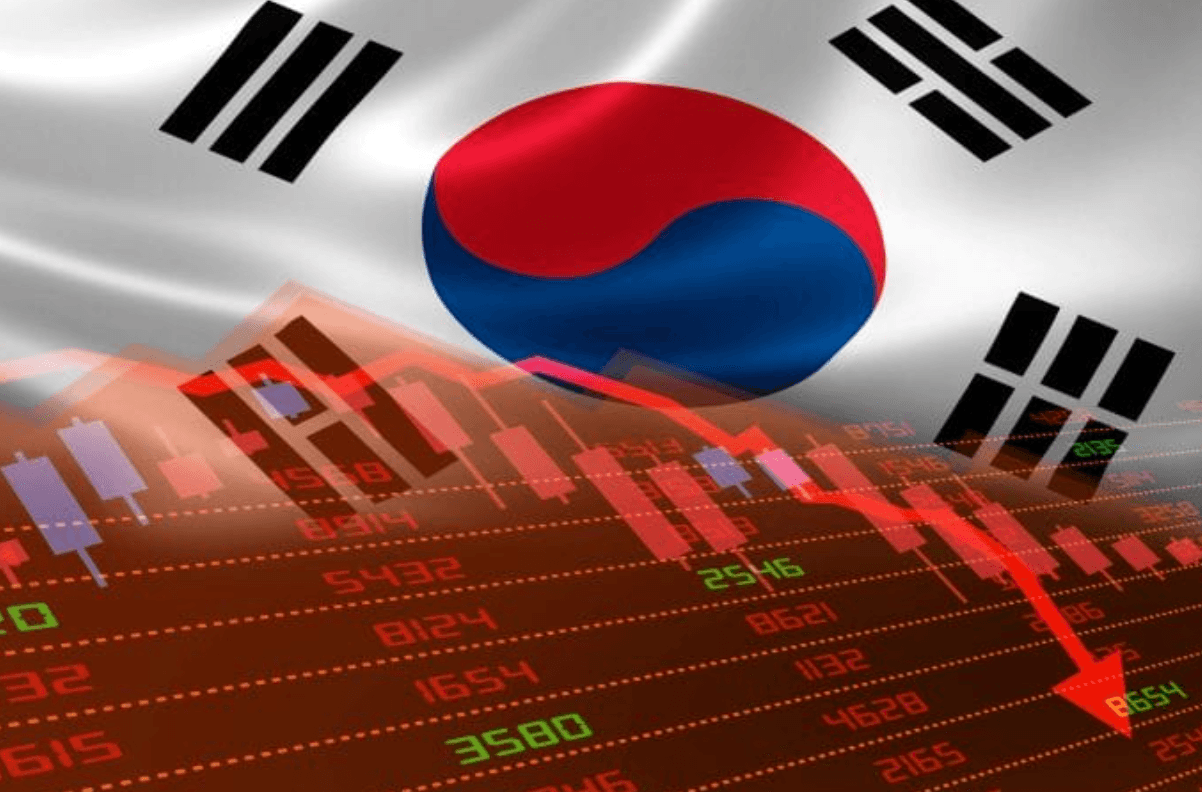
Bear markets in stock indices have a consistent historical characteristic that makes the buy question genuinely difficult to answer at the moment the bear market is confirmed rather than in hindsight. The KOSPI stock market entering bear market territory today is the kind of event that looks obvious in retrospect as either the buying opportunity of the year or the moment before things got significantly worse, but that looks genuinely uncertain in real time. The KOSPI stock market at current levels reflects maximum pessimism about three simultaneous concerns that may or may not be as severe as today's selling implied. Whether the KOSPI stock market is a buy depends on which of those concerns is temporary and which is structural, and on whether the July 29 earnings catalysts provide the evidence needed to distinguish between the two.
Why This Bear Market Is Different From Previous KOSPI Declines
Not all bear markets are created equal and the specific mechanism behind the KOSPI's 25% decline from the June peak determines what a recovery requires rather than simply noting the percentage.
Previous KOSPI bear markets have been driven by global financial crises, domestic corporate governance failures, or currency crises that created forced selling independent of the underlying business trajectories of Korean companies. The current decline is driven by something more specific and more debatable: the market's reassessment of whether AI infrastructure spending will remain at the levels that Samsung and SK Hynix's peak valuations assumed.
That specific driver makes the current KOSPI bear market both more and less concerning than historical precedents. More concerning because it reflects a genuine uncertainty about the demand trajectory that the two largest KOSPI constituents depend on rather than a financial crisis that resolves when credit conditions normalize. Less concerning because the uncertainty is resolvable through specific observable data, specifically hyperscaler earnings commentary and SK Hynix's own demand disclosures, rather than through the extended uncertainty of a financial crisis or a currency collapse.
The KOSPI bear market that resolves when earnings data confirms AI demand is a different investment proposition from the KOSPI bear market that resolves when global credit markets heal. The former has a specific and near-term catalyst. The latter has an indefinite timeline.
What the Foreign Investor Behavior Is Actually Telling You
The most analytically important data point from today's session is not the 25% bear market confirmation. It is what foreign investors did when the bear market was confirmed.
Foreign investors net bought approximately 278 billion won concentrated in Samsung Electronics and SK Hynix on the day the KOSPI officially entered bear market territory. That behavior requires explanation rather than simple acknowledgment because it runs directly counter to what the bear market narrative would predict.
Foreign investors in Korean equities are primarily large institutional funds with long investment horizons, sophisticated research capabilities, and global portfolio contexts that allow them to compare Korean chip stocks at current prices against alternatives across all global markets. When those investors choose to add exposure on the worst day of a significant decline, they are expressing a specific and considered view that the current price reflects excessive pessimism relative to their assessment of the business trajectory.
The specific stocks they bought, Samsung Electronics and SK Hynix rather than defensive Korean consumer or financial stocks, tells you that the foreign buying is not a general Korean market value argument. It is a specific AI memory demand durability argument. Foreign investors who believe Kimi K3 represents a temporary sentiment shock rather than a structural revision of AI infrastructure spending are expressing that view through the two stocks most directly exposed to the AI memory thesis.
Whether foreign investors are right is not knowable today. Their behavior tells you that sophisticated global capital has concluded the current price is more attractive than the alternatives available elsewhere, which is a specific and meaningful signal even if it does not guarantee that the bottom has been reached.
The Kimi K3 Question That the Buy Decision Hinges On
The buy case for the KOSPI at current levels requires taking a position on a specific question that the market has been pricing aggressively in one direction: does Kimi K3 represent a DeepSeek-style permanent shift in AI model efficiency or a temporary sentiment shock that fades as hyperscaler spending plans are confirmed?
The DeepSeek comparison that multiple analysts are drawing is instructive but imperfect. When DeepSeek launched in early 2025, the initial market reaction was a sharp sell-off in AI infrastructure stocks based on the fear that more efficient models would reduce demand for Nvidia GPUs and the memory that powers them. The subsequent recovery demonstrated that more efficient models expand total AI adoption faster than they reduce per-workload infrastructure requirements, producing net demand growth rather than demand reduction.
Kimi K3 is creating the same pattern. The initial market reaction is to sell AI infrastructure exposure on the assumption that lower-cost AI models reduce the HBM memory intensity of AI workloads. The bull case is that Kimi K3's efficiency enables AI deployment in markets and applications that were previously too expensive, creating net demand growth that more than offsets any efficiency reduction in existing workloads.
If the DeepSeek precedent applies to Kimi K3, the KOSPI at 25% below its June peak with Samsung and SK Hynix down 30% to 40% is a buying opportunity similar to what investors who bought AI memory exposure in the weeks following the DeepSeek shock experienced. If Kimi K3 represents something more structurally significant about the limits of expensive AI infrastructure, the buy at current levels arrives too early.

The Won Weakness That Changes the Calculation for International Investors
One dimension of the KOSPI buy decision that domestic Korean analysis frequently underweights but that international investors must incorporate is the currency dimension that makes KOSPI returns in dollar terms different from KOSPI returns in Korean won terms.
The Korean won opened at 1,488 against the dollar today, extending a weakening trend driven by oil price pressure and risk-off sentiment. International investors who buy Korean equities when the won is weak relative to their home currency are making a simultaneous bet on Korean stock prices recovering and on the won recovering against their home currency. Both conditions need to hold for the international investor to generate the returns that the Korean won-denominated price decline implies.
The specific won weakness today is connected to the oil price surge above $90. Korea's energy import dependence means oil price increases mechanically pressure the current account balance, which in turn weakens the won. If the US-Iran situation resolves and oil prices moderate, the won recovers alongside the KOSPI, which amplifies returns for international investors who bought at today's combination of depressed stock prices and weak currency. If oil remains elevated, the won stays weak and the international investor's returns in home currency terms are reduced relative to the won-denominated price recovery.
For international investors evaluating the KOSPI buy at current levels, the won's level relative to their home currency is as important as the KOSPI's level relative to its June peak. The combination of both being depressed simultaneously creates a specific opportunity that only arises when multiple negative factors converge.
Why July 29 Is the Most Important Single Date for the Buy Decision
Every aspect of the KOSPI buy case converges on a single date that is nine days away and that will provide more relevant information than any analysis available today.
July 29 is when SK Hynix reports Q2 2026 earnings, Microsoft reports Q4 fiscal 2026 results, and Meta reports Q2 2026 results. The simultaneous arrival of those three reports creates a specific information event for the KOSPI buy decision that is unusually concentrated.
SK Hynix's report addresses the demand question directly. If HBM revenue in Q2 exceeded Q1's already extraordinary level and management guides Q3 with continued confidence about the shortage extending past 2030, the Kimi K3 shock is answered by actual shipped product data rather than by inference about what lower-cost AI models might mean for future demand. A strong SK Hynix report with positive forward commentary is the most powerful available refutation of the bear case that has driven the KOSPI into bear market territory.
Microsoft's report addresses the hyperscaler AI capital expenditure question from the customer side. If Satya Nadella and Amy Hood confirm that AI infrastructure spending plans are unchanged despite the emergence of more efficient open-source models, the premise of the Kimi K3 bear case is directly challenged by the spending decisions of the world's largest AI infrastructure customer.
Meta's report adds the second largest AI infrastructure spender's perspective on the same question. Mark Zuckerberg's commentary on AI capital expenditure plans following Kimi K3's launch will be scrutinized as intensely as any capital allocation announcement in the current earnings season.
The Valuation Argument That Makes the Buy Interesting
One dimension of the KOSPI buy case that has received less attention than the sentiment and catalyst analysis is the valuation compression that a 25% index decline and 30% to 40% decline in leading stocks has produced.
Samsung Electronics and SK Hynix at 30% to 40% below their June peaks are trading at forward multiples that reflect the bear case scenario where AI demand moderates rather than the base case where demand sustains at rates consistent with the CEO commentary about shortages extending past 2030. The gap between the bear case multiples embedded in current prices and the base case multiples that the business trajectory supports if July 29 confirms the demand narrative is the specific source of potential upside that makes the current buy interesting rather than obvious.
Buying into a bear market is never comfortable and the valuation argument does not make it comfortable. What it does is establish that the potential return from the current price level to the base case valuation is large enough to justify the risk of the bear case proving correct, which is the mathematical foundation of any contrarian investment thesis.
Three Investor Profiles and Their Different Answers
Long-term investors with a twelve to twenty-four month horizon who believe the AI memory demand cycle is intact despite the Kimi K3 shock and who have established currency views consistent with won recovery as oil prices moderate find the combination of 25% KOSPI decline and 30% to 40% declines in leading stocks to be the entry point that the AI memory thesis has been waiting for since the June peak. The foreign investor buying today is expressing exactly this profile's assessment in real time.
Investors who need July 29 earnings to validate the demand thesis before committing should wait. The cost of missing the nine days between now and July 29 in potential recovery is bounded. The cost of buying today and seeing July 29 confirm the bear case is potentially more substantial. For investors who need conviction before committing capital, the nine-day wait for the most important earnings cluster of the year is the rational choice.
Short-term traders who observe the foreign investor buying signal, the simultaneous bear market confirmation as a potential capitulation signal, and the compressed won as a currency reversion opportunity may find the current KOSPI setup attractive for a trade rather than an investment, with July 29 as the defined exit date regardless of whether the trade has worked by then.
For those looking to participate in global financial markets, having access to the right trading platform matters. WEEX offers crypto and stock trading products, covering major global markets including US stocks and digital assets.
Conclusion
The KOSPI stock market at 25% below its June peak is either the most obvious buy in Korean equities since the bear market bottom that preceded the AI memory boom or a market where the structural concerns about AI demand efficiency are real enough to justify the bear case that current prices reflect.
The foreign investor behavior today, specifically buying Samsung Electronics and SK Hynix as domestic institutions sold on the worst day of the decline, is the most specific signal that sophisticated global capital believes the former interpretation is more accurate than the latter. The won's weakness, the oil price pressure, and the Kimi K3 shock are all conditions that reverse if the US-Iran situation moderates and if July 29 earnings confirm the AI infrastructure spending trajectory.
Nine days of uncertainty separate the buy decision today from the information that makes it obviously correct or obviously premature. The bear market is confirmed. The buy case is specific and grounded rather than speculative. Whether the next nine days validate or challenge it is what July 29 will determine.
FAQ
1. Is the KOSPI stock market a buy after entering bear market territory?
The buy case is grounded in three specific observations: foreign investors net bought Samsung and SK Hynix on the day of the bear market confirmation, the valuation compression from 30% to 40% declines in leading stocks prices the bear case rather than the base case for AI demand, and July 29 brings the simultaneous SK Hynix, Microsoft, and Meta earnings that will provide the most direct available evidence on whether the Kimi K3 shock represents temporary sentiment or structural demand revision.
2. What makes this KOSPI bear market different from previous declines?
Previous KOSPI bear markets were driven by financial crises, currency collapses, or corporate governance failures with indefinite resolution timelines. The current decline is driven by a specific and resolvable uncertainty about AI infrastructure spending efficiency following the Kimi K3 launch. That uncertainty has a specific near-term resolution date in July 29's earnings cluster rather than the extended resolution timeline of a financial crisis.
3. What does the foreign investor buying signal mean?
Foreign investors net bought approximately 278 billion won concentrated in Samsung Electronics and SK Hynix on the day the KOSPI entered bear market territory, while domestic institutions sold approximately 922 billion won. The divergence suggests domestic selling reflects systematic portfolio adjustment triggered by the bear market designation rather than a fundamental reassessment, while foreign buying reflects a considered view that current prices undervalue the AI memory demand cycle's durability.
4. How does the Korean won weakness affect the KOSPI buy decision for international investors?
International investors buying KOSPI exposure at current levels are simultaneously buying depressed stock prices and a weakened Korean won. If the US-Iran situation moderates and oil prices fall from above $90, the won recovers alongside the KOSPI, amplifying returns for international investors beyond what the stock price recovery alone would produce. Won weakness driven by oil pressure creates a compounded opportunity for investors whose home currency is stronger than the current won level.
5. Why is July 29 the most important date for the KOSPI buy decision?
SK Hynix reports Q2 2026 earnings, Microsoft reports Q4 fiscal 2026 results, and Meta reports Q2 2026 results simultaneously on July 29. SK Hynix's report addresses HBM demand directly with shipped product data. Microsoft and Meta's commentary addresses hyperscaler AI capital expenditure plans following Kimi K3's launch. The three reports together provide more relevant information for the KOSPI buy decision than any analysis available in the nine days before they arrive.
Disclaimer: This content is provided for general branding and informational purposes only and doesn't constitute financial, investment, legal, or tax advice. Any events, rewards, online events, or related information mentioned herein should not be considered a recommendation, solicitation, or invitation to purchase, sell, trade, or otherwise deal in any crypto assets or to use any services. Crypto assets are highly volatile and may result in loss. WEEX services and online events may not be available in all regions and are subject to applicable laws, regulations, and eligibility requirements. You are responsible for ensuring that your use of WEEX services complies with local laws and for carefully assessing the risks before participating in any crypto-related activities.
You may also like
Tesla Stock Is Down 17% in 2026: What Q2 Earnings Need to Deliver to Turn the Story Around

What Is Mark Cuban's Stock Options Philosophy? How SpaceX Turned Welders Into Millionaires
SPCX Stock Price and the $25 Billion Short Position: Is a Short Squeeze Coming?
Is SPCX Stock Price a Buy? What Uber, Airbnb and Rivian's IPO Crashes Tell Investors
SPCX Stock Price Hits All Time Low: What Investors Should Do Right Now

How Will the CLARITY Act and Bank-Grade Stablecoin KYC Rules Change Crypto Trading in 2026
Why Is BitMine Buying Millions of Ethereum Tokens and Staking $9 Billion in ETH in 2026
How to Protect Your Bitcoin from Physical Attacks: Lessons From the NYC Crypto Torture Case in 2026
What Is the NYC Crypto Kidnapping Case? The Soho Bitcoin Attack Explained — 2026 Case Analysis

SpaceX Stock (SPCX): Now Public, and Back Where It Started
USA Rare Earth (USAR): What It Is and How to Trade the Token
NVIDIA Stock in 2026: Real Shares, Tokenized NVDA, and Perpetuals Compared
How to Buy USAR Coin: Buying Tokenized USA Rare Earth Stock the Right Way
WEEX Poker Party Series 4: Draw Cards to Split a $1M USDT Pool
Can TENDIES Coin Recover After the Pullback? Price Outlook Explained
Who Really Makes Money on Prediction Markets? Smart Money vs Retail Traders
The Hidden Problem With Prediction Markets: Who Pays the Winners?
Prediction Markets Are the Future of Finance or Just Gambling?
How Polymarket and Kalshi Turned Predictions Into a Billion-Dollar Business

Why Prediction Markets Are So Hard to Regulate: The CFTC vs SEC Debate
Are Prediction Markets Legal? CFTC vs SEC Regulation Explained

Why Is TSMC Stock Down After a 77% Profit Jump? What Wall Street Is Actually Worried About
Is Samsung Stock a Buy at Its Lowest Level Since the AI Boom Began?
Samsung Stock and the KOSPI Bear Market: What the 30% Decline From Peak Tells Investors
Oil Price Above $90: What the US-Iran War Means for Your Portfolio Right Now
Iran War and Bitcoin: Why Crypto Is Not Acting Like a Safe Haven at $90 Oil
KOSPI Stock Market Enters Bear Market: What a 25% Drop From the Peak Means for Investors
KOSPI Stock Bear Market: What It Means for Samsung, SK Hynix and Korean Chip Stocks
SK Hynix Leveraged ETFs SKHL SKHX SKHZ: What Each One Does and Who Should Use Them
Barclays Sees 70% Upside for SK Hynix Stock: What the Overweight Rating Means
Tesla Stock Is Down 17% in 2026: What Q2 Earnings Need to Deliver to Turn the Story Around
What Is Mark Cuban's Stock Options Philosophy? How SpaceX Turned Welders Into Millionaires
SPCX Stock Price and the $25 Billion Short Position: Is a Short Squeeze Coming?
Is SPCX Stock Price a Buy? What Uber, Airbnb and Rivian's IPO Crashes Tell Investors
SPCX Stock Price Hits All Time Low: What Investors Should Do Right Now
How Will the CLARITY Act and Bank-Grade Stablecoin KYC Rules Change Crypto Trading in 2026
Contents
Popular coins
Latest articles




